Fire consumes timber from the surface inward
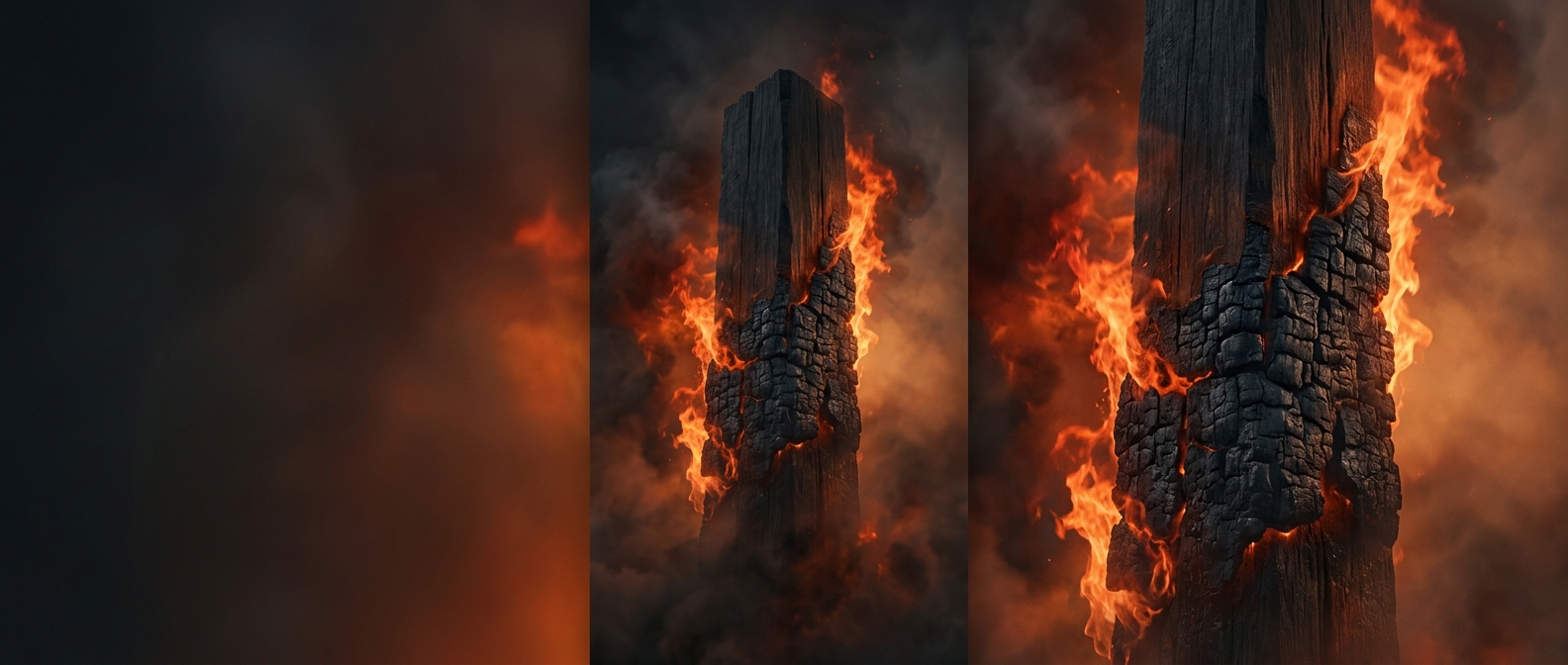
When wood is heated strongly, its components break down and release gases. Those gases can burn, while the remaining surface becomes char: a dark, brittle layer of carbon-rich material. Charring is damage, but it also changes how quickly the fire can attack the wood beneath.
Char conducts heat poorly compared with solid wood, so it acts as an insulating barrier. As the fire continues, the boundary between char and unburned wood moves inward. The outer material is sacrificed first; deeper in, cooler wood can remain intact enough to carry load.
The hidden core matters
A large timber beam has more material between its surface and its center than a thin piece of wood does. That gives the heat a longer path to reach the core. Engineers account for the expected loss at the surface when assessing or designing heavy timber structures: the important question is not whether the outside will burn, but how much sound wood will remain inside for the required time.
This protection is not unlimited. Fire duration, the beam’s size and shape, and how it is exposed all affect how quickly the unburned section shrinks. Connections and other parts of a building must also be considered; a thick beam alone does not guarantee that an entire structure will remain safe.
The visible blackening can therefore be misleading in either direction: a heavily charred timber may still contain a load-bearing core, while its scorched surface signals that the core has been steadily losing its protective margin.