A flash could leave glowing material behind
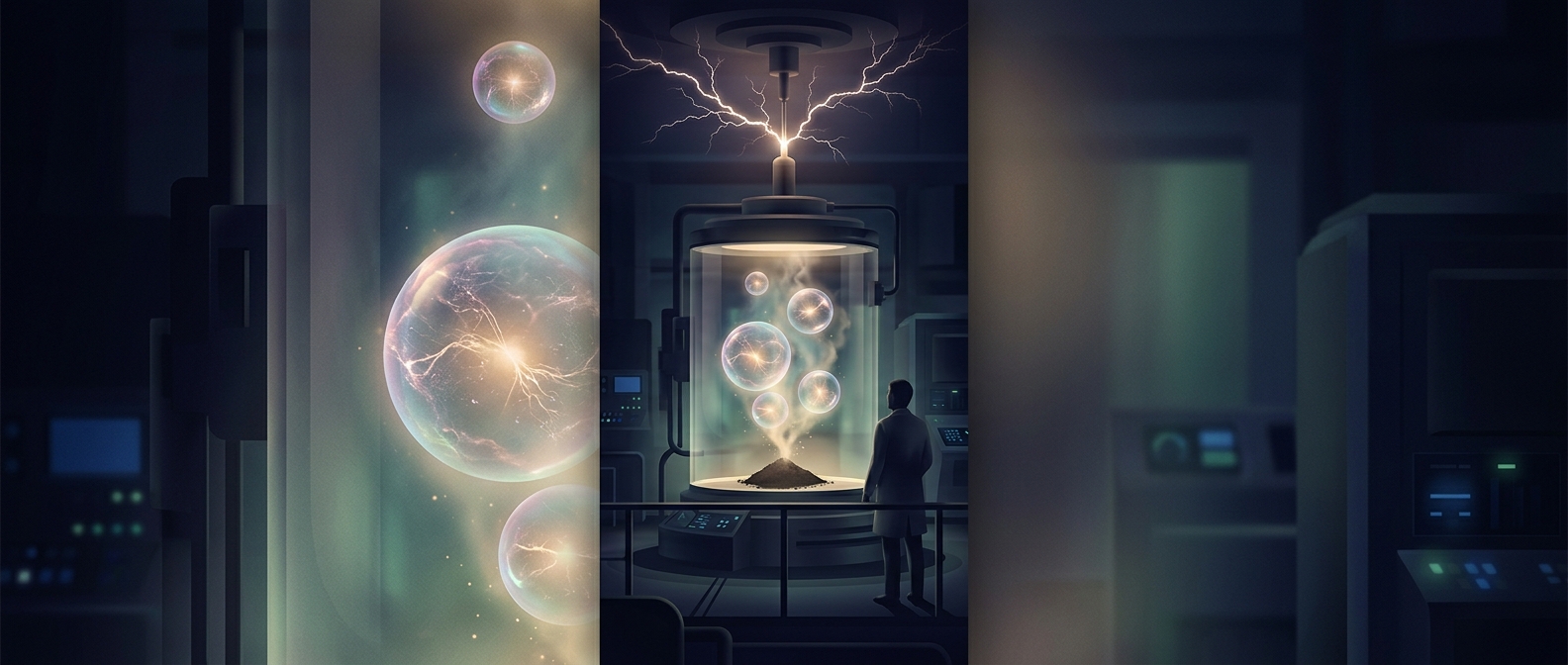
In one proposed account of ball lightning, the lightning strike does not become a glowing sphere. Instead, it supplies the heat that creates one. A powerful discharge can heat soil so abruptly that some silicon-bearing material vaporizes. As that vapor cools, it may condense into a cloud of extremely small particles carried by the surrounding air.
The particles could then react with oxygen. Oxidation—the chemical process in which a substance combines with oxygen—releases energy, some of it as visible light. If the particles remain hot and their reactions continue for a short time, the cloud could glow after the main lightning flash has ended.
Why the light might seem to float
A cloud of tiny particles would not need to behave like a solid ball. Air currents could move it, while the glow and the darkness around it make its edges look like a distinct, hovering object. This offers a possible route from a ground strike to a light that witnesses perceive as suspended in the air.
The account depends on several steps occurring in the right conditions: enough material must be heated, particles must form, and their reactions must sustain a visible glow. Researchers have not confirmed that this sequence explains ball lightning. Its appeal is that it connects the phenomenon to ordinary materials and chemical reactions—while leaving open the question of whether those reactions can produce the reported effects.