St. Paul’s Welcome Mat for the Space Age
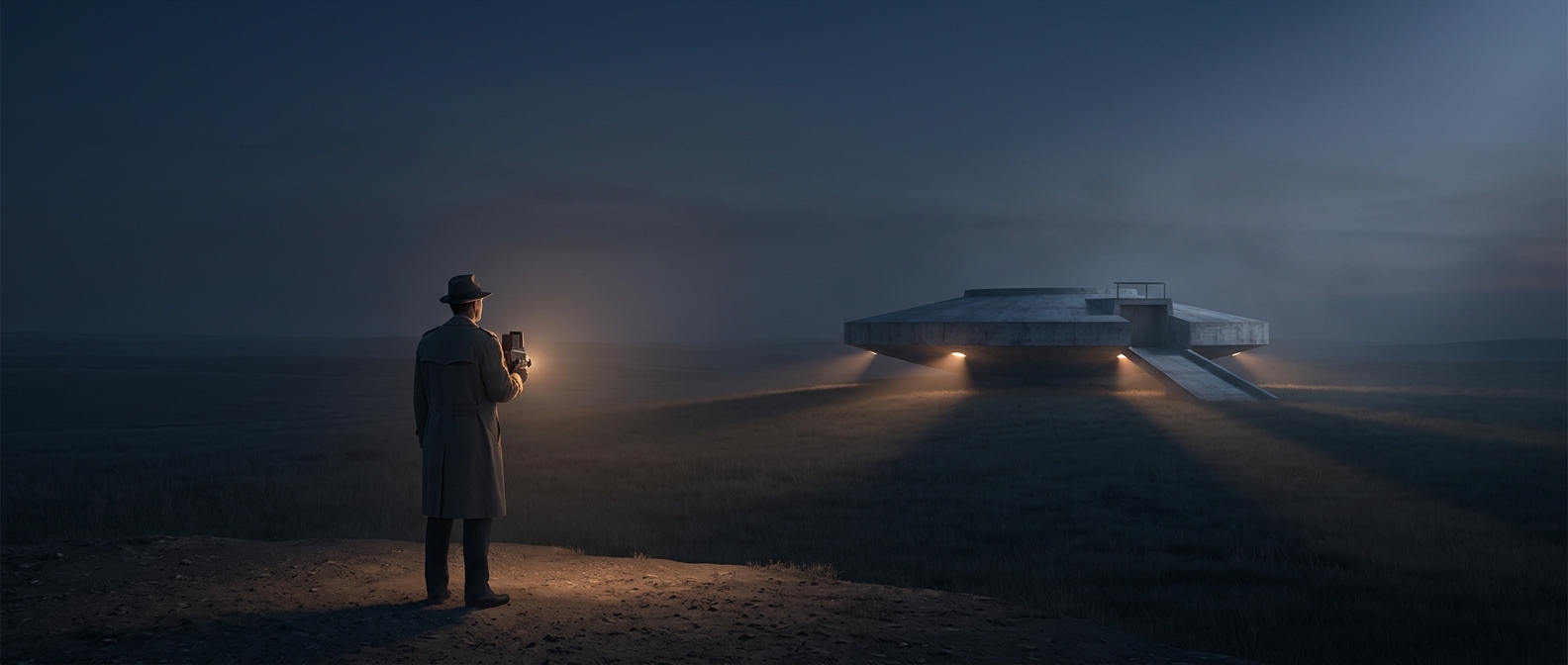
In 1967, Canada’s centennial year, St. Paul, Alberta, turned the era’s fascination with space into a local landmark. The concrete landing pad was meant as a playful invitation to extraterrestrial visitors—not as a working airfield or a claim that anyone had spotted a UFO. Its map of Canada made the gesture unmistakably national: even visitors from another world, the town suggested, should know where they had arrived.
The idea fit a moment when spaceflight had become part of everyday conversation. Rockets and satellites made the prospect of travel beyond Earth feel newly imaginable, while the centennial gave communities across Canada a reason to create public projects that would be remembered. St. Paul made that ambition humorous and visible, giving an abstract possibility a physical address.
A Joke That Became a Place to Visit
The pad’s appeal lies in the contrast between its solid construction and its impossible purpose. Concrete implies weight, permanence, and engineering; the imagined users are visitors from somewhere beyond the planet. That mismatch is the joke—and the reason the site works as a roadside attraction. People can walk onto the map and briefly play along with the town’s invitation.
The landing pad also gave St. Paul a distinctive story to tell long after the centennial celebrations ended. It does not make the town a destination for actual spacecraft, but it turns curiosity about UFOs into something local and tangible. The most memorable part is that the welcome mat is not for travelers from another province: it is for anyone who might arrive from another world.**