How a spider turns silk into a launch system
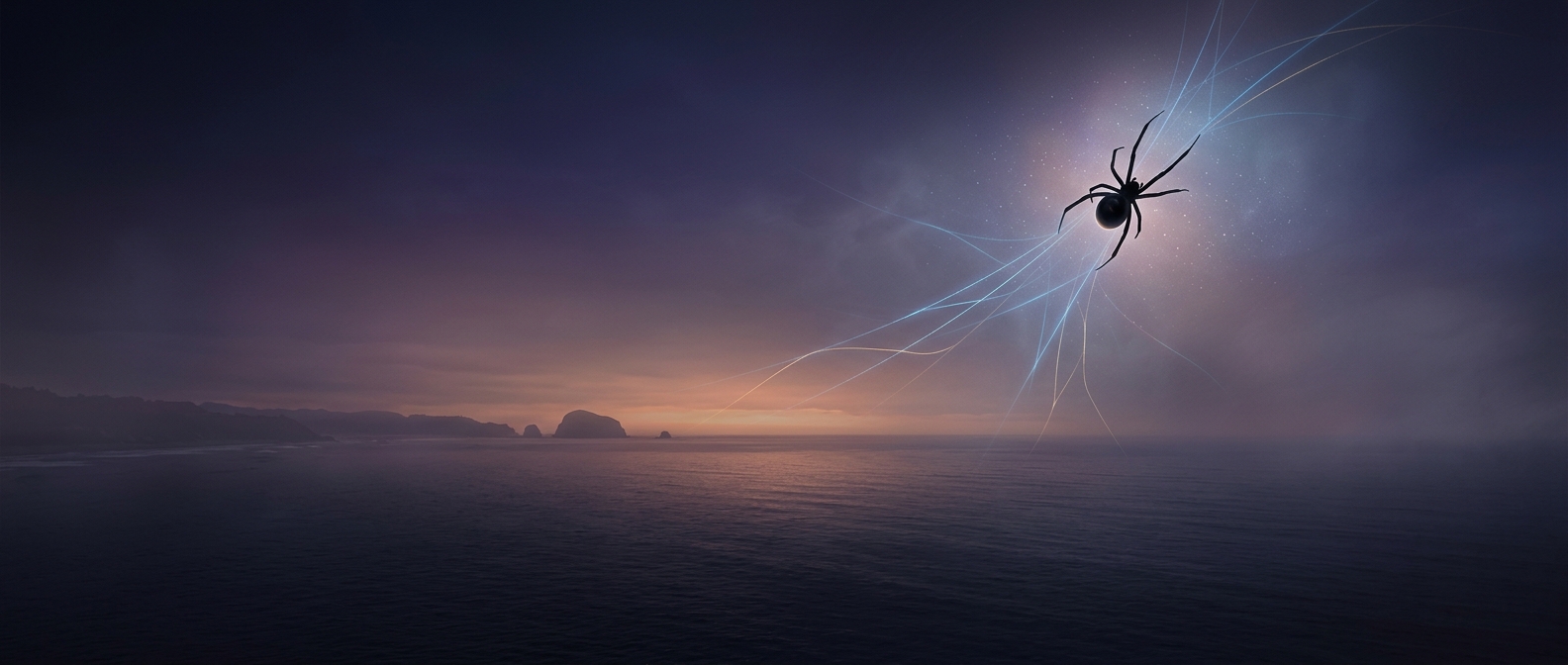
A spider preparing to travel often climbs to an exposed perch, raises its abdomen, and releases one or more wispy strands. Air resistance pulls on the silk; when that drag is strong enough to overcome the spider’s weight, the animal lifts off. This form of travel is called ballooning. It can carry tiny spiders far from where they hatched, helping them reach new places without walking across the ground.
The silk is not a balloon in the usual sense: it does not trap gas. Instead, long, extremely light strands present enough surface to the moving air to create lift and drag. The spider’s success depends on conditions such as wind, the silk’s length, and the animal’s size.
When the air is still, electricity may help
The atmosphere also has an electric field: near the ground in fair weather, it generally points downward. A charged silk strand in that field experiences an electrical force. Because the strand is so light, even a modest force could matter when wind is weak. Measurements and experiments support the possibility that electric fields can affect takeoff, but how much they contribute during ordinary ballooning outdoors remains an open question.
That uncertainty does not make the electrical mechanism an alternative to wind in every case. Ballooning can involve several forces at once, with moving air usually providing drag and atmospheric electricity potentially adding a subtler push. The striking result is that a spider’s route into the sky may depend not only on a gust it can feel, but also on an invisible field surrounding it.