Why rain can tighten the ride market
Rain changes both sides of a rideshare market at once. More people may request a car rather than walk, cycle, or wait outdoors, while some drivers may avoid getting on the road or find that each trip takes longer. Even if the number of drivers has not changed, longer trips can keep cars occupied and reduce how quickly they become available for another pickup.
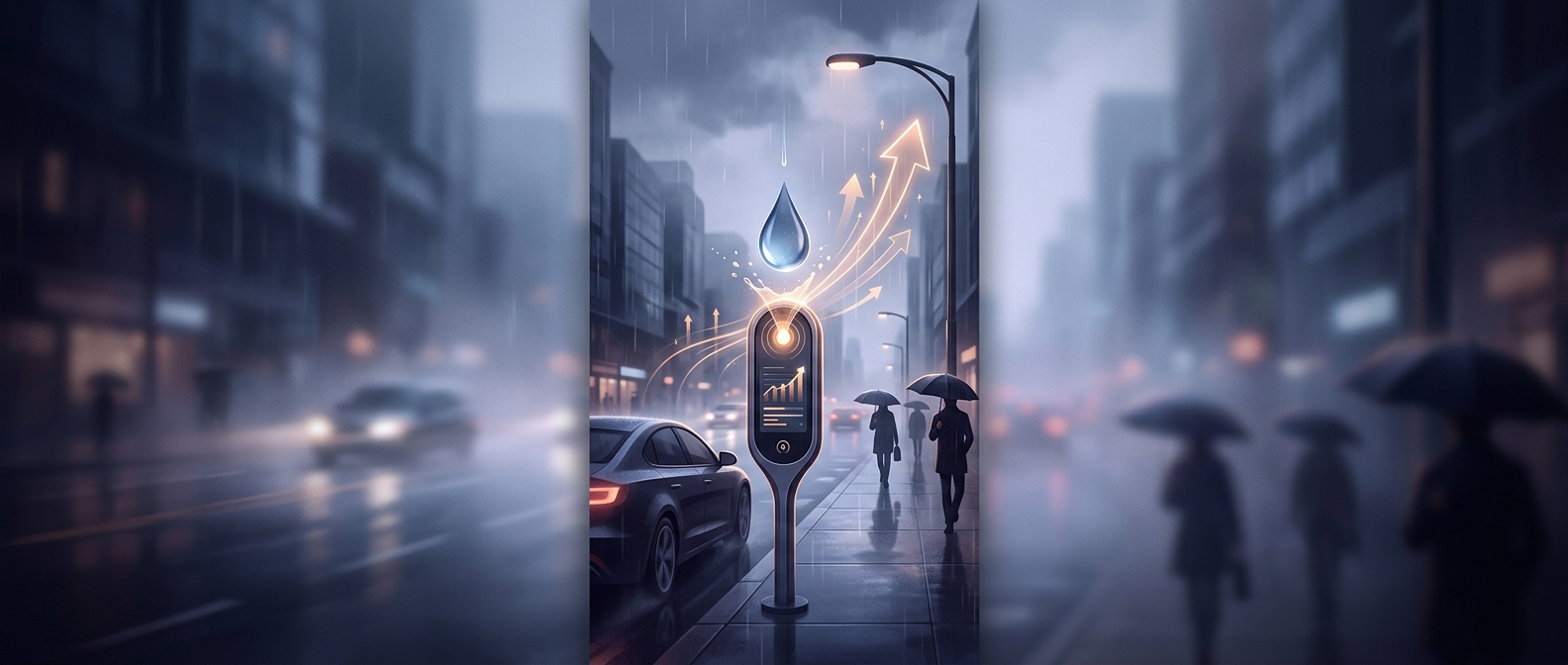
The result is a temporary mismatch: more requests are competing for fewer immediately available rides. An app’s pricing system responds to that imbalance by raising fares in affected areas. This is commonly called surge pricing—a price adjustment meant to reflect unusually high demand relative to nearby supply.
What the higher fare is meant to do
A higher price can discourage some riders from requesting a car right away, easing pressure on the queue. It can also make driving in a crowded, wet area more worthwhile, encouraging available drivers to head there or stay online. As those choices change, the gap between requests and available cars can narrow, and fares may fall again.
That response is not instantaneous. A driver may be several minutes away, roads may be moving slowly, and requests can arrive faster than cars can reach them. So a fare increase does not guarantee an immediate pickup; it is a signal and an incentive, not a way to create cars on the spot.
For riders, the practical consequence is that the same trip can cost more when weather changes the local balance of requests and vehicles. For the market, the extra charge is intended to help decide who rides now and where drivers go next.