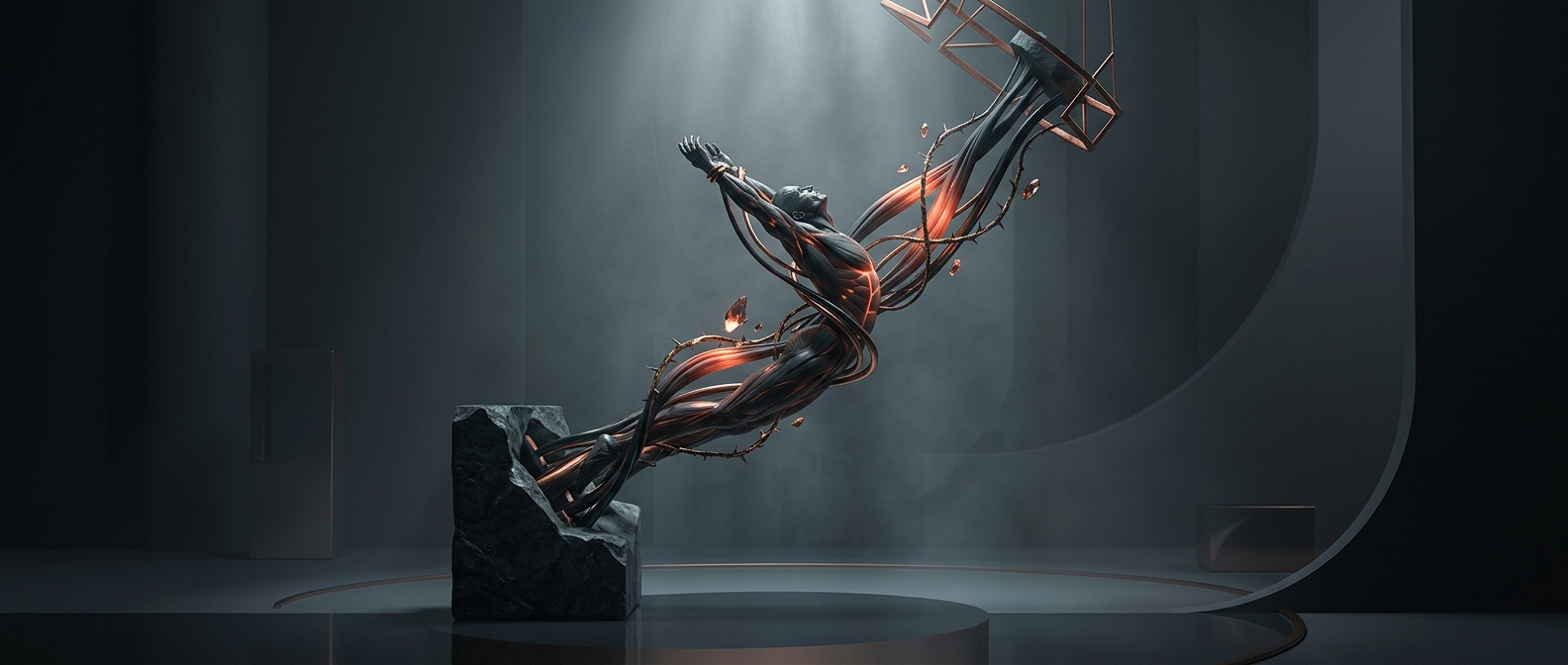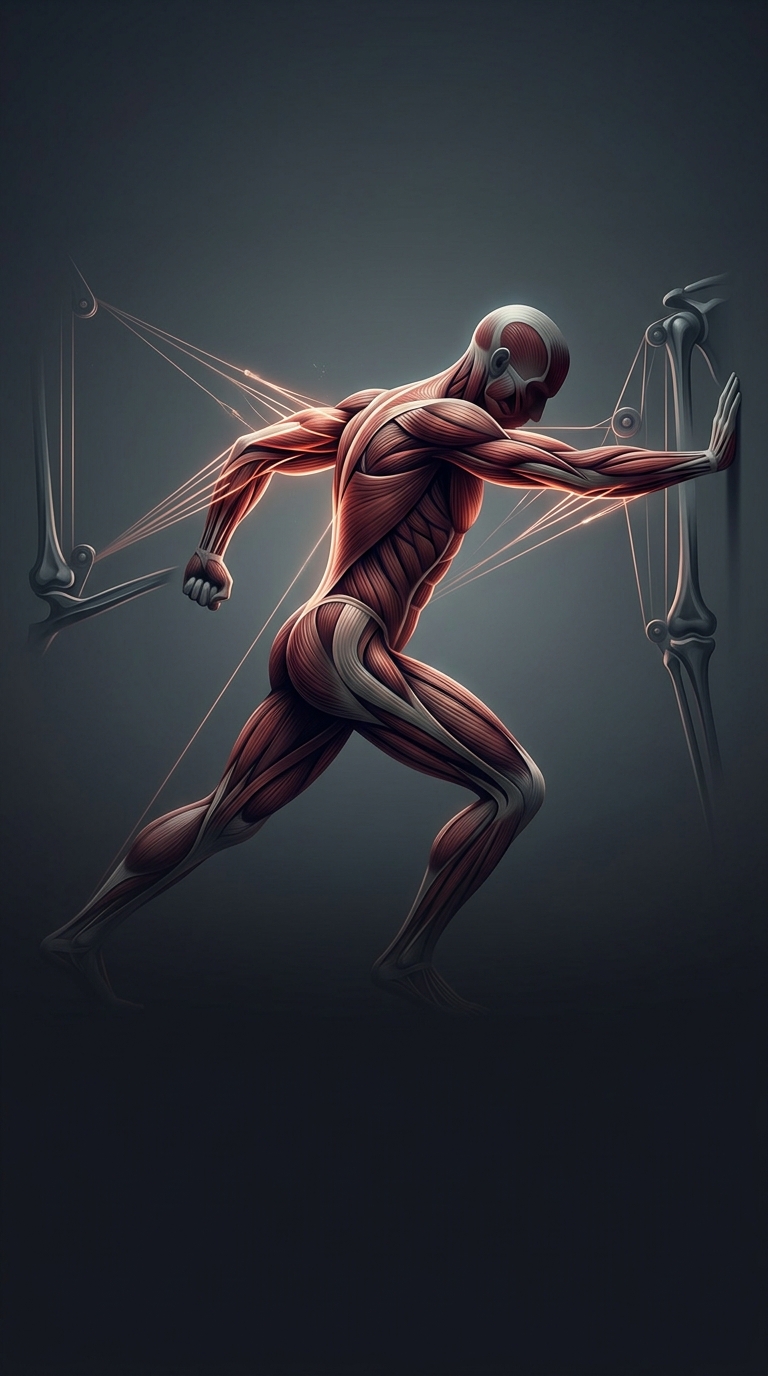
Muscles move joints by pulling
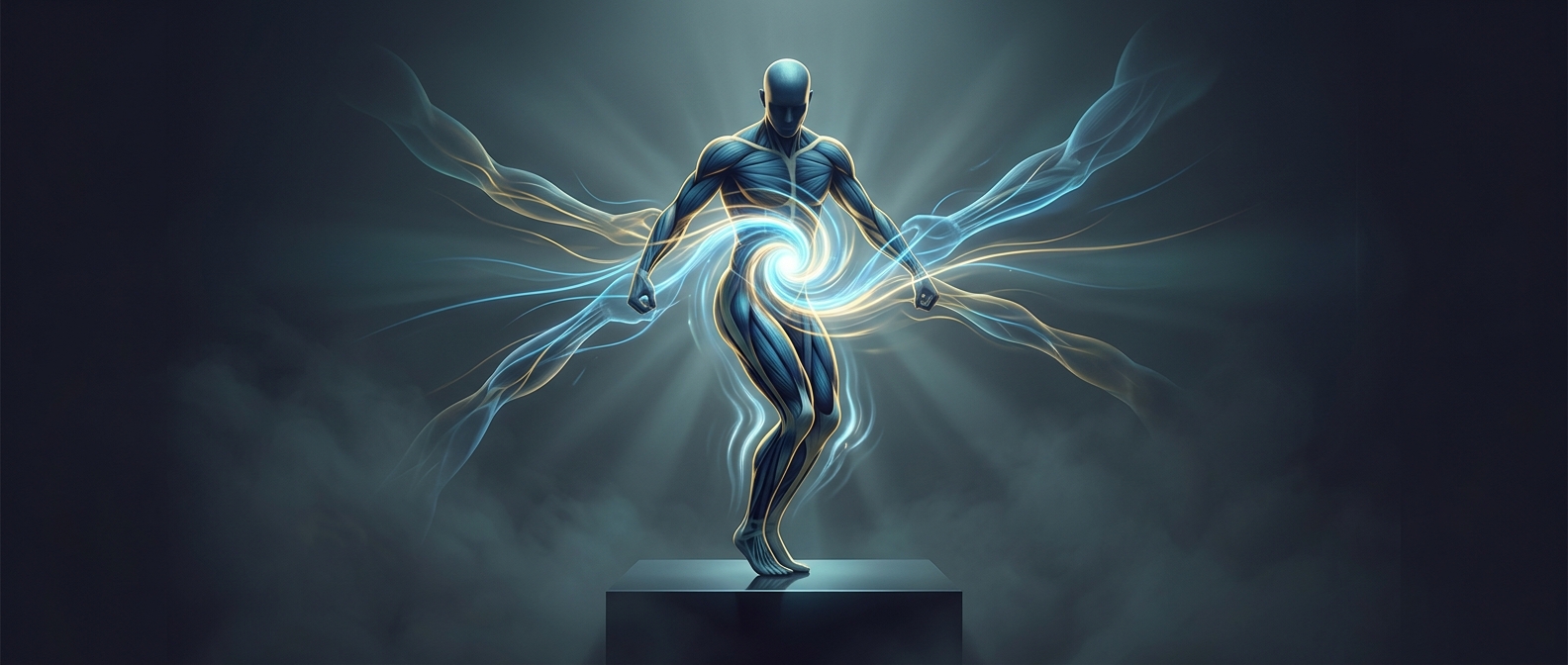
A skeletal muscle can create force only when it contracts: its fibers develop tension and tug on the connective tissue that links the muscle to bone. Because that connection is usually on opposite sides of a joint from the muscle’s bulk, the tug turns the bone rather than pushing it straight ahead. The joint acts as a pivot, and the bones act as levers.
This arrangement also explains why muscles work in teams. To bend the elbow, the biceps contracts and pulls the forearm upward. To straighten it, the triceps contracts and pulls from the other side. The triceps does not push the forearm down; its pull rotates the forearm in the opposite direction.
Opposing muscles make controlled movement possible
Muscles that produce opposite movements are called antagonists. When one contracts, the other usually relaxes enough to let the joint move. To stop or steady a movement, both can be active at once, tightening the joint rather than allowing it to swing freely.
The lever arrangement has tradeoffs. A muscle attached close to a joint can move the hand or foot through a large distance and with speed, but it must exert substantial force to do so. Muscles attached farther from the pivot can produce more turning force with less muscle tension, though the limb moves less distance for each shortening. The body’s muscle-and-bone system trades some force advantage for reach and speed.
Why posture depends on continuous pulling
Even when you are standing still, muscles make small, ongoing adjustments. Gravity and external loads pull on the body, while muscles create opposing tension to keep joints from giving way. So the same basic mechanism powers both a deliberate action, such as lifting a cup, and the quiet work of holding it steady.