The animal cycle behind an old hand game
Long before the familiar fist, flat hand, and two-fingered sign, players in China had a game built around a different kind of contest: frogs, slugs, and snakes. The important feature was not a realistic fight but a closed loop of advantage. Each creature defeated one rival and was defeated by another, so no choice could win every time.
That structure is called cyclic dominance. It turns a simple contest into a guessing game: players try to anticipate one another, while each option remains vulnerable. The animal version and modern rock-paper-scissors share this basic design, even though one uses creatures and the other uses gestures.
From creatures to gestures
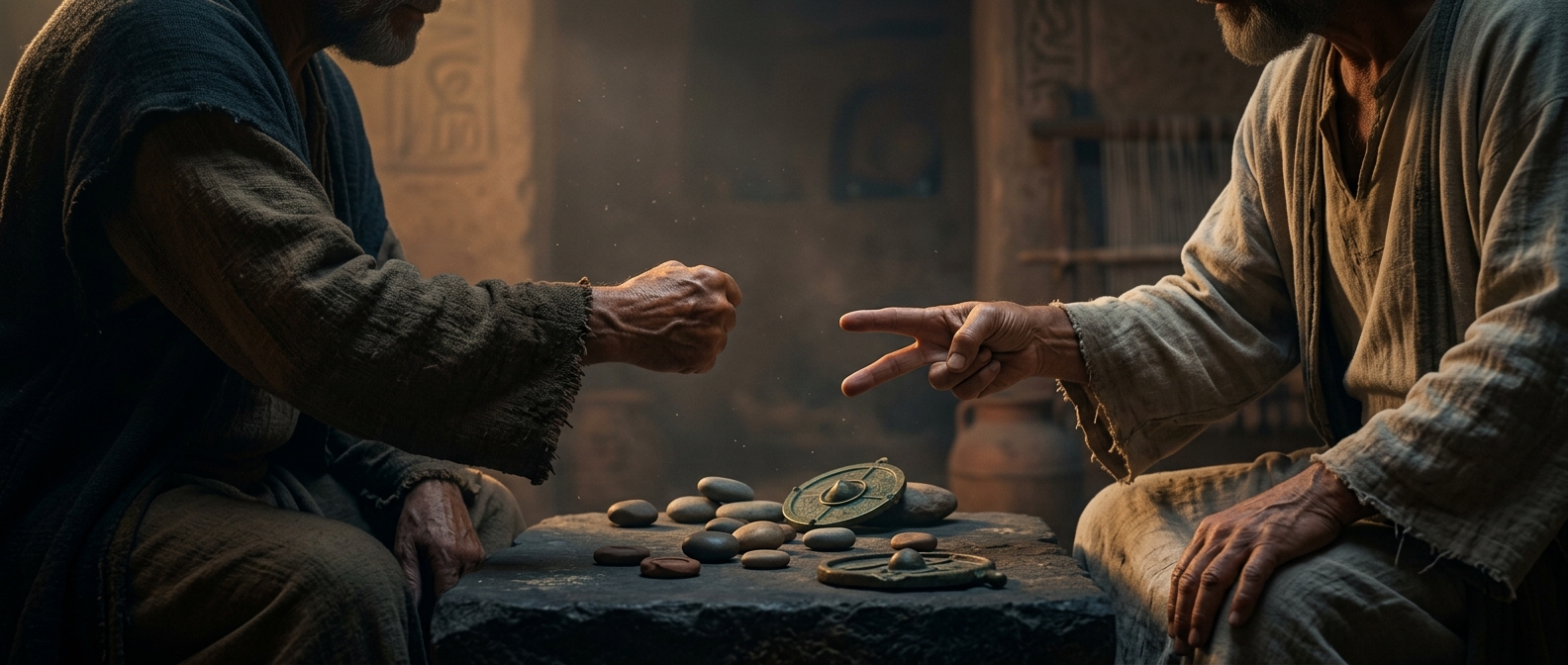
A similar game is associated with Han-dynasty China, centuries before the hand signs became familiar. The resemblance does not, by itself, prove that the animal game was the direct ancestor of today’s version. It does show that the underlying idea—three choices arranged so each beats one and loses to one—can be expressed in very different ways.
That is the clever constraint that makes the game work. Add a choice that beats everything and the contest is no longer balanced; remove the circular relationships and one option may become an obvious favorite. Whether the players show a frog or a closed fist, the loop keeps the outcome uncertain until both choices appear.