A feud made visible in the village square
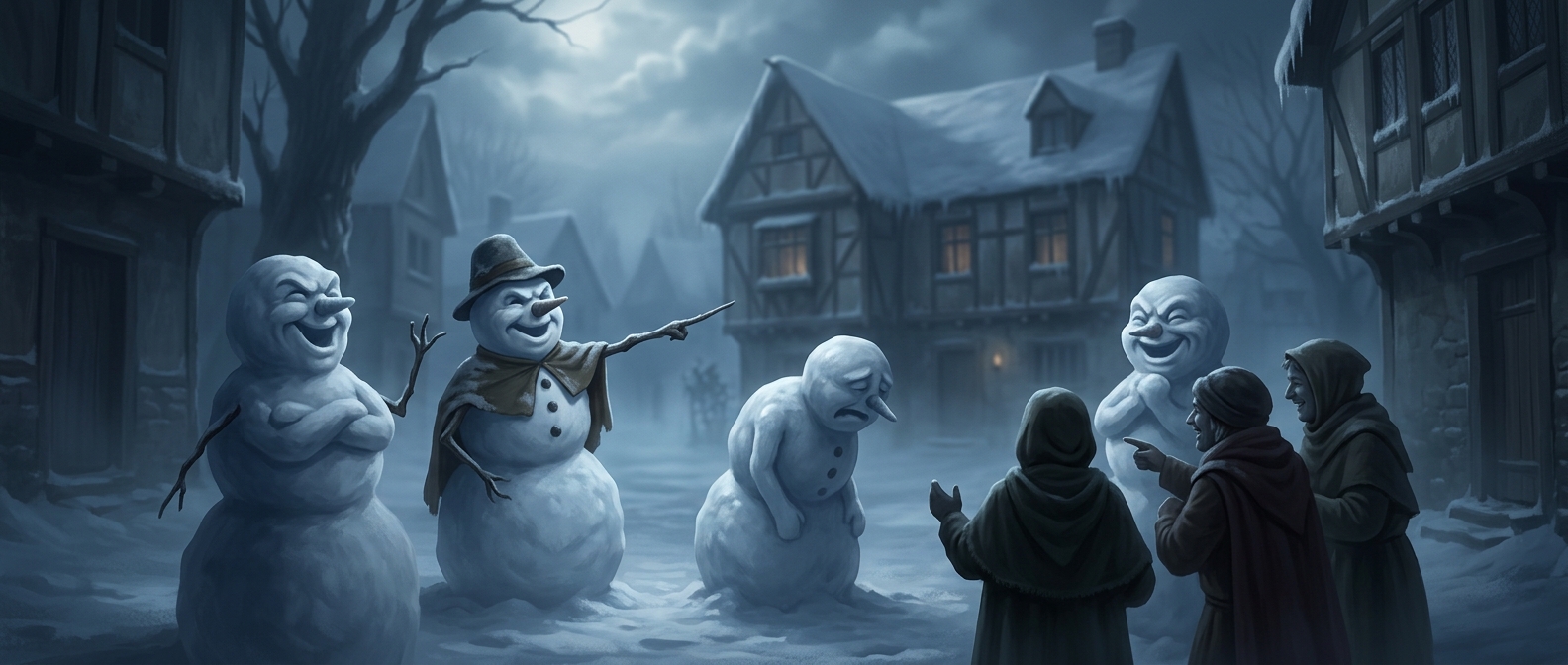
A snow effigy could turn a private grievance into a public joke. By shaping a rival’s features or clothing in snow, its maker gave neighbors a recognizable target without needing a painted portrait, a printed caricature, or costly materials. The insult depended on recognition: the more clearly the figure called its subject to mind, the more effectively passersby could share in the mockery.
Why snow suited the purpose
Snow was abundant, easy to shape, and temporary. That combination made it useful for a seasonal act of ridicule: the sculptor could make a conspicuous figure with what lay at hand, and the weather would eventually erase it. Its impermanence did not make the insult invisible. A figure displayed where others could see it could carry a grievance into public view, even if only for a short time.
The practice also shows that early snow figures were not necessarily meant as cheerful winter decorations. They could function like rough, improvised effigies—objects made to stand for a person and expose that person to ridicule. The familiar snowman, then, has a less innocent side: before it became a cozy seasonal image, a pile of snow could serve as a cheap canvas for local rivalry.