A Small Killing Became a Test of Repentance
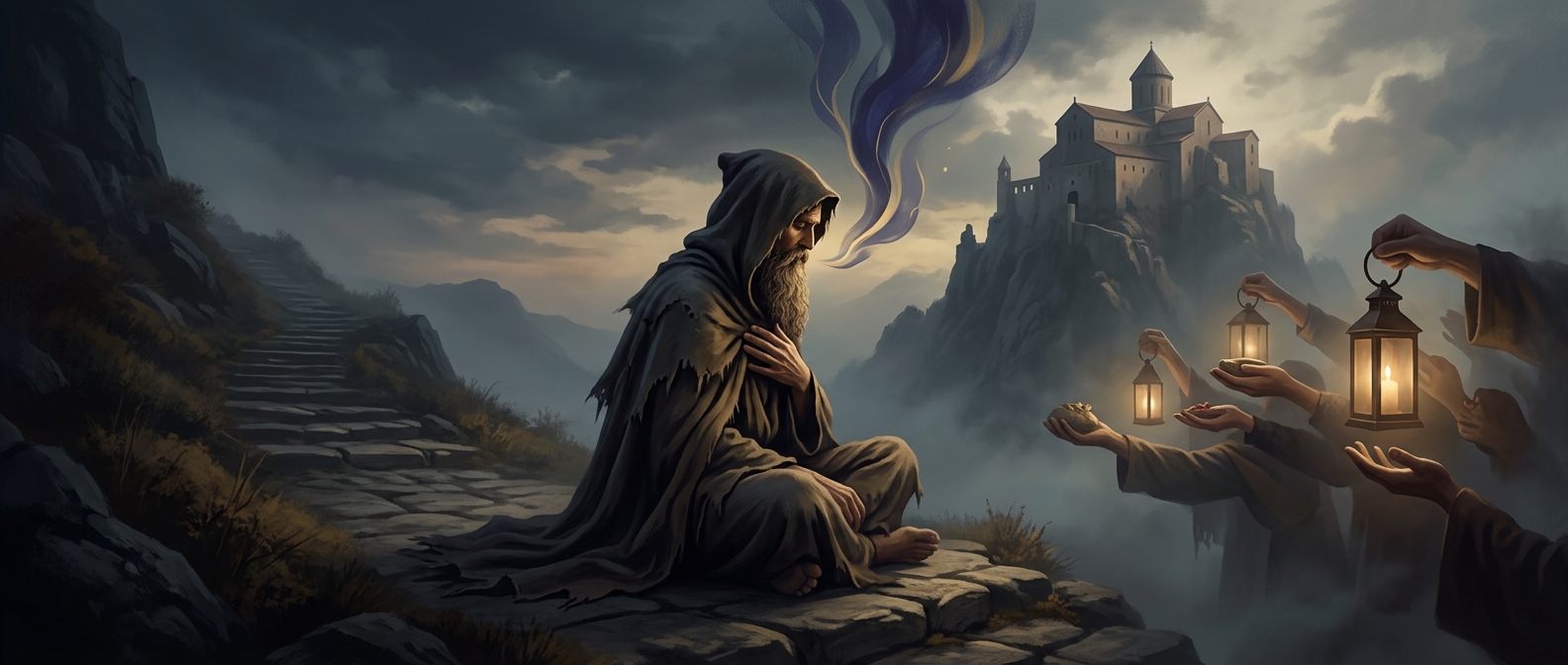
In the traditional account, Macarius’s ordeal began with a tiny act: he killed an insect that had stung him, then felt guilty about taking its life. Rather than treating that regret as a passing feeling, he answered it with an extreme bodily discipline—remaining exposed in a marsh where insects could bite him.
The story belongs to the world of early Christian desert asceticism. Ascetics sought spiritual discipline through solitude, fasting, prayer, and hardship. In that setting, physical discomfort could serve as a concrete form of repentance: Macarius did not merely regret his action; he accepted suffering in response to it.
Why the Ordeal Changed His Appearance
A marsh offered little shelter from biting insects. Repeated bites and swelling could make someone look dramatically different, which explains the account’s striking ending: Macarius returned nearly unrecognizable. The transformation makes his penitence visible, turning an inward struggle into a story that could be remembered and retold.
The point is not that every believer was expected to imitate such punishment. In monastic tales, unusually severe acts often portray the intensity of a holy person’s commitment. Here, the disproportion between the tiny insect and the prolonged ordeal gives the episode its force: even a small creature’s life mattered enough, in Macarius’s eyes, to prompt a radical act of repentance.