A shared rule shaped the monastic day
“Cenobitic” comes from Greek roots meaning “common life.” In this form of monasticism, people pursued religious discipline as members of a community rather than as isolated hermits. A written rule or customary set of instructions organized ordinary choices—when to pray, eat, sleep, and work—so that the day followed a shared rhythm.
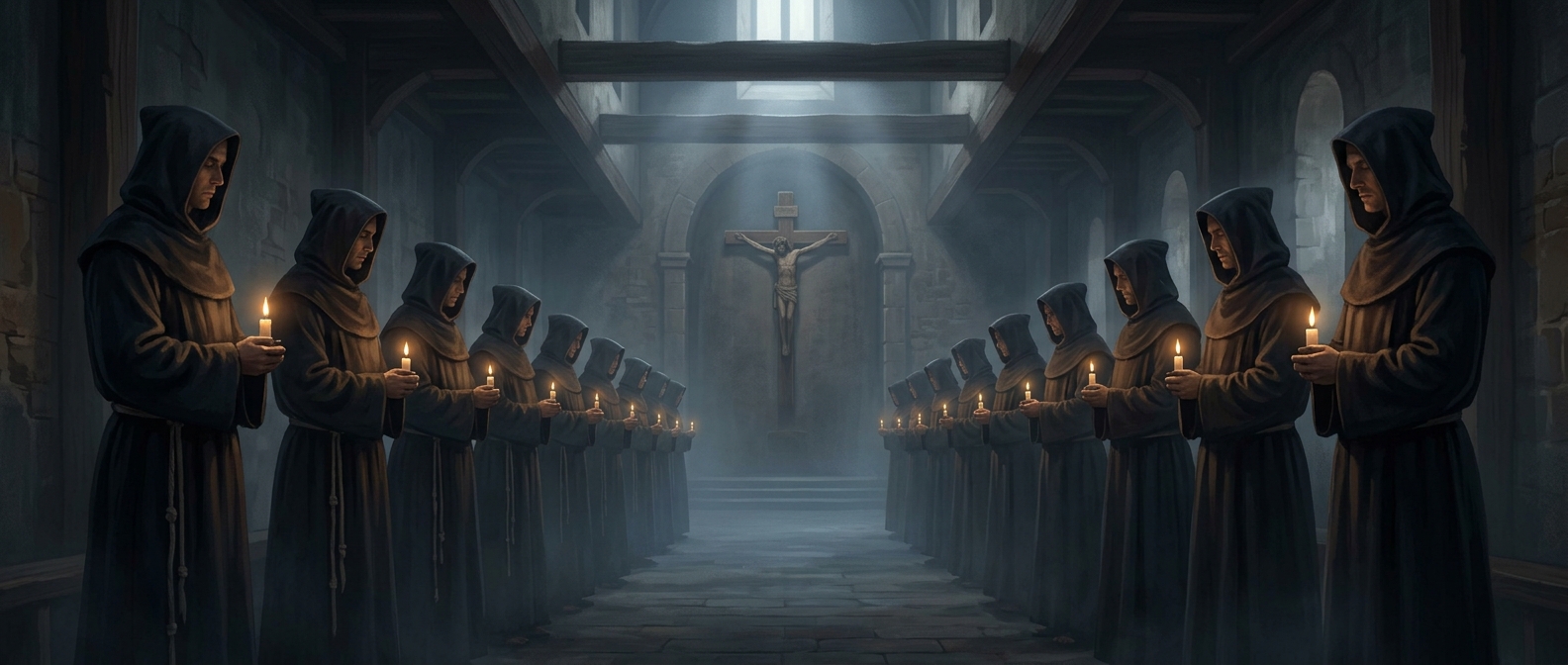
That structure made devotion practical and collective. A bell or other signal could bring everyone to prayer; meals and work took place alongside other members. The point was not simply efficiency. Repeated routines limited the time spent choosing what to do next and made discipline something the group practiced together.
Why live under close supervision?
A monastery could support people who might struggle to sustain an ascetic life alone. Members shared labor and resources, while an abbot or other leader interpreted the community’s rule and addressed disputes. Daily proximity also made conduct visible: patience, obedience, and cooperation had to be practiced in ordinary interactions, not only in private prayer.
This arrangement involved a tradeoff. Community offered support and a dependable structure, but it also constrained personal preference. The schedule belonged to the group, and an individual’s religious practice was shaped by responsibilities to fellow monks.
Cenobitic life therefore differed from eremitic life, in which a person sought solitude as a hermit. It did not eliminate personal spiritual effort; it placed that effort inside a system of shared expectations. The result was a form of monastic discipline in which even the timing of a meal or a night’s rest could become part of living by a common rule.