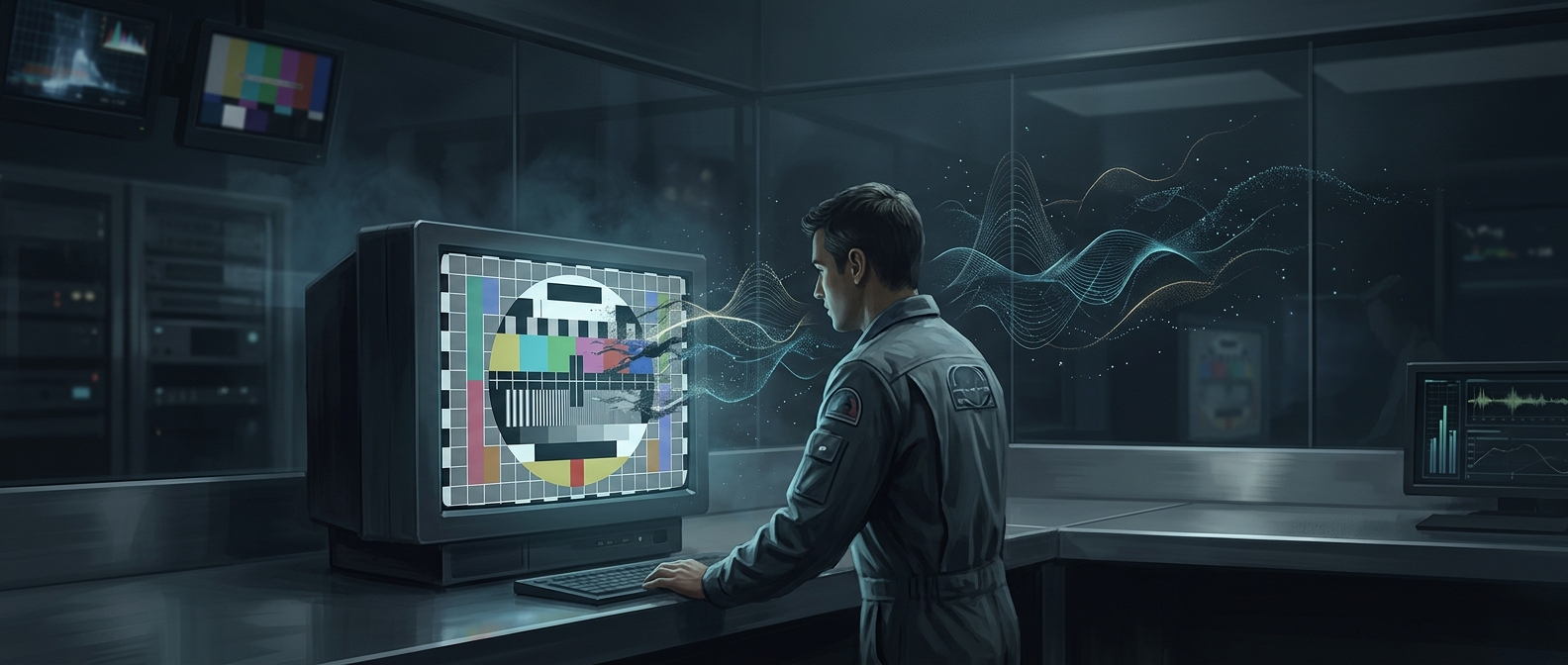
A reference tone for the sound path
A 1,000-hertz tone is a steady pitch: its waveform repeats 1,000 times per second. Because its frequency is known and it does not fluctuate like speech or music, a technician can use it as a reference while checking the audio equipment between a studio and a transmitter. If the tone arrives too quietly or too loudly, the equipment’s gain—the amount it amplifies the signal—can be adjusted.
The choice is practical as well as audible. A tone around the middle of the audio range is easy to produce and measure, and 1,000 hertz became a familiar reference frequency for equipment checks. The tone can reveal a level mismatch or a problem in the audio path, though it cannot show how the system handles every pitch or the changing complexity of real program sound.
Picture and sound, checked separately
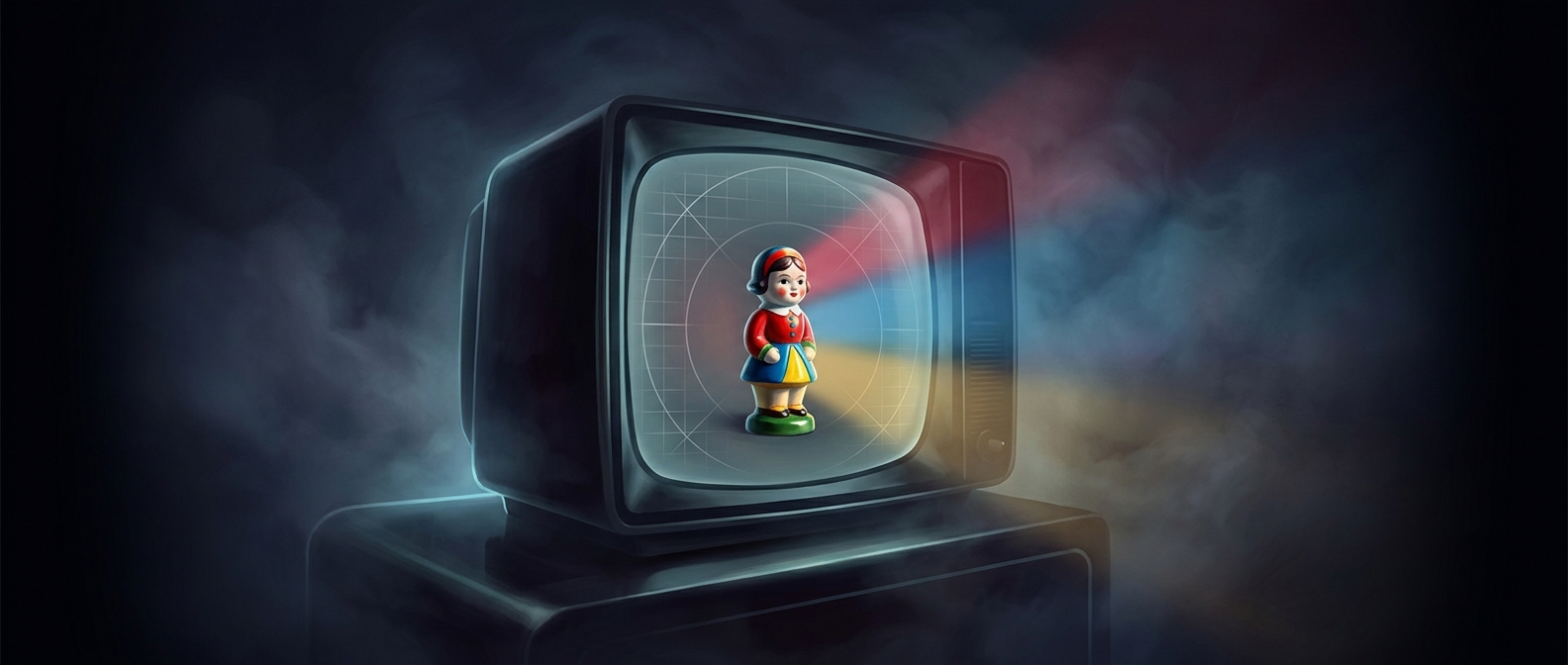
The color bars and the tone served different jobs. The bars gave technicians a controlled picture with known colors and brightness values; the tone gave them a steady sound signal. Watching and listening to these references helped locate whether a fault was in the video chain, the audio chain, or both.
That mattered because a broadcast passed through multiple pieces of equipment before reaching a television. A picture could look washed out while sound levels remained correct, or the audio could be misadjusted even when the bars looked right. The paired test signals made those problems easier to spot before viewers encountered them in a program.