When a Bath Became a Social Meal
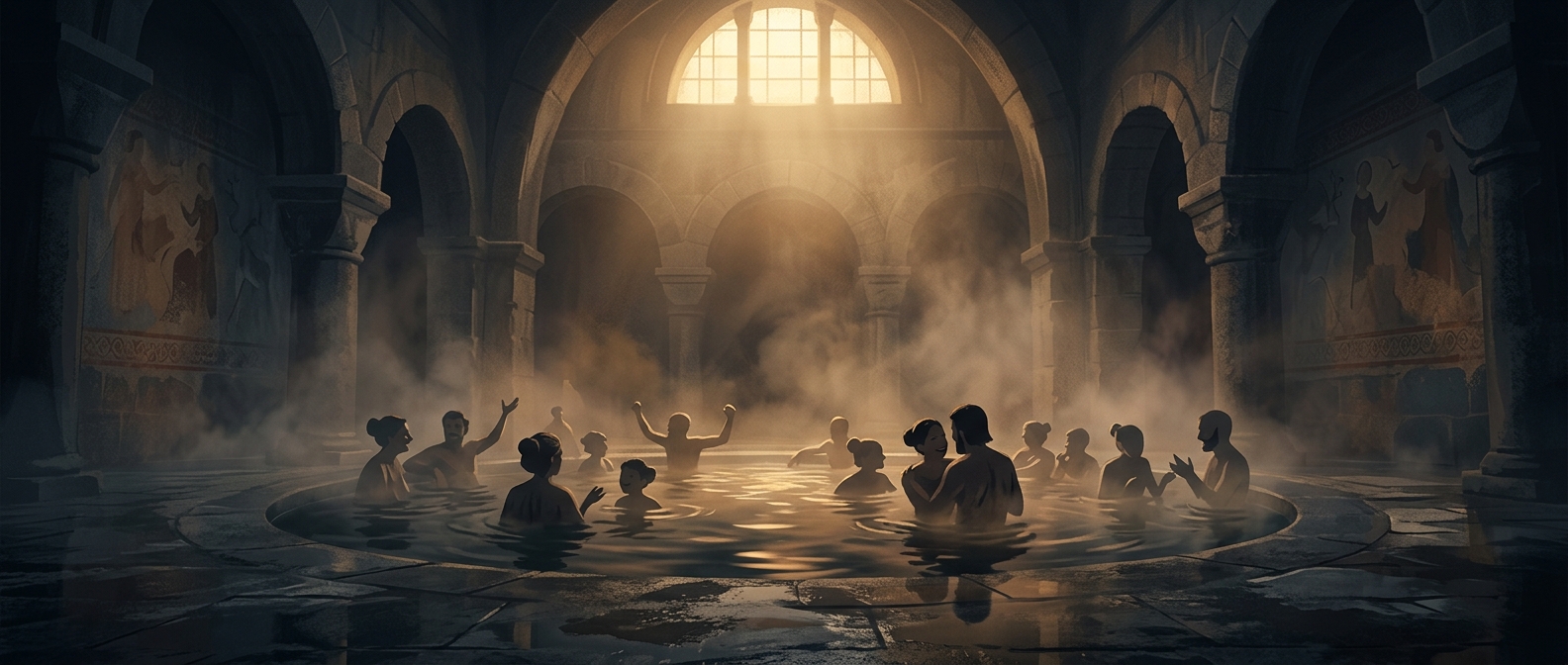
In some medieval bathhouses, bathing was not treated as a private task to finish quickly. Guests shared warm water and company, and food could be part of the same outing. Eating without getting dressed was therefore less a stunt than a sign that the bathhouse was a communal setting, where the boundaries between washing, relaxing, and socializing were looser than they are in a modern bathroom.
The Bathhouse as a Place to Linger
A meal made sense in a space where people had already gathered to spend time together. Rather than leaving the bathing area, changing, and finding another place to sit, guests could continue their visit while food was brought to them. The warm water was the setting; conversation and eating extended the occasion beyond washing alone.
This detail should not be taken to mean that every medieval bathhouse offered meals, or that all guests bathed in the same way. Practices varied across places and periods. But where food was served to naked bathers, the arrangement shows how thoroughly bathing could be folded into public leisure: the bathhouse was not merely a facility for getting clean, but a place where people could spend time together without first returning to ordinary dress.