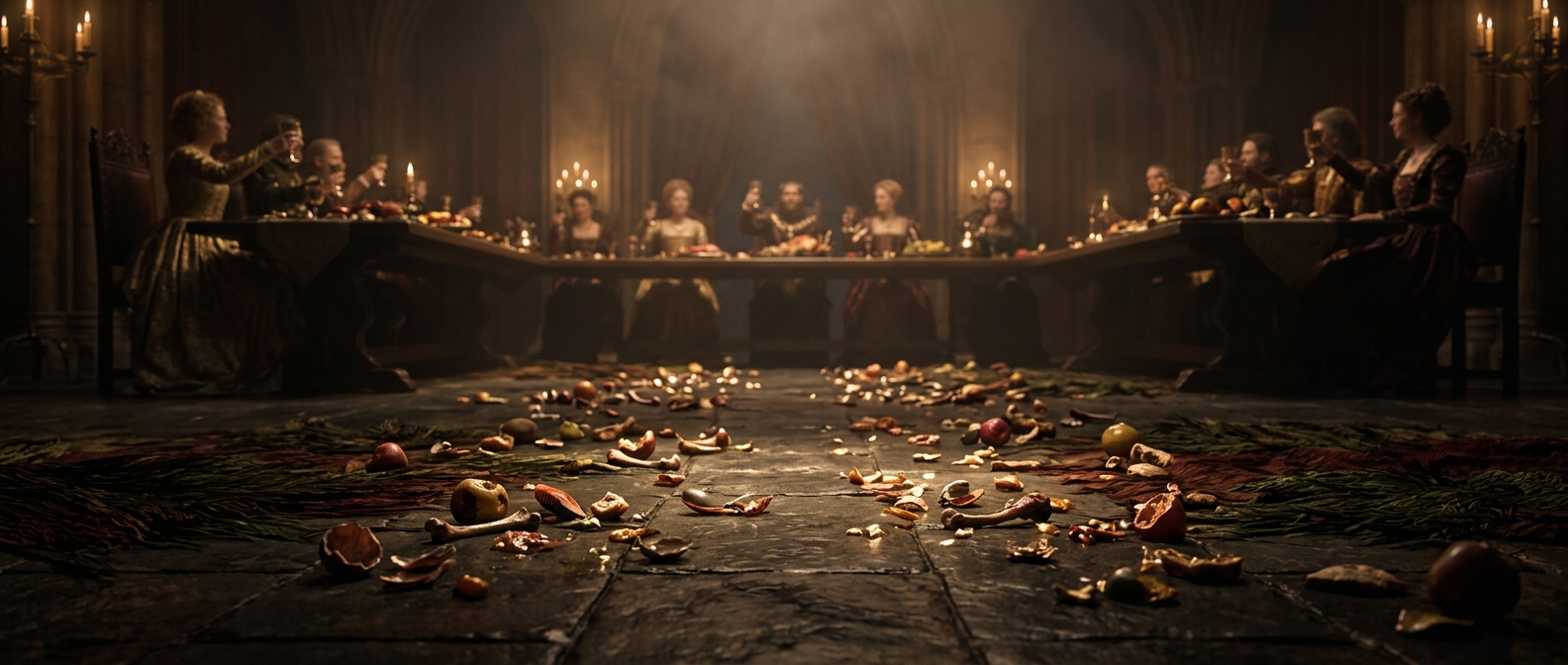
A meal designed to make room for the next course
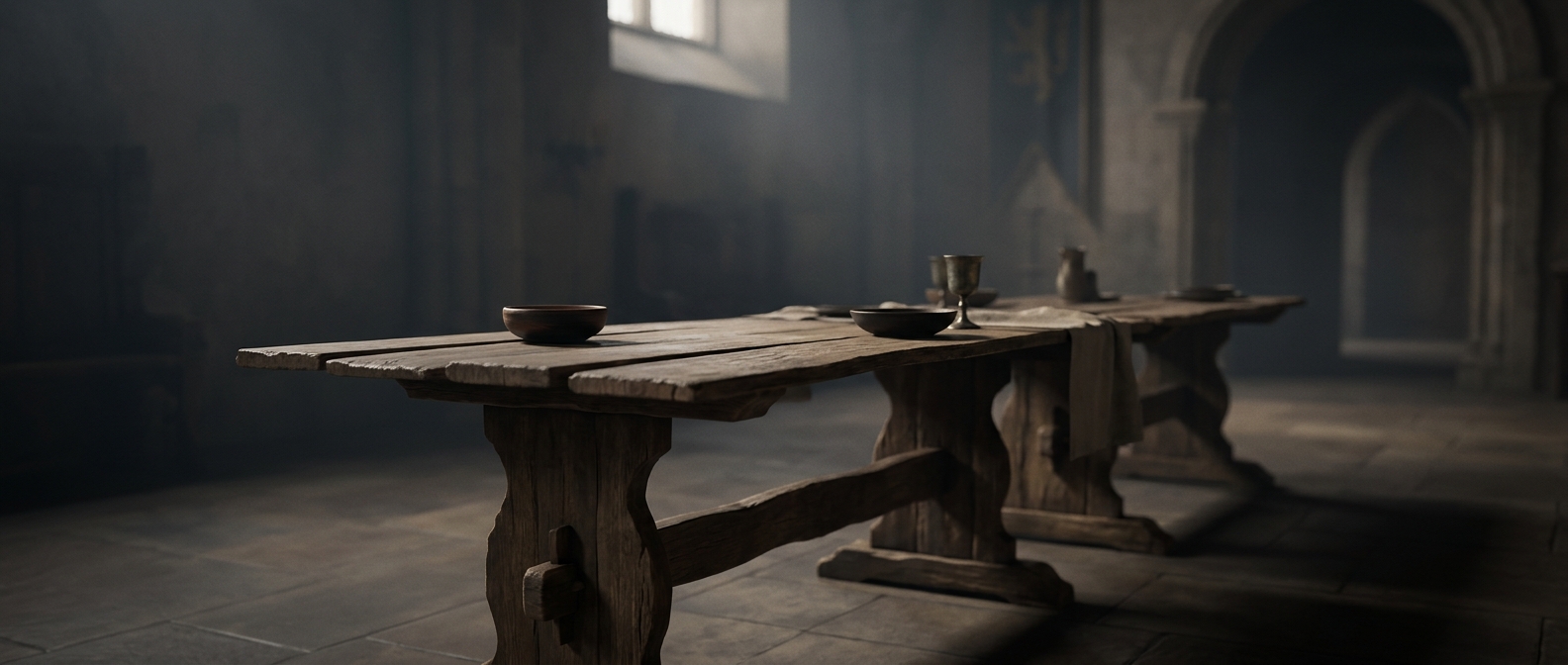
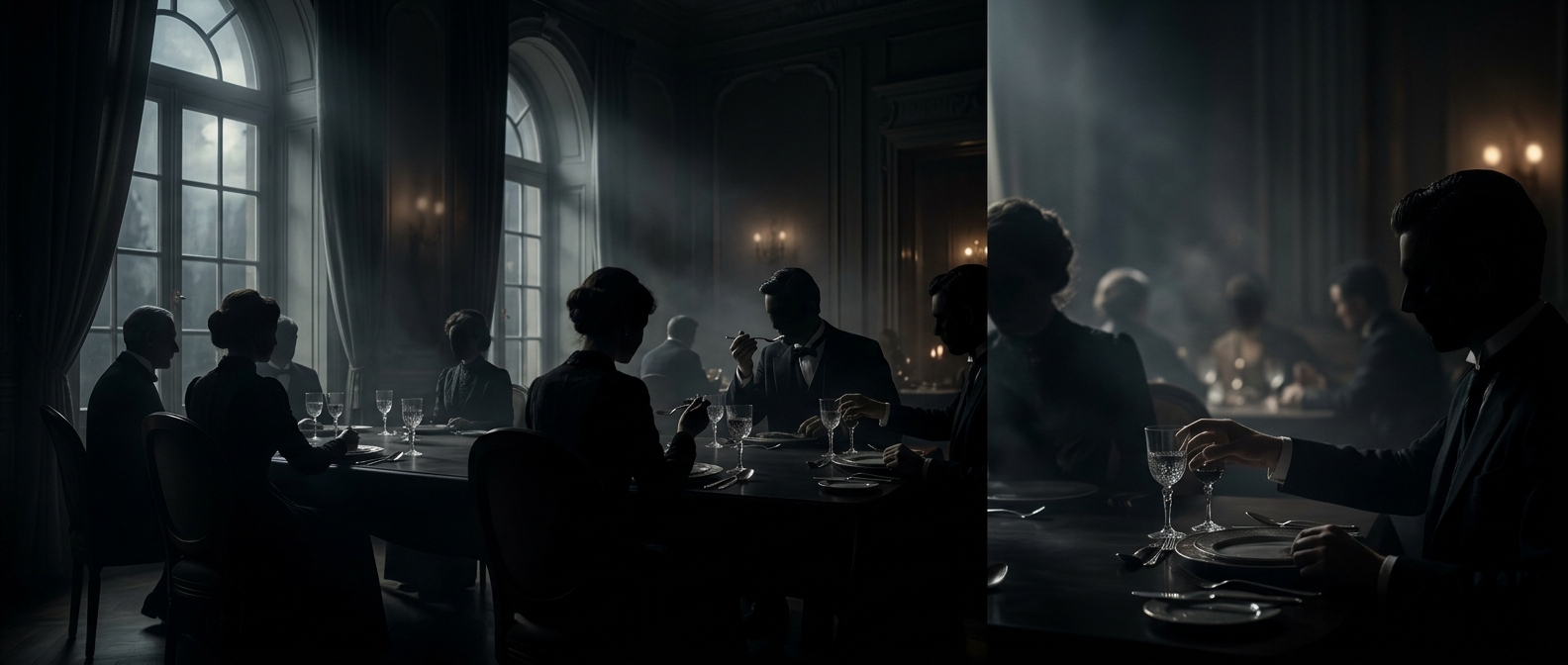
A banquet was not always served as one settled spread. Dishes arrived in successive courses, and each change required space for what came next. If diners left bones or other unwanted bits on the table, the surface could quickly become cluttered just when servants needed to clear it and set down fresh food.
Sending scraps to the floor shifted that mess away from the shared eating surface. What looks like careless littering by modern standards could therefore fit the practical rhythm of the meal: eat, discard, and make room for the next service. The floor functioned as a rough, temporary receptacle, not as a place where food was meant to be eaten.
Good manners depended on the room
Etiquette is not timeless; it reflects what a particular setting considers orderly. In a 17th-century banquet room, keeping the table usable for repeated rounds of dishes mattered more than keeping the floor spotless throughout the meal. The division of labor mattered too: guests ate, while household staff handled the work of clearing and resetting.
That arrangement makes the practice easier to understand without making it seem hygienic by modern standards. A dining room could look tidy at the table even as scraps accumulated below it. The striking reversal is that, in this setting, tossing food down could help preserve the place where the next course was about to appear.