A Meal Arranged Like a Mirror
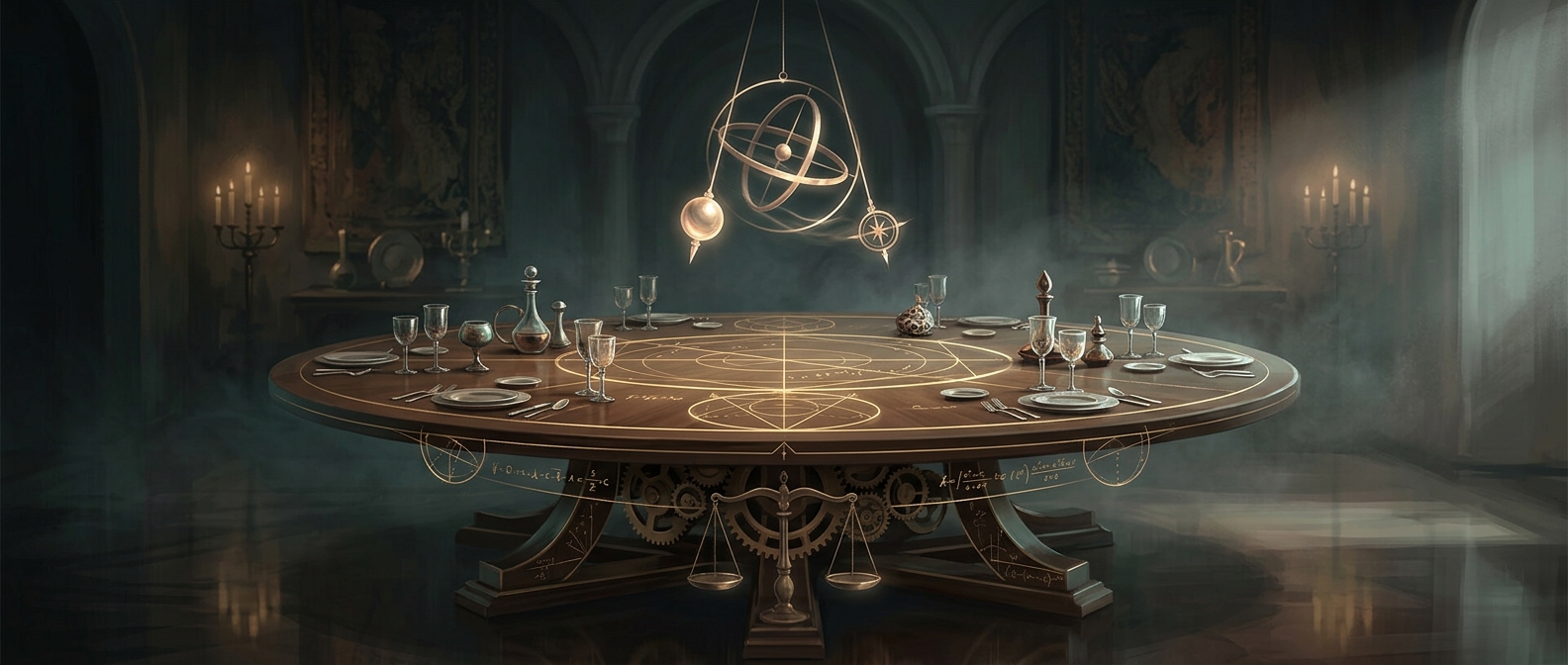
A formally balanced dining table was designed to read as a whole, not as a collection of separate place settings. If a serving bowl appeared on one side, its counterpart went opposite; dishes, utensils, and decorations followed the same logic. The result was visual symmetry: each half of the table seemed to answer the other.
That did not necessarily mean cooks weighed every dish or calculated the table’s load to mathematical precision. The balance was chiefly in the arrangement. Matching objects at matching distances made the setting look deliberate, while an unmatched platter could make the whole display seem lopsided—even if everyone had enough to eat.
Order Made Visible
This kind of symmetry turned dining into a display of control. A carefully composed table suggested that the host had planned the gathering down to its smallest visible details. It also gave guests a clear pattern to follow: place settings and shared dishes occupied predictable positions rather than appearing wherever there was room.
The ideal came with a practical cost. A host or household staff had to arrange matching pieces and keep them in place as dishes were brought out. The meal was therefore not only prepared in the kitchen; its appearance was managed in the dining room.
The striking implication is that a table could be judged before anyone tasted the food. Its success depended partly on whether the objects around the meal formed a coherent picture—a standard in which order itself was part of the hospitality.