Tea Was First Served in Bowls, Not Handled Cups
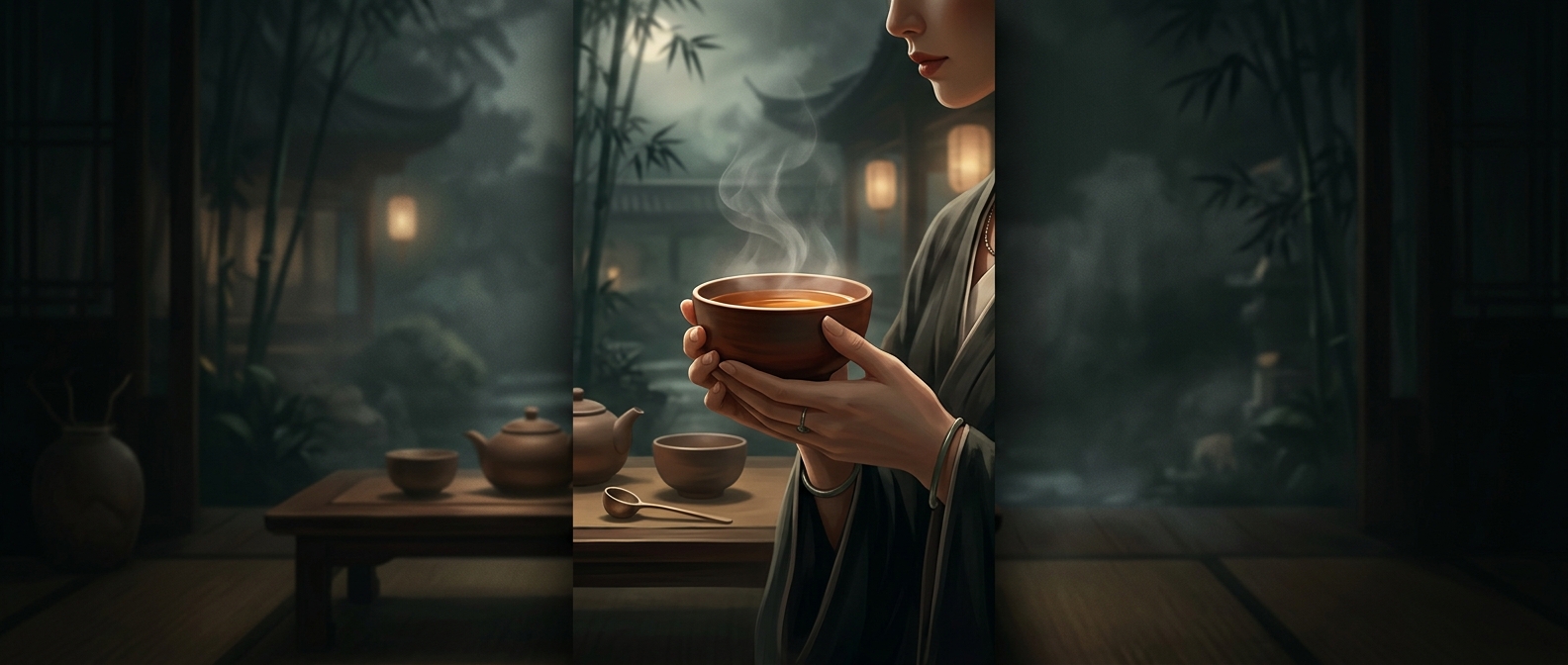
The handleless tea cup grew out of an older drinking vessel: the small bowl. In China, where tea drinking had a long-established tradition, tea was commonly served in compact porcelain bowls. When tea and Chinese porcelain became fashionable in Europe, imported cups carried that bowl-like form with them. The shape was familiar to its makers and users; it was not designed around the later European expectation that a cup should have a handle.
A Different Way to Hold the Heat
Without a handle, the drinker had to grip the vessel itself, often near its rim or lower sides. That meant feeling the porcelain’s warmth directly, and a freshly poured drink could make the grip uncomfortable. Small servings made the vessel easier to hold than a large mug, but they did not eliminate the problem: porcelain passes heat to the fingers, and users had to handle a hot cup with care.
A saucer helped by providing a place to set the cup between sips. It also made it possible to carry the cup and drink together without continuously gripping the hot vessel.
The Handle Was an Adaptation
As tea drinking spread in Europe, makers developed cups with handles, adapting the imported bowl-like form to local habits and preferences. A handle offered a cooler point to hold and made lifting a hot drink more comfortable. The change was practical, but it also marked a shift in what people expected a tea cup to be: not simply a small bowl for drinking, but a vessel designed to be picked up by its own attachment.
That is why early cups could look elegant yet feel awkward by modern standards: the handle had not yet become part of the definition of a cup.