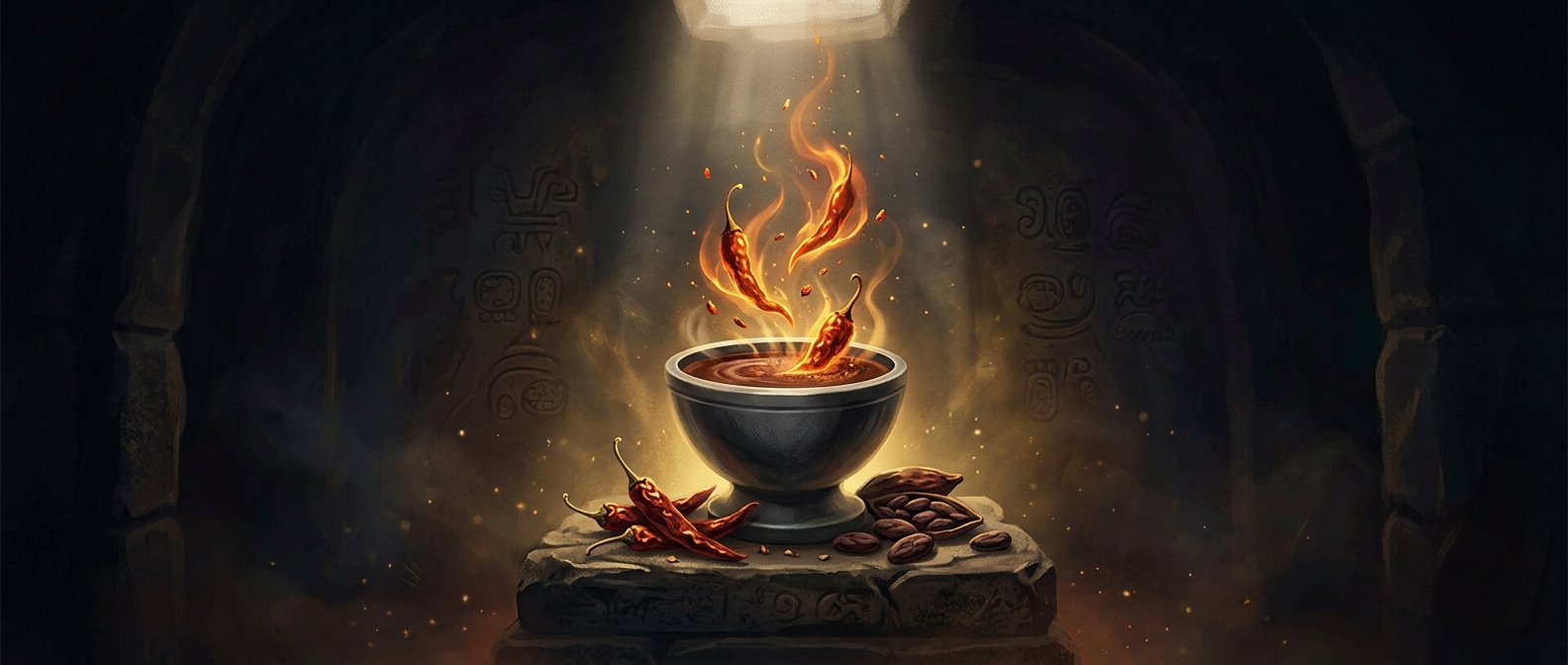
Cacao Before the Sugar
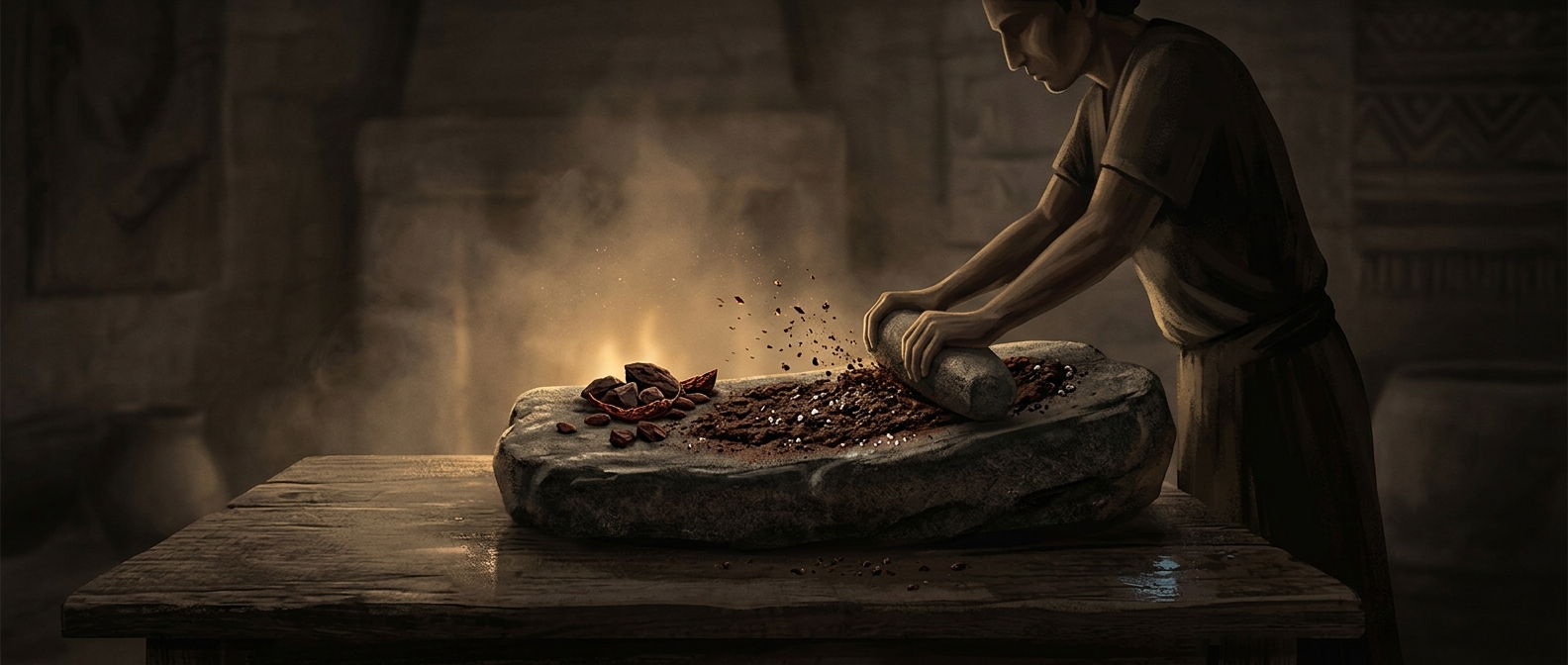
Long before chocolate became a sweet, milky comfort drink, people in Mesoamerica prepared cacao as a strongly flavored beverage. They roasted cacao seeds, ground them into a paste, and mixed the paste with water and other ingredients. Without sugar or milk to soften its taste, cacao was naturally bitter; chili added heat rather than sweetness.
Calling it “hot chocolate” can be misleading, too. Some versions were served cool or at room temperature. The defining feature was often the preparation: the drink was poured between vessels to build a layer of foam, prized for its texture and appearance.
A Drink With a Different Purpose
This was not simply a less-sweet version of today’s cocoa. Cacao drinks belonged to Mesoamerican foodways in which ingredients such as chili and maize could contribute flavor, thickness, or nourishment. Cacao also carried social and ceremonial importance, though recipes and customs varied across communities and periods.
The bitterness and spice made for a vivid, stimulating-tasting drink, not a dessert. Its froth, sharp flavor, and labor-intensive preparation set it apart from ordinary water or gruel. The contrast with modern hot chocolate is not just a matter of taste: it reflects a different idea of what a chocolate drink was for.
How Chocolate Became a Treat
When cacao preparations crossed the Atlantic, Europeans adapted them to their own preferences. Sweeteners and, eventually, milk helped turn cacao into the smoother, sweeter drink familiar today. That transformation did not erase the older tradition, but it changed chocolate’s everyday identity—from a bitter, spiced beverage to a treat associated with comfort and indulgence.
So the next time a mug of cocoa tastes like dessert, it is worth remembering that cacao’s earlier appeal could come from the opposite experience: a foamy, bitter drink with a chili bite.