A board shaped to hold a meal
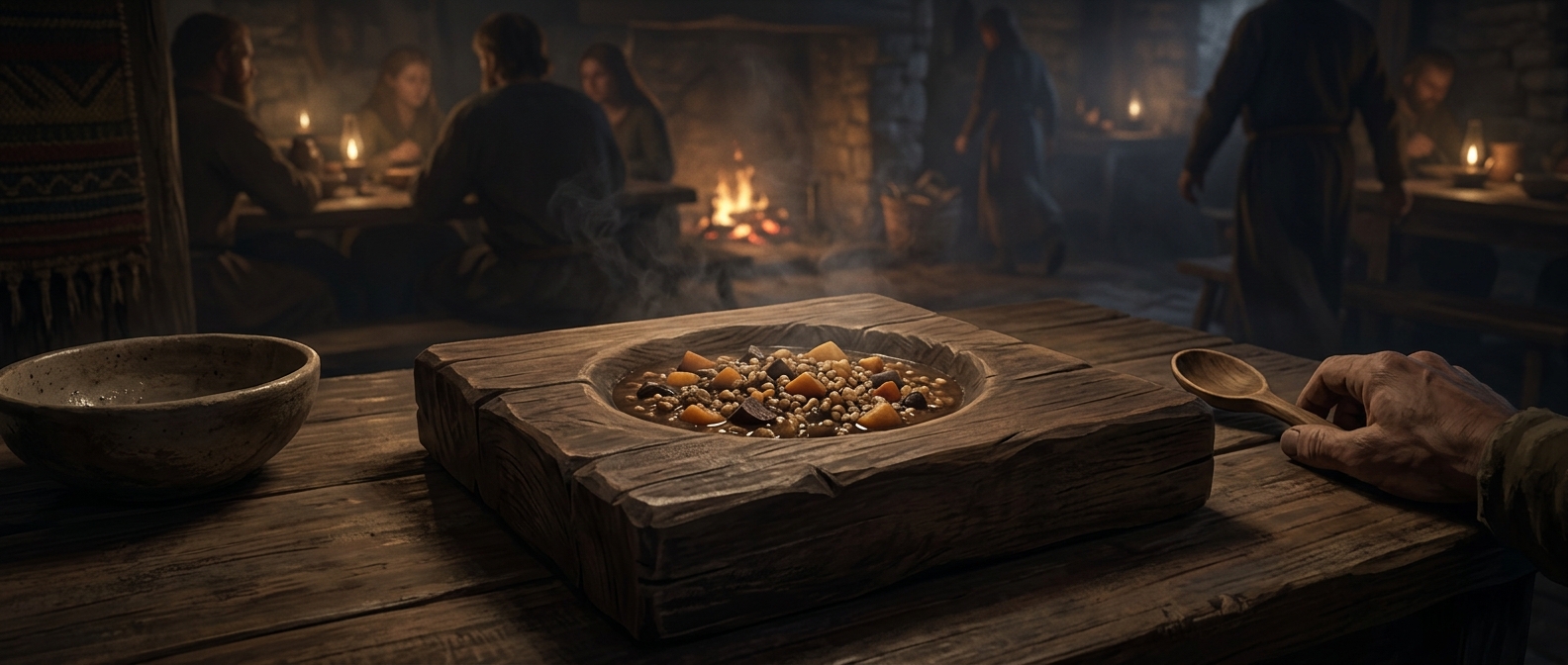
A flat piece of wood could serve as a plate, but a shallow hollow made it much more useful. Gruel—a soft, often thin food made by cooking grain in liquid—could spread across a bare board or spill over its edge. The carved dip gave it a place to pool, turning a simple slab into something between a plate and a bowl.
That shape reflects a practical compromise: people did not need fine ceramic tableware to contain food. A wooden board could provide a firm surface for eating while its depression held foods that would otherwise run away. The hollow did not need to be deep; it only had to keep the meal gathered in front of the diner.
Tableware followed the food
The object’s form also shows how closely eating tools were tied to what was served. A board was adequate for solid food, while a hollow made it workable for gruel. Instead of requiring a separate bowl, one piece of wood could do both jobs.
It was a modest piece of equipment, but the carved dip solved a real problem at the table: how to keep a runny meal on a surface that was not a bowl.