A table could be a setup, not a piece of furniture
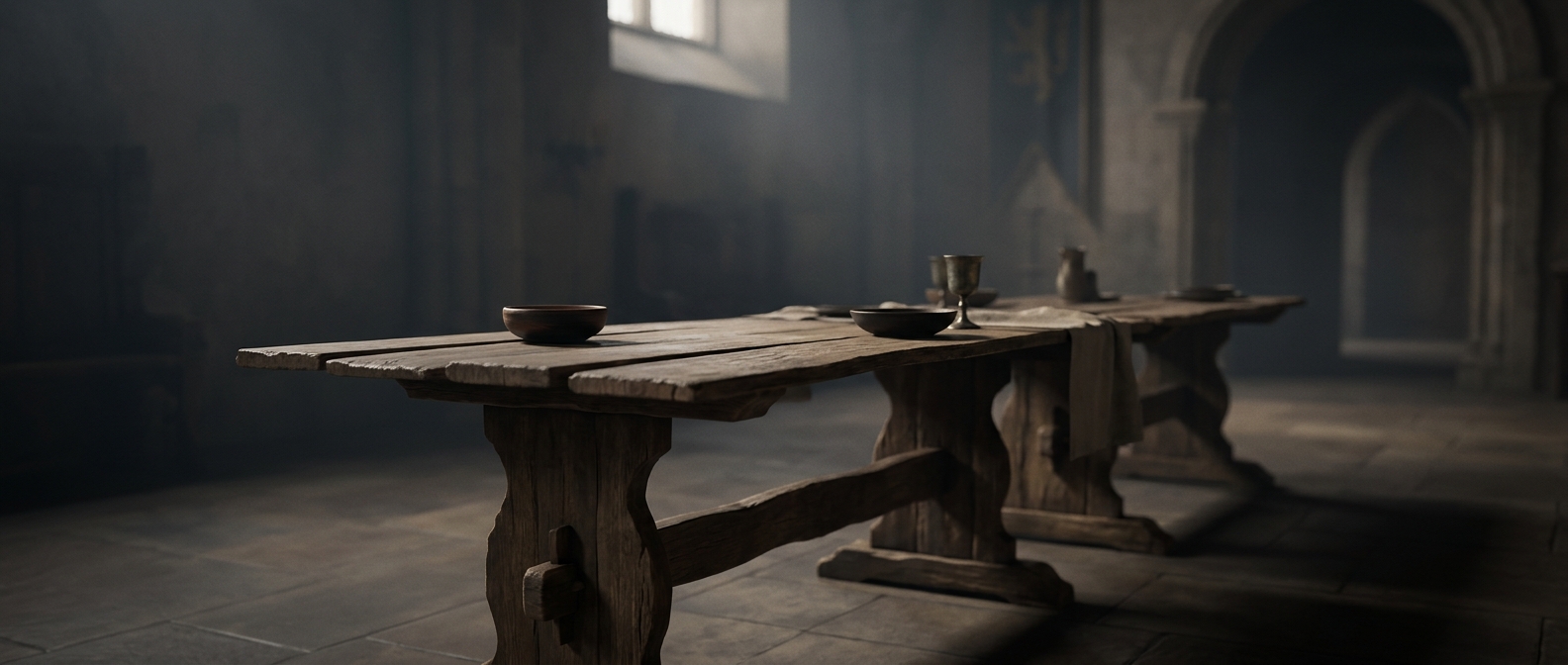
In many medieval halls, a dining table was assembled when needed: long boards rested on movable trestles, or supports. After the meal, the boards and trestles could be cleared away, leaving the room open for other uses. The word table could refer to this working arrangement—the surface set up for eating—rather than to a permanently joined piece of furniture.
That design suited large households and communal halls. A fixed table would occupy valuable floor space even when nobody was dining; boards and supports could be brought out for a meal and stored afterward. The familiar modern table, with its own legs and a stable place in the room, was only one way to make a dining surface.
When “turning the tables” meant a reversal
The expression turn the tables now means to reverse who has the advantage. Its image fits a world in which a table was something that could be rearranged, but the phrase’s history is more specific than simply flipping a dining table. It is generally associated with the language of games, where changing the position of the playing surface or its occupants could suggest a reversal of fortune.
The old furniture helps make the metaphor vivid: a table was not necessarily an immovable object. It could be assembled, cleared, and repositioned. What sounds like a modern figure of speech therefore carries an echo of a more practical kind of table—one made for the occasion, then taken apart when the occasion was over.