How a USB port becomes the attack path
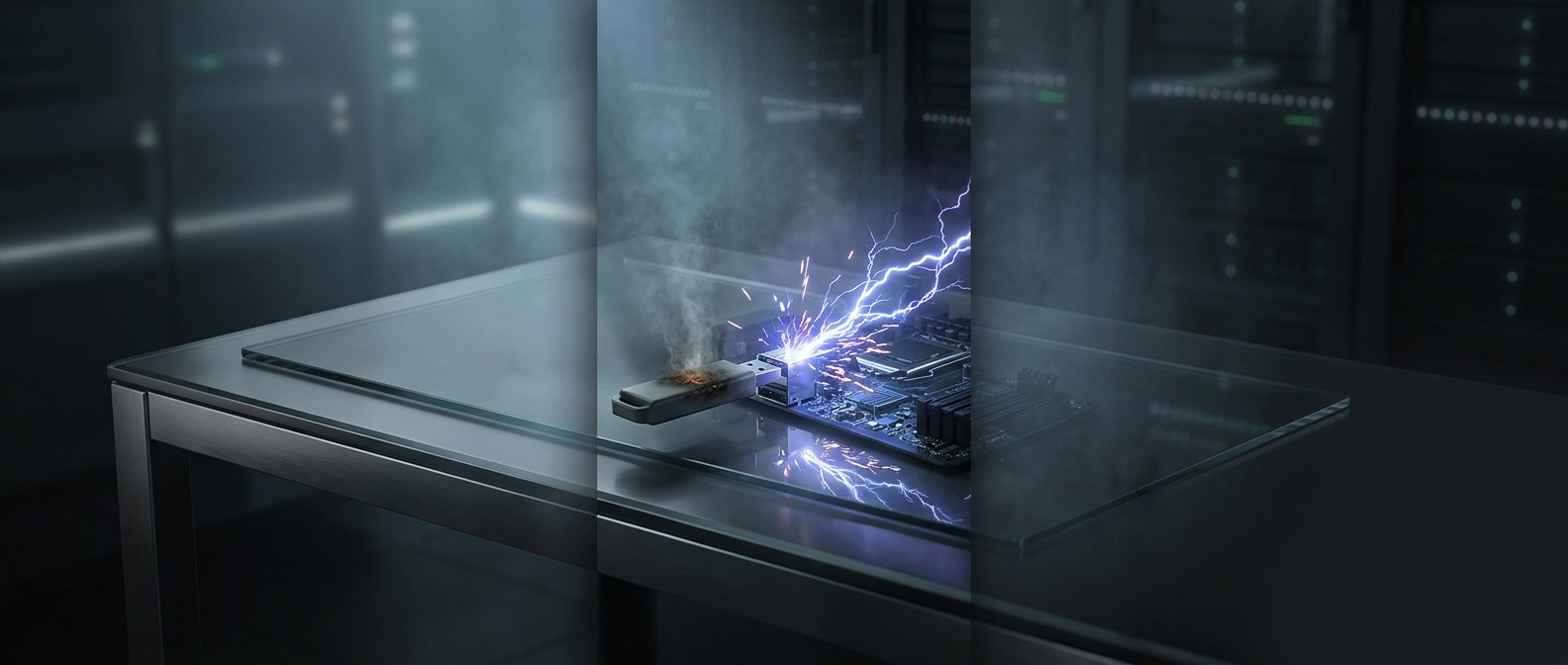
A USB port is designed to exchange power and data at low voltages. A USB Killer exploits the fact that the same connector exposes both: its circuitry draws power from the host, stores electrical energy in capacitors, and then releases it as high-voltage pulses onto the data contacts.
A capacitor is a component that holds an electrical charge. The device charges it from the port, then switches the stored energy into wires meant for delicate communications. Repeating that cycle can subject the computer’s USB circuitry to a series of electrical stresses rather than one ordinary connection event.
Why the damage varies
The pulses can overwhelm or destroy components that handle USB signals, such as the port’s protection circuitry or the controller connected to it. Depending on how the computer is built and where the energy travels, damage may be limited to a port or extend to other parts of the system. The result is not guaranteed: protection design, circuit layout, and the particular device all matter.
That uncertainty is part of the threat. A USB Killer can look like an ordinary flash drive, but it is not trying to store or transfer files. Plugging it in gives its circuitry access to the computer’s power and signal paths. A familiar connector therefore offers no assurance that a device attached to it is safe.