A poem held in memory
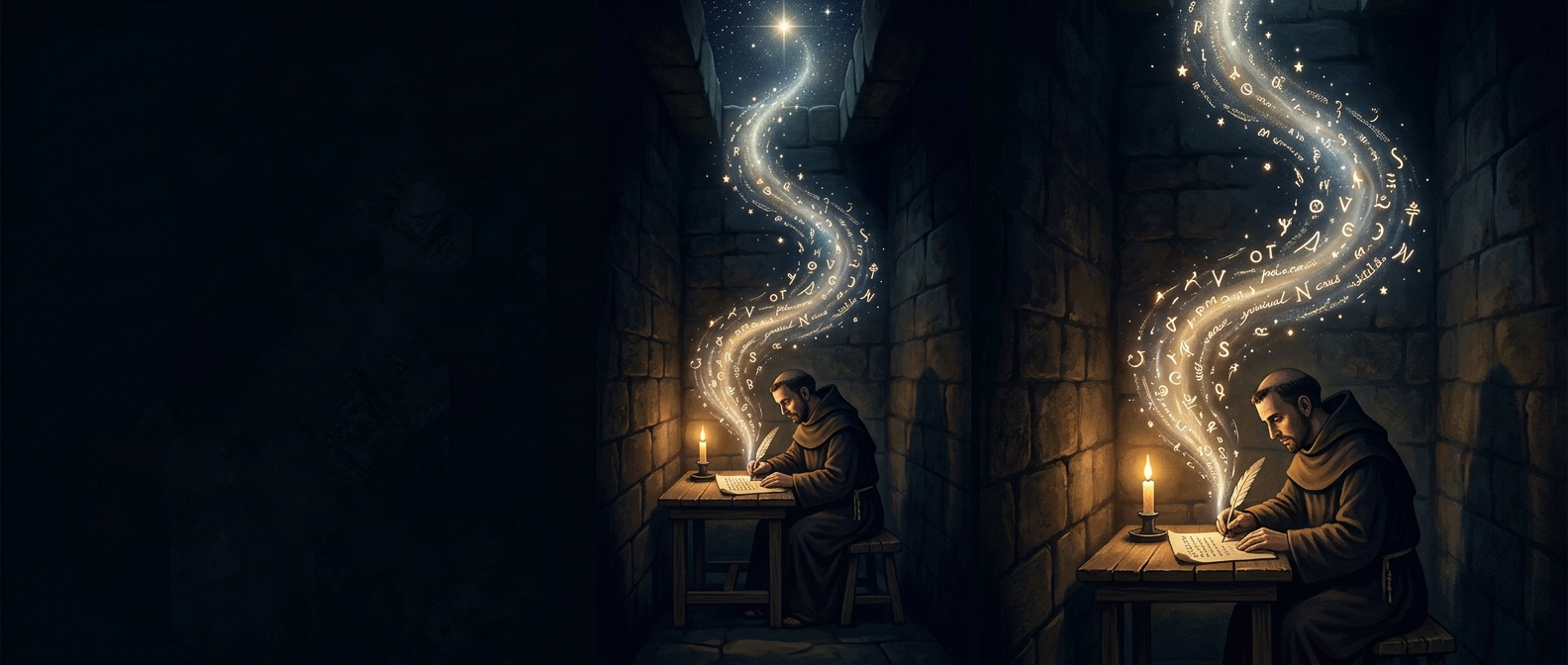
Saint John of the Cross’s imprisonment was not a chosen retreat. In 1577, monks opposed to the Carmelite reforms he supported seized him and confined him in a cramped cell in Toledo. He had little light, no ordinary freedom to write, and endured physical punishment. Yet some of his most celebrated poetry took shape there.
Without paper, John composed verses in his mind and memorized them. That changed the practical nature of his work: a poem had to be carried, line by line, inside the very person who was being kept captive. After his escape, he was able to write down and develop poetry associated with the confinement.
The darkness in the poetry
John’s poems use images of night, longing, and a journey toward a beloved. In his mystical writing, these are not simply descriptions of his cell. They express the soul’s difficult passage toward union with God—a process that, in his account, can involve losing the comfort of familiar thoughts and feelings. The prison gave that language a stark physical setting, but the poems reach beyond a record of imprisonment.
That distinction helps explain their force. A locked room could make darkness literal; John’s poetry made it a way to speak about spiritual uncertainty and desire. The poems survived first as memorized words, before they could become written texts.»