How a flower’s defense reaches the table
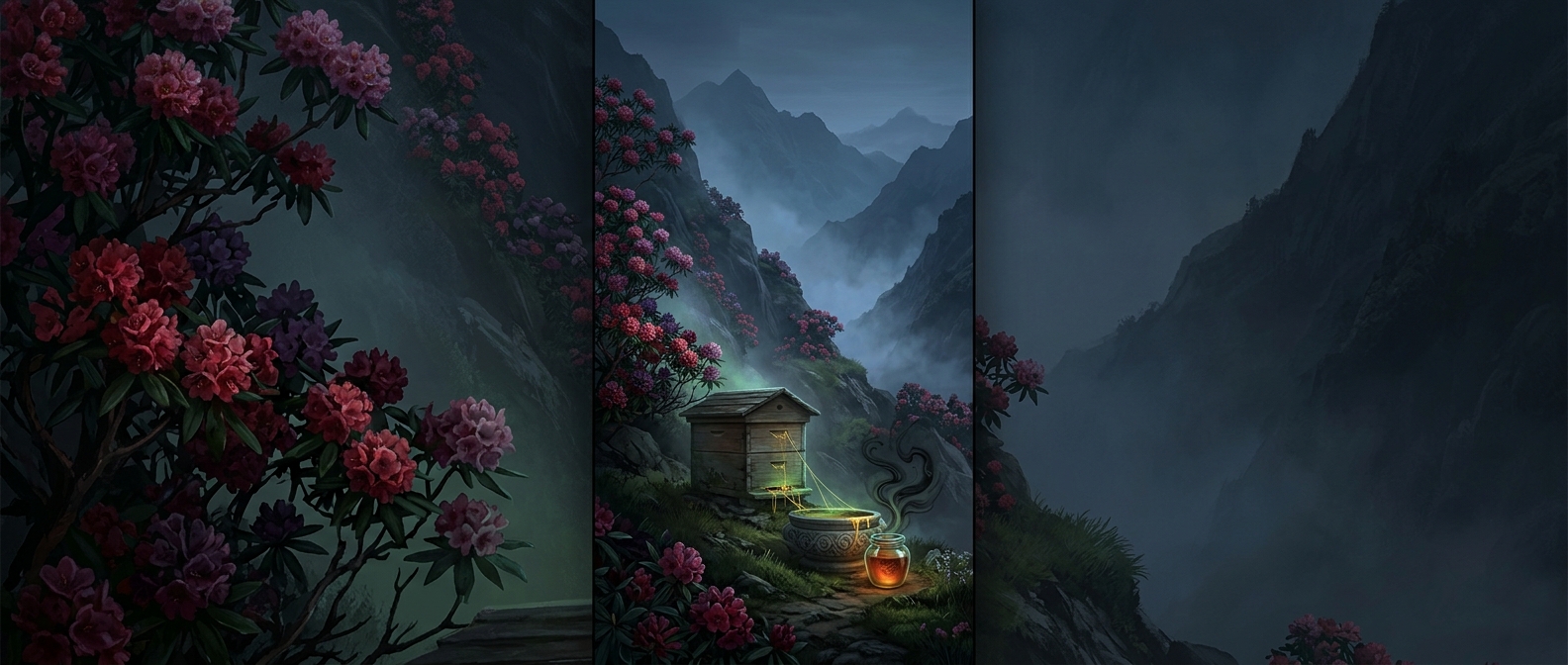
Rhododendrons make grayanotoxins, chemicals that can protect the plant from being eaten. When bees collect nectar from toxin-producing rhododendron flowers, some of those compounds can pass into the honey. The bees turn nectar into honey, but that process does not reliably remove the toxins.
The result is sometimes called “mad honey.” Its danger is not that it contains a mind-altering ingredient designed to cause visions; the same toxin affects nerves and the heart, and the effects can vary with how much contaminated honey a person eats.
Why the effects can feel so strange
Grayanotoxins interfere with voltage-gated sodium channels—tiny gates that help nerve and muscle cells send electrical signals. They can keep these channels active longer than normal, disrupting the signals that regulate bodily functions. That can bring dizziness, nausea and vomiting, as well as changes in heart rate and blood pressure. In some cases, the resulting confusion or altered perception may be described as hallucinations.
That chain explains why the honey’s effects are unpredictable: toxin levels can differ, and people do not all respond alike. A jar’s floral origin is therefore more than a flavor note—when the nectar comes from the wrong rhododendron, the flower’s chemical defense can travel all the way from the hillside to a person’s nervous system.