How a leaf becomes a delivery system
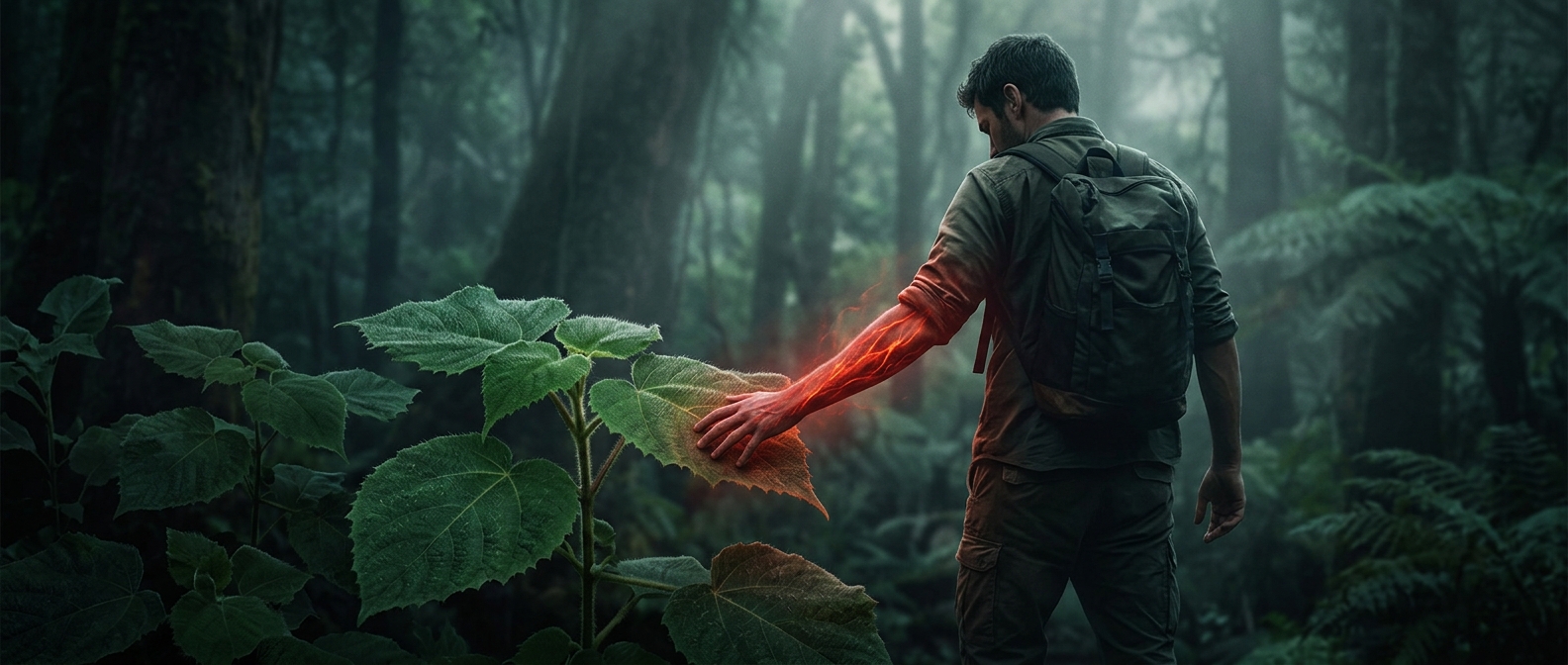
The Gympie plant’s danger is easy to miss: its leaves and stems are covered in fine, brittle hairs. When skin brushes against them, the hairs can break and pierce the surface, acting like tiny needles that deliver irritating toxins. The sting is therefore not just a surface reaction to touching a leaf; it involves material lodged in the skin.
Why the pain can outlast the contact
The toxins affect the nerves that register pain. Even after the plant is no longer in contact with the skin, those nerves can remain unusually reactive, producing pain that persists or flares in response to cool air. In effect, a brief encounter can leave the body’s alarm system firing long after the original touch.
That helps explain why an encounter can be so distressing: the trigger may be gone, but ordinary sensations can still provoke intense pain. Reports of people wanting an affected limb amputated convey the severity of that experience, not a treatment for the sting.
A rainforest hazard to avoid touching
The practical lesson for anyone walking in the plant’s Australian habitat is simple: do not handle unfamiliar foliage, even if a leaf looks soft or harmless. The hairs are small enough that a casual brush can be consequential, and the pain may make the encounter memorable for far longer than the walk itself.