Why the resin looks like blood
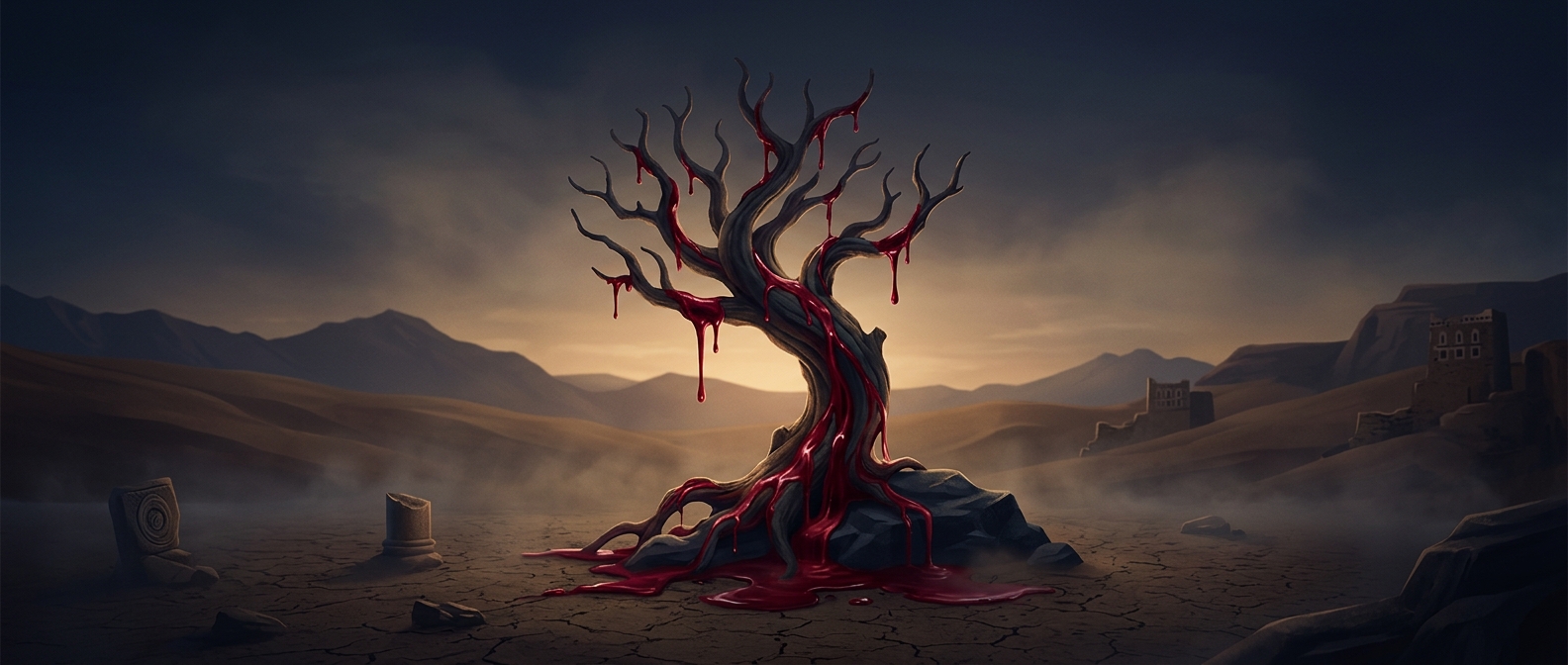
A wound in a Socotra dragon’s blood tree releases resin: a sticky plant substance that helps seal damaged tissue and can discourage insects and microbes. Its deep red color comes from natural pigments in the resin, not from anything like animal blood. As the resin dries, it hardens into a dark, brittle material.
The tree’s scientific name is Dracaena cinnabari. It grows naturally on Socotra, a Yemeni island in the Arabian Sea, where its widely spreading crown gives the tree its distinctive umbrella shape. That canopy is part of the island’s landscape, not just a striking silhouette: its shade can shelter young plants and reduce their exposure to heat and drying winds.
A useful substance—and a vulnerable tree
People have collected the resin for centuries, using it in products such as dyes, incense, and varnishes. But resin is not an endlessly replenished crop: taking it requires wounding the tree, and slow-growing trees may be especially vulnerable when they are also struggling to produce young growth.
On Socotra, grazing animals can eat seedlings before they grow large enough to survive, while changing environmental conditions add pressure to the forests. The red resin is therefore more than a dramatic sight at a cut: it is a reminder that the tree’s survival depends on the next generation taking root beneath its canopy.