Why baobabs seem to stand on their roots
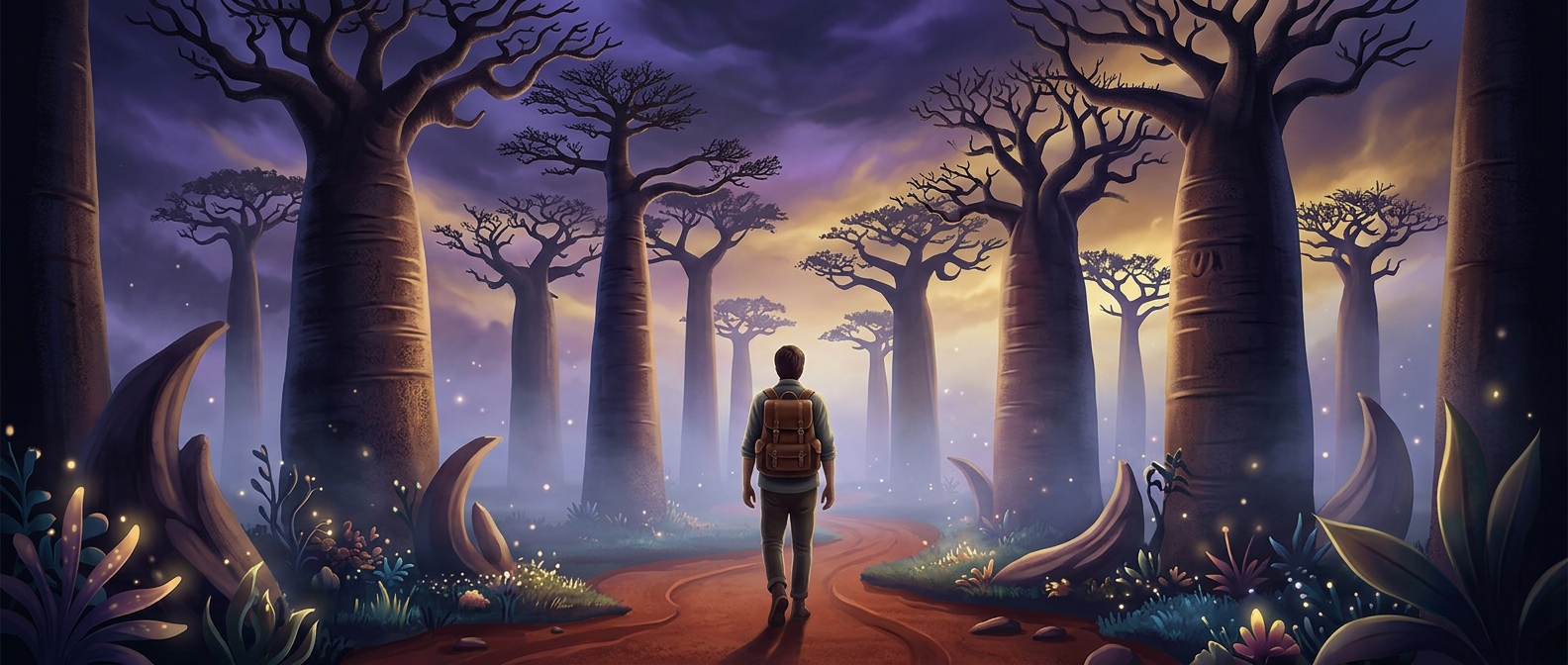
Along Madagascar’s Avenue of the Baobabs, the trees’ shape can make the landscape look almost surreal: thick, straight trunks rise above the road, while a relatively small cluster of branches spreads near the top. The contrast is strongest when the trees are bare or have few leaves. Their branches can look like roots lifted into the sky, giving rise to the familiar “upside-down” impression.
A shape built for dry seasons
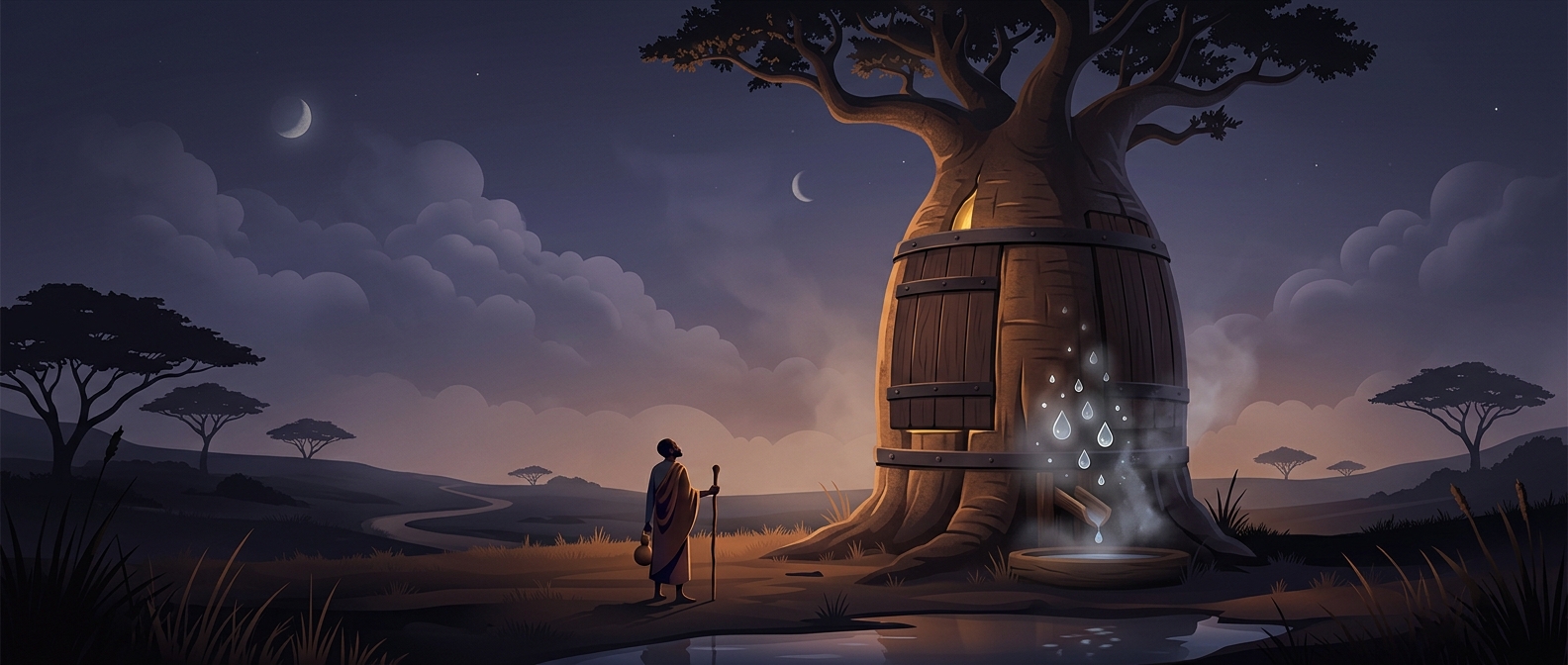
The silhouette is not just a visual oddity. Baobabs are adapted to places where rain can be scarce or seasonal. Their broad trunks store water, helping the trees endure dry periods, while their leaves may drop during the dry season. With the leafy crown temporarily reduced, the bare branches stand out sharply against the sky and make the trunk seem even more dominant.
The Avenue’s trees belong to Madagascar’s distinctive baobab flora. The island’s long isolation allowed many native plants and animals to evolve there, and its baobabs are part of that unusual botanical heritage. The trees lining the route are not a formal avenue planted in a uniform row; they are remnants of a wider landscape where baobabs once grew among other vegetation.
A landmark shaped by what remains
As surrounding land was cleared for farms and settlements, the baobabs became more exposed and visually prominent. Today, their towering forms define the roadside view. The “upside-down” look is therefore both a feature of the tree itself and a product of the open landscape around it: a water-storing trunk, a sparse crown, and a stretch of land where the trees stand unmistakably apart.