How an ancient lake became a white horizon
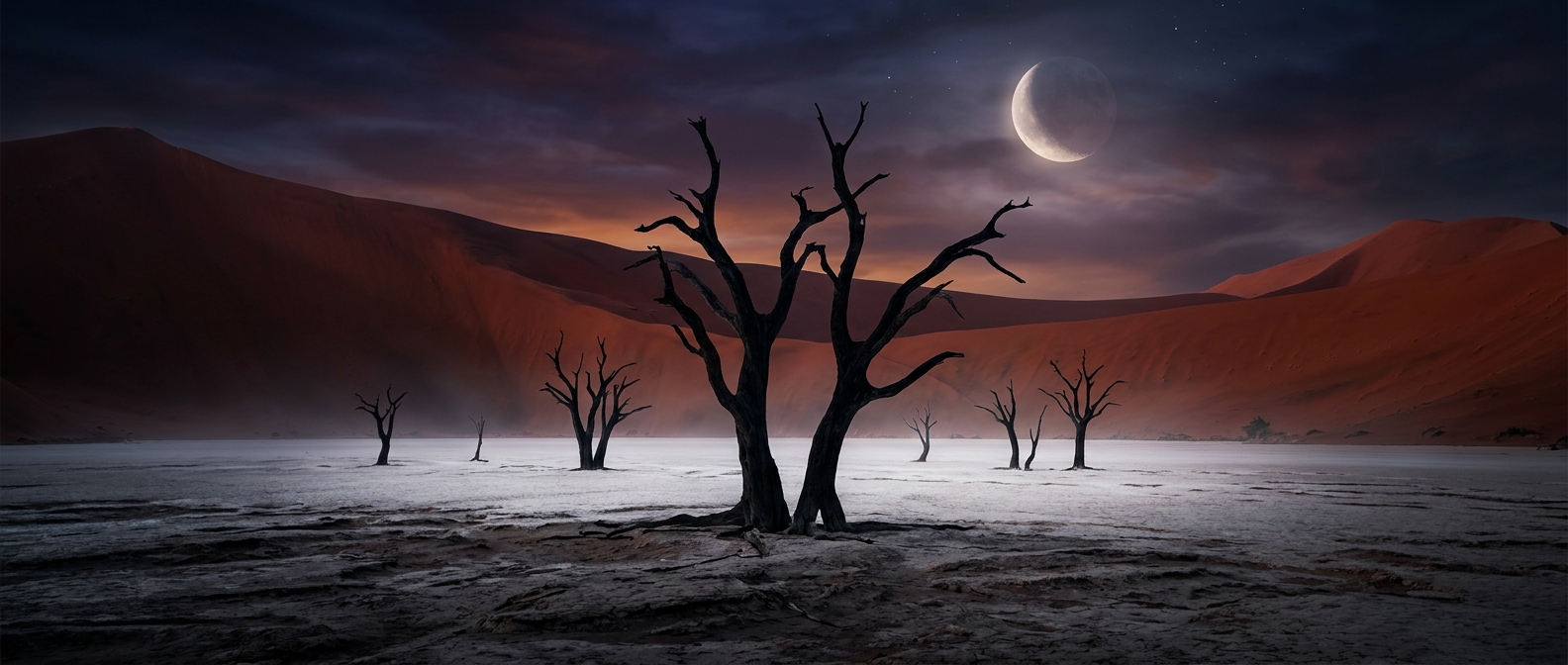
The Makgadikgadi is not simply a desert covered in salt. It is a vast network of pans in northeastern Botswana, remnants of a much larger ancient lake. As the lake shrank and its rivers stopped replenishing it, water evaporated from the low basin. Minerals were left behind, while wind and occasional water spread fine sediment across the surface.
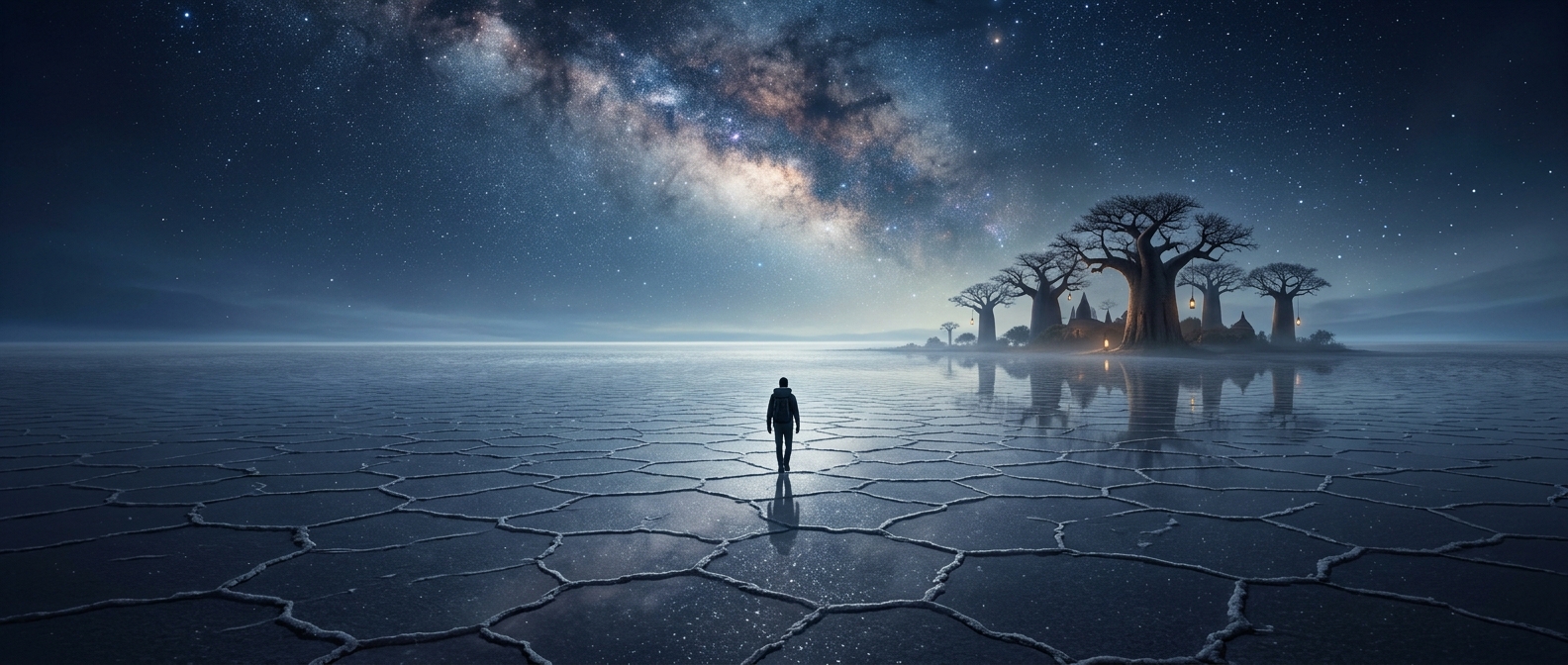
That history helps explain the pan’s remarkable openness. Over long periods, water and wind have smoothed the basin, leaving few ridges to interrupt the view. The horizon can seem to sit at ground level, and familiar landmarks—trees, hills, even small changes in elevation—may be absent for long stretches.
A flat landscape that changes with the rain
The crust is not an unchanging sheet of solid salt. Rain can soften or flood parts of the pans, and the wider landscape includes grasslands as well as dry, bright surfaces. In the wet season, shallow water can briefly transform the basin; as it disappears, the open, pale ground returns.
For visitors, the scale is both the spectacle and the practical challenge. With little shade and few visual reference points, distance is difficult to judge, and a route that looks simple on a map can feel exposed on the ground. The pan’s emptiness is not a lack of history: it is the visible residue of a lake, shaped by evaporation and weather into one of Botswana’s most expansive landscapes.