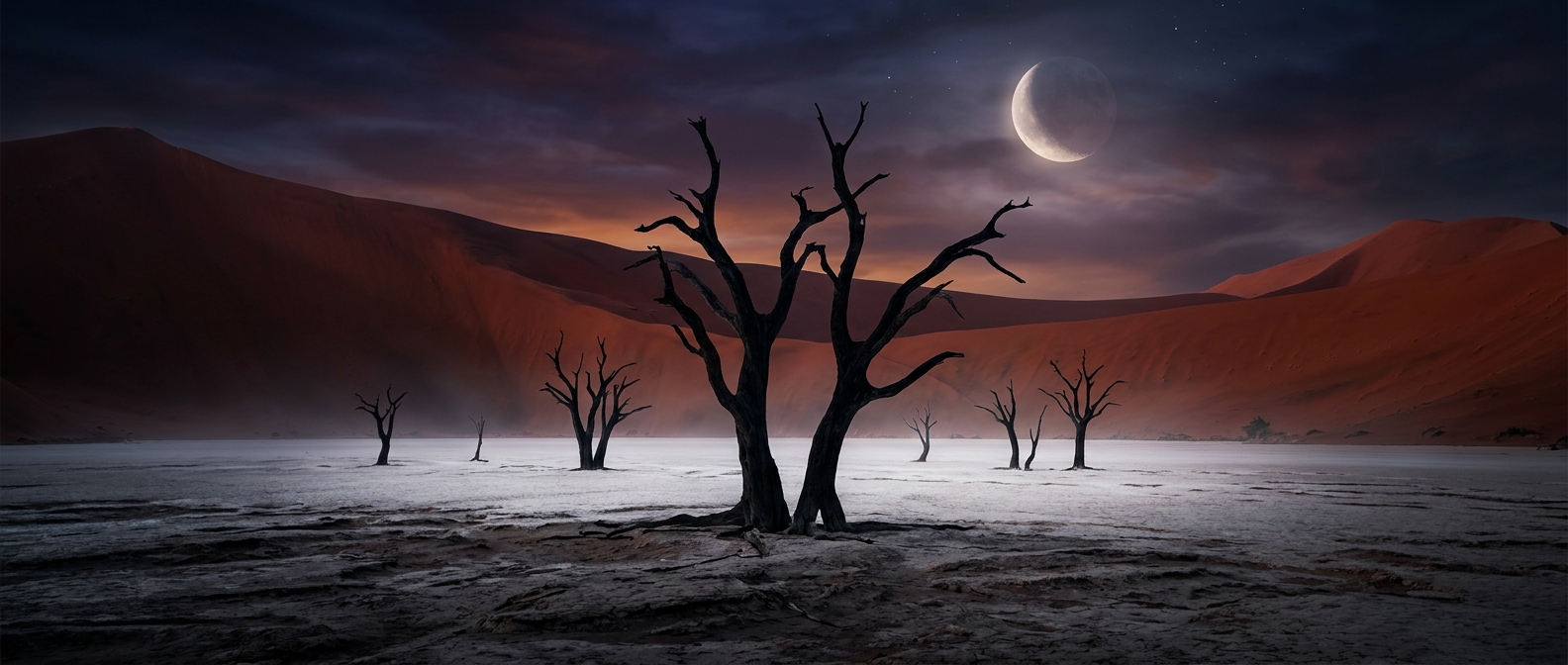
How Deadvlei Became a Dry Basin
Deadvlei lies among the dunes of Namibia’s Namib-Naukluft region. It was once a shallow clay pan where water from the Tsauchab River could collect. During wetter periods, the river reached the basin and sustained camel thorn trees. Then advancing dunes altered the route of the water, cutting the trees off from their supply. The pan dried, leaving the trunks behind.
Why the Trunks Still Stand
In a damp climate, fallen trees are gradually broken down by fungi and other organisms. Deadvlei is so dry that this decay happens extremely slowly. The dead trunks have remained upright for centuries, while years of intense sunlight darkened their wood. Their black appearance comes from weathering, not from a fire.
The bright ground is a pale clay surface, and the surrounding dunes owe their orange color to iron-bearing minerals that have oxidized over time. That contrast—dark trunks, nearly white pan, orange sand—is what makes the landscape seem almost deliberately arranged.
A Scene Made by Change
The trees are not growing in a forest frozen in time; they mark the place where water once reached. Dunes continue to shift around the basin, but the dry conditions preserve the evidence of the older landscape. A single view holds two very different timescales: the river’s vanished route and the slow survival of wood after the water was gone.