Why Some Monks Chose to “Graze”
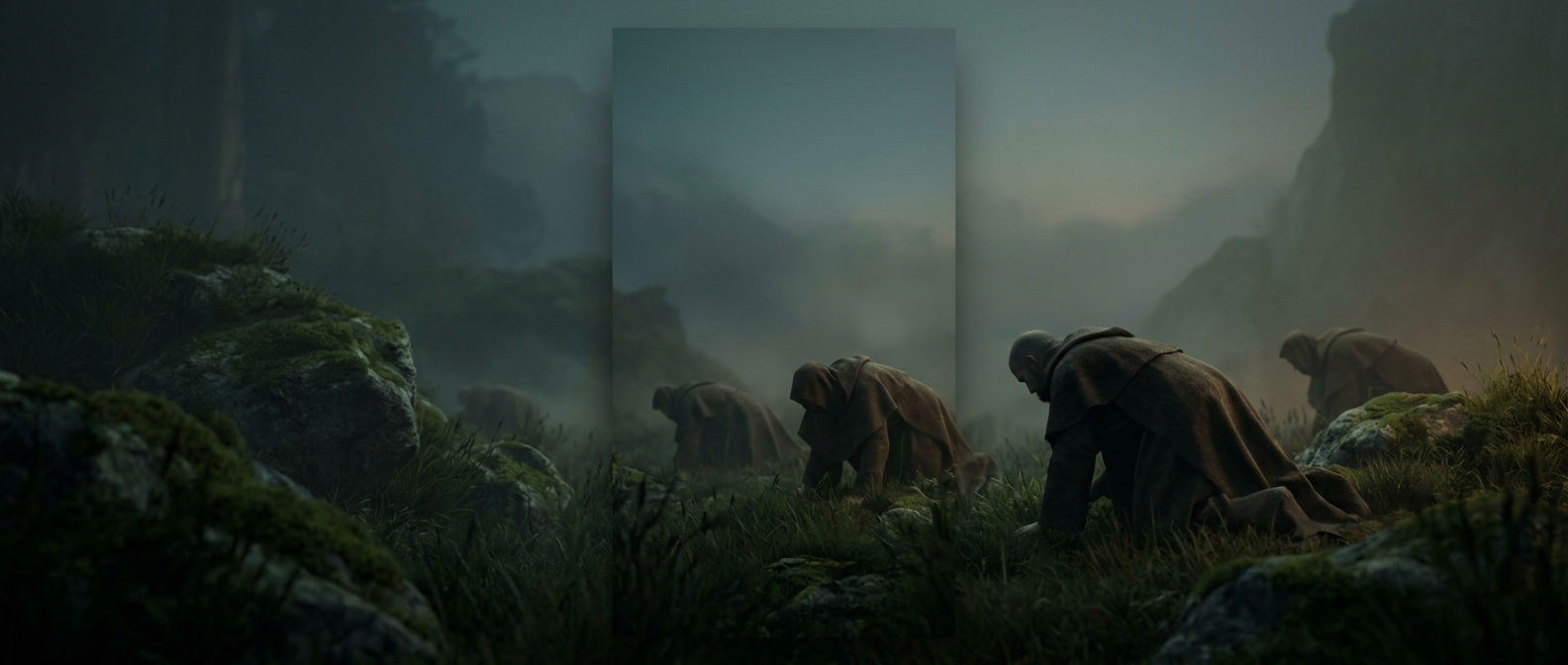
The Boskoi—whose name means “grazers”—were Christian ascetics remembered for eating wild plants without cooking them. Accounts describe them taking grasses and other edible growth straight from the landscape, rather than preparing meals or cultivating fields. The image is deliberately stark: these monks sought to live with as little human comfort and control as possible.
Renouncing the Tools of Ordinary Life
Cooking and farming do more than make food easier to eat. They require fire, equipment, stored supplies, and a settled routine. Giving them up meant refusing many of the habits that tied people to households and villages. For an ascetic, that hardship could serve as a discipline: less effort spent arranging comfort, more attention given to prayer and spiritual endurance.
The practice also made dependence on the wilderness visible. Instead of planting a crop and deciding when to harvest it, a grazer accepted what could be found growing nearby. That did not mean every monk ate the same plants or followed an identical routine; surviving descriptions are broad, and accounts of ascetics can emphasize extreme behavior to convey holiness.
A Life Made Intentionally Unsettled
The Boskoi’s unusual diet was part of a wider rejection of ordinary settled life, not simply a food preference. Their example pushed renunciation to an almost animal simplicity: no cooked meal, no cultivated plot, and no clear boundary between the monk’s life and the wild terrain around him. That vivid image is why the “grazing” monks remain memorable.