One Beat Gives the Group a Common Clock
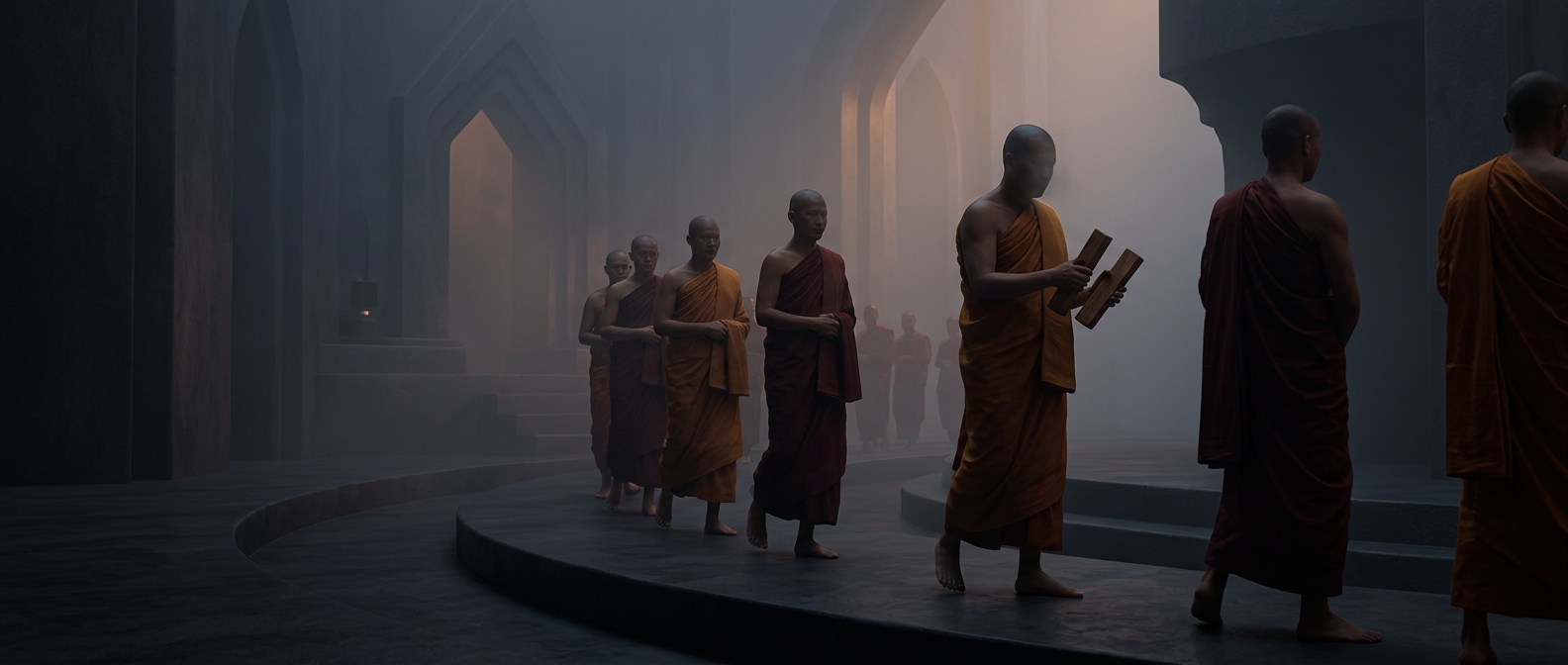
When several people walk slowly side by side, each person’s natural stride can drift a little. One monk may shorten a step; another may pause fractionally longer. Those tiny differences accumulate until the line looks uneven. A steady wooden beat gives everyone the same outside timing cue, so each walker can adjust a step to the same pulse rather than relying only on personal feel.
The block’s sharp attack—the brief, clear instant when it is struck—helps make the beat easy to notice. Its resonant tone then lingers long enough to be heard across the group. Walkers do not need to match every footfall to a separate strike; they can settle into a shared pace and keep returning to it as they move.
How Rhythm Shapes the March
The sound also changes what the walk demands. Instead of deciding independently how quickly to move, each person listens and responds. That reduces small timing differences and gives the group a single, audible reference point. The timekeeper’s role is therefore practical as well as ceremonial: one person maintains the pulse while the others organize their movement around it.
In a religious setting, a measured march can make attention itself part of the practice. The beat is not evidence of a supernatural effect; it is a simple human tool for coordinating bodies and directing focus. The striking detail is that a small wooden block can make a group’s pace feel shared: each step belongs not just to the walker, but to a rhythm everyone can hear.