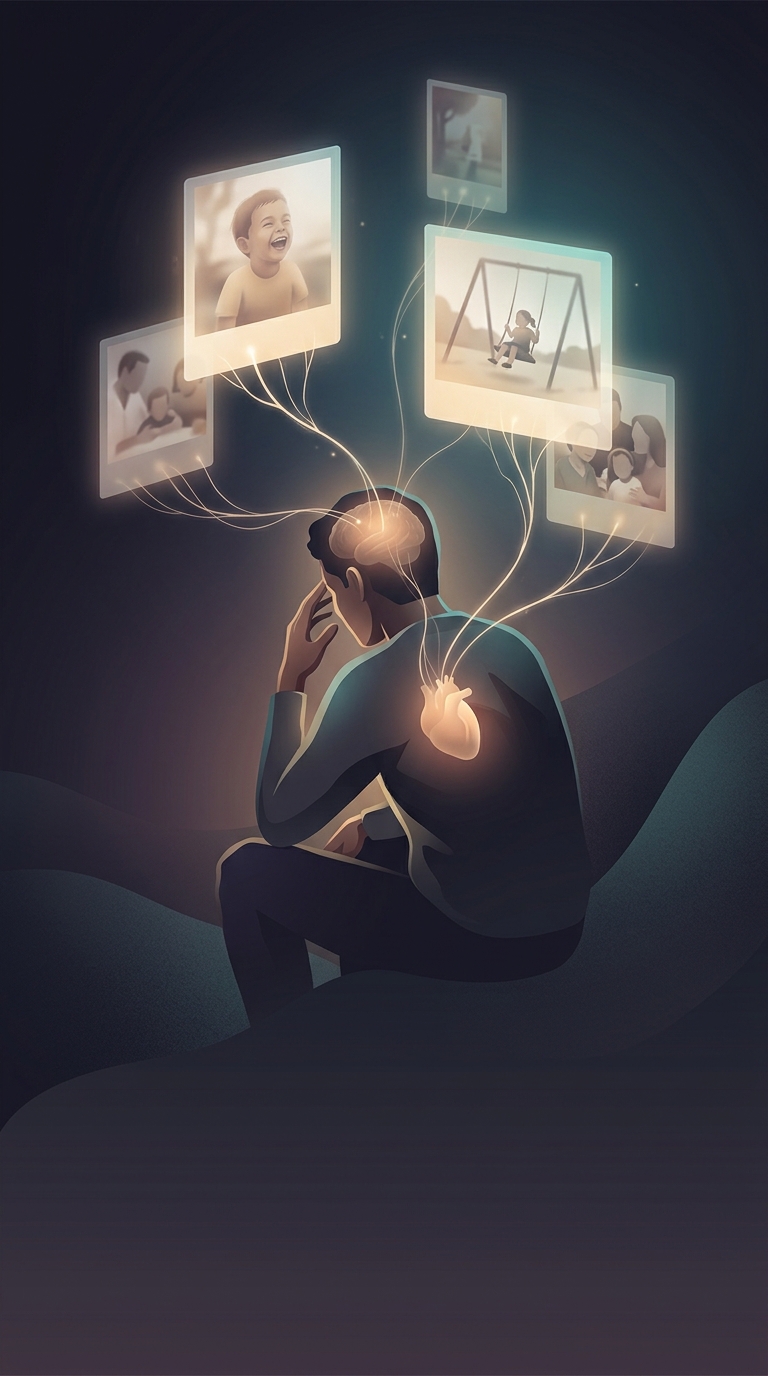
How a Childhood Photo Can Change the Experience of Pain
A photograph can do more than distract you. Seeing your younger self may bring back a specific memory—who was there, what the place felt like, and how you understood yourself at that age. Psychologists call this autobiographical memory: memory for events from your own life. Recalling a familiar, meaningful scene can make the present feel less isolating and help settle the fear or stress that often accompanies severe pain.
Pain is a bodily signal, but the brain also weighs attention, emotion, and expectations when interpreting it. A vivid memory gives attention something personal and emotionally rich to engage with. That does not erase the source of the pain; it may make the experience feel more manageable by easing some of the distress around it.
Why Familiarity Matters
An old photo can act as a cue for a whole network of memories. A picture of a childhood bedroom, for example, may prompt thoughts of a familiar routine or a trusted person—not just a visual image. That sense of continuity, connecting the person in the photo with the person facing pain now, can be grounding when the body feels overwhelming or frightening.
The effect depends on what the image brings up. A comforting memory may help; a painful or complicated one may not. The useful choice is a photo linked to a feeling of safety or connection, not simply the oldest picture available. In a hard moment, a small image can offer the mind a concrete place to rest while the body is receiving care.