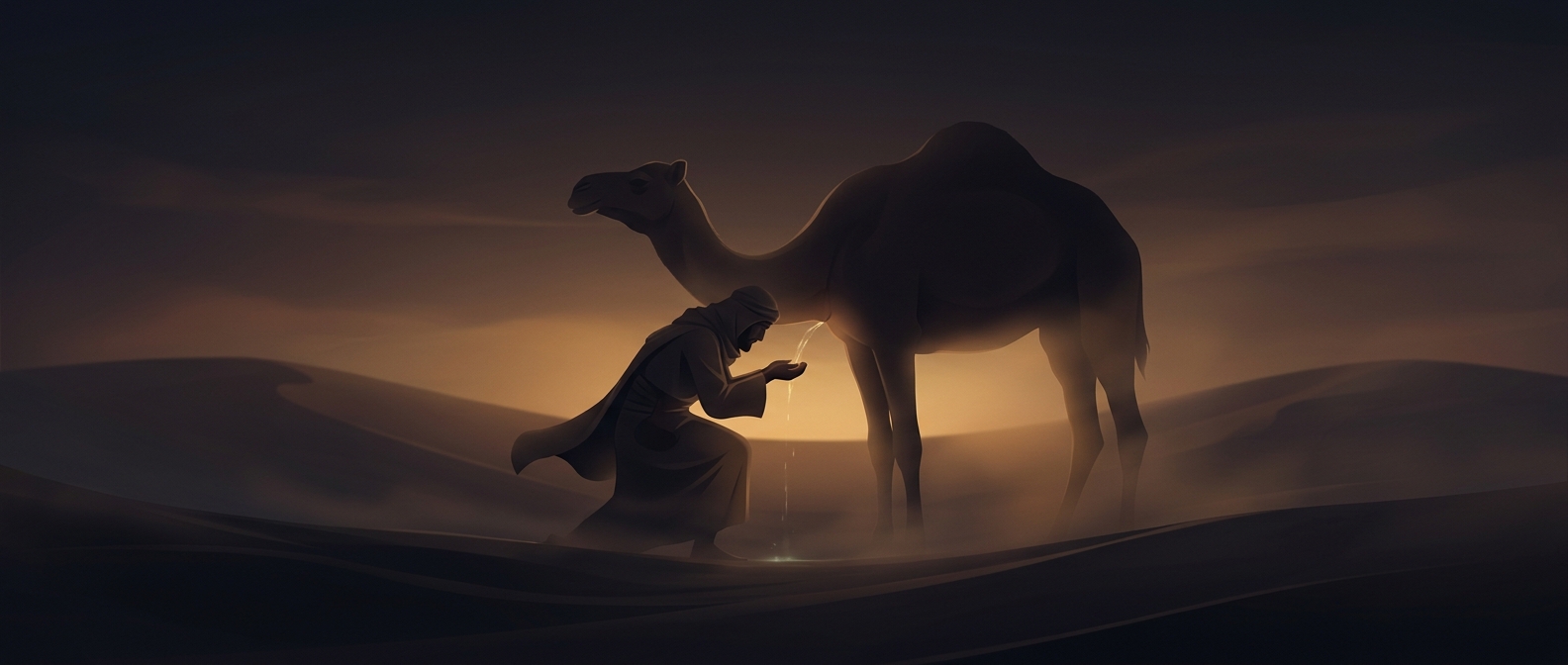
When the water route vanished
In the Taklamakan, a desert in western China, a journey depended not just on direction but on knowing where water could be found. Wells and pools were essential waypoints: people and pack animals could not simply travel indefinitely between them. When the wells on Sven Hedin’s 1895 expedition ran dry, the problem became immediate. The party had lost its dependable source of water, while the heat and exertion continued to drain what its members had already taken in.
A desperate stopgap, not a source of water
Sheep’s blood and a sip of camel urine offered Hedin something to swallow when ordinary drinking water was unavailable. But neither could replace a well. Blood contains liquid, yet it is not a sustainable drink; camel urine is waste, not a dependable way to rehydrate. The detail is striking because it shows how narrow the gap had become between finding something to ingest and finding the water the expedition actually needed.
The decisive change came when Hedin reached a muddy pool. Even poor-quality water could provide a chance to drink that the improvised substitutes could not. The caption records the cost of the failed water supply: half the crew and animals died. In a desert expedition, a single missed or exhausted water point could therefore threaten the whole traveling group, not just the person leading it.
The expedition’s real lifeline
The episode is often remembered for the unlikely fluids, but its practical lesson is about dependence on water points. A desert route was only as viable as the next usable source. When one failed, thirst, distance, and the needs of animals turned a navigational setback into a survival crisis—and a muddy pool could matter more than any desperate substitute.