A moving display case for court fashion
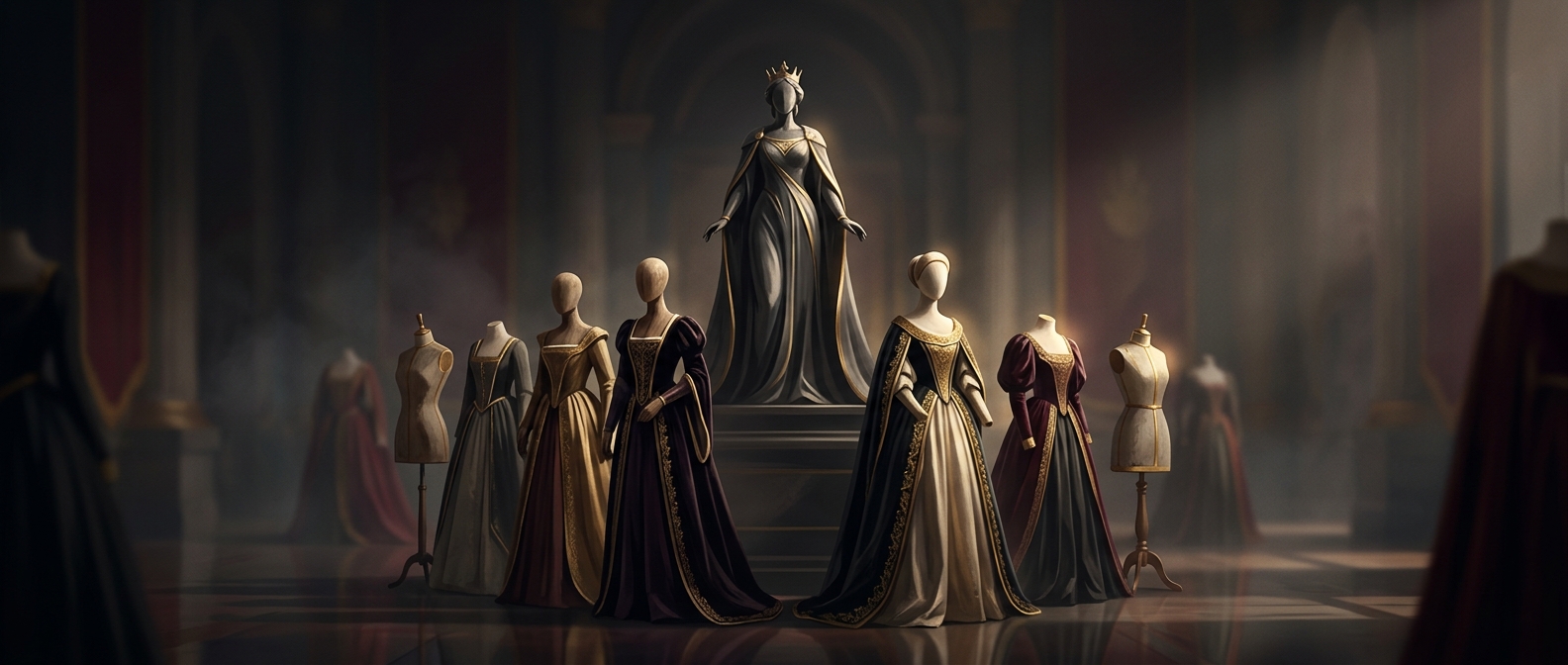
Before a shopper could browse racks of ready-to-wear clothing, a person seeking the latest style often had to see the clothes themselves. Life-size fashion dolls—sometimes called fashion figures—made that possible. Dressed in miniature versions of current outfits, they could travel from one royal court to another and show how a new look worked as a whole, rather than relying on a written description or a sketch.
What the doll could show
A drawing could capture a silhouette, but a dressed figure gave viewers a better sense of the fabric, color, layers, and finishing details. Its garments could be examined up close, including how pieces fit together and which accessories completed the outfit. The doll was a model, not a pattern: seeing a dress on it did not automatically reveal the measurements or sewing instructions needed to reproduce it.
That distinction made the display useful to people involved in making and wearing clothes. A tailor or dressmaker could study the construction, while a courtier could judge whether a style suited her taste and status. The clothing—not the doll as a toy—was the point.
Fashion traveled before the stores did
Sending an outfit on a dressed figure turned fashion into something that could circulate across distance. The recipient could inspect a look without the designer or wearer making the journey, and local makers could use the example as a guide. In this way, a doll served as a portable showcase at a time when there were no department-store windows or broad retail networks to display the newest styles.
Its most important feature was its scale: large enough to make the clothes legible, yet portable enough to carry. A royal fashion exchange could therefore bring the details of a faraway wardrobe directly into another court.