Why an Evaporative Humidifier Slows Down in Damp Air
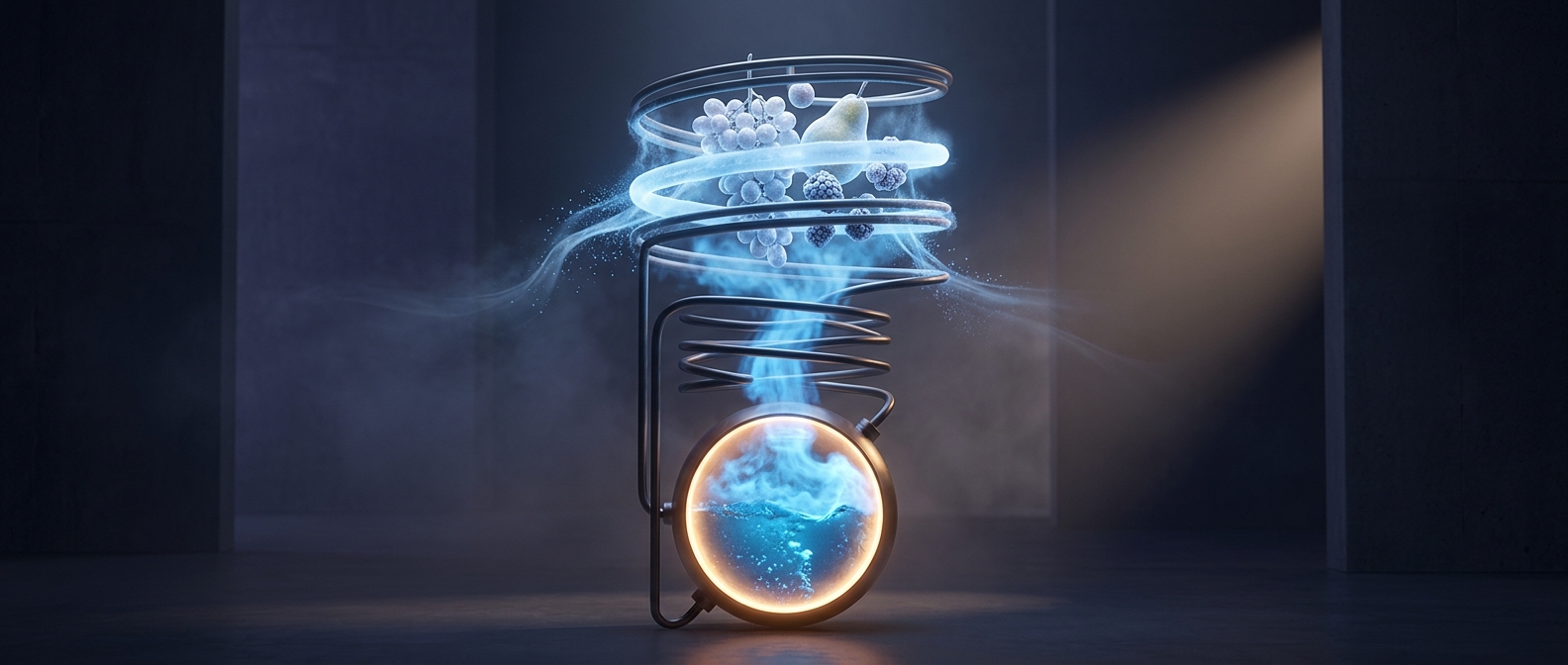
The wick does not release a fixed amount of water. Evaporation depends on how readily the surrounding air can take up more water vapor. When room air is dry, water leaves the wick relatively easily; as the room becomes more humid, evaporation tends to slow. That gives this kind of humidifier a degree of natural self-limiting behavior—though it does not precisely control humidity or replace a humidistat.
The Air Gets a Little Cooler
Evaporation takes energy, and some of that energy comes from heat in the water and passing air. The outgoing air can therefore feel cooler, much as skin feels cooler when sweat evaporates. The machine is adding water vapor, not sending out a warm cloud of steam.
The Wick Is a Working Part
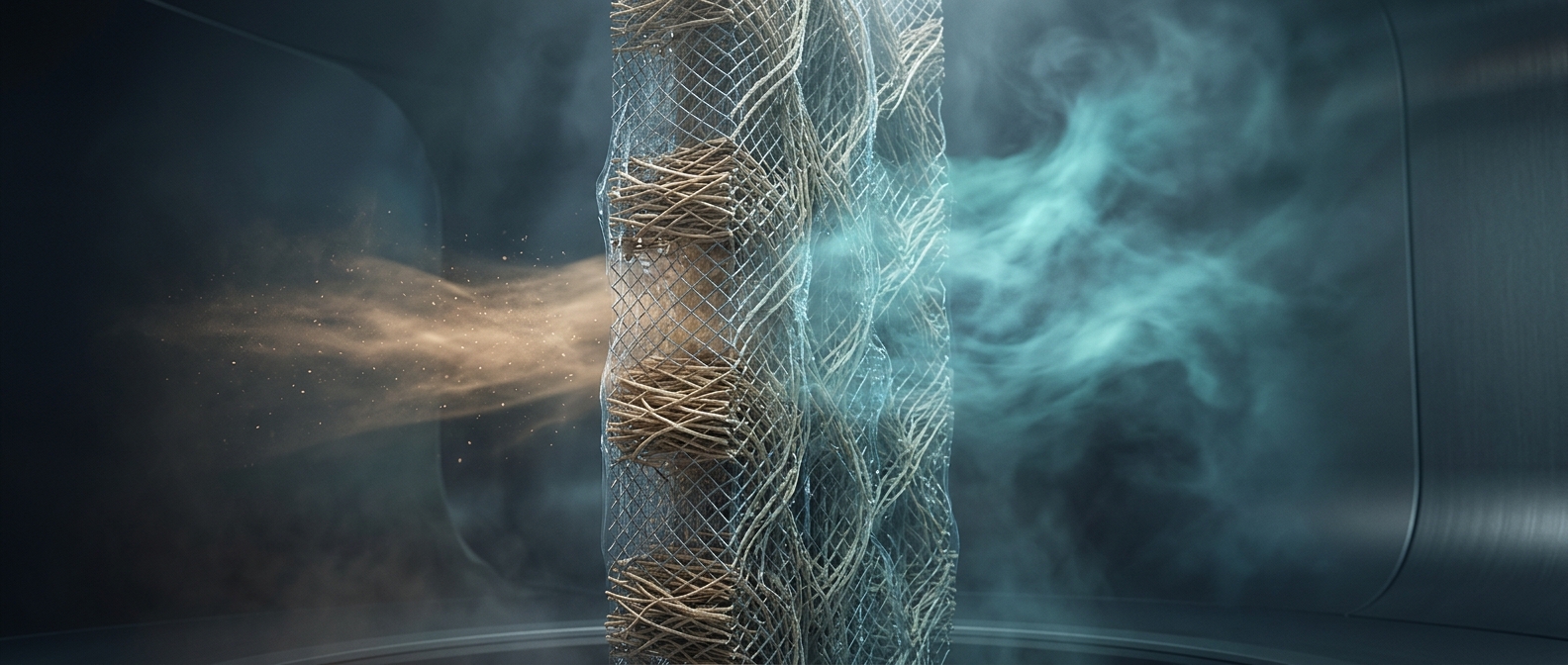
Because room air passes through a damp material, the wick can collect dust and other particles. Deposits can also build up as water evaporates, so the wick and water reservoir need regular cleaning, and the wick may eventually need replacement. A clogged or worn wick can restrict airflow and make humidification less effective.
This design’s quiet tradeoff is that moisture output depends on both the fan and the condition of the wick. In a dry room, a clean wick can evaporate water readily; in a more humid room, the same appliance may add moisture more slowly without changing its settings.