How Nitinol “remembers” a shape
Nitinol is an alloy of nickel and titanium. Its shape-memory effect comes from a reversible change in the arrangement of its atoms—not from the metal storing a picture of its former shape.
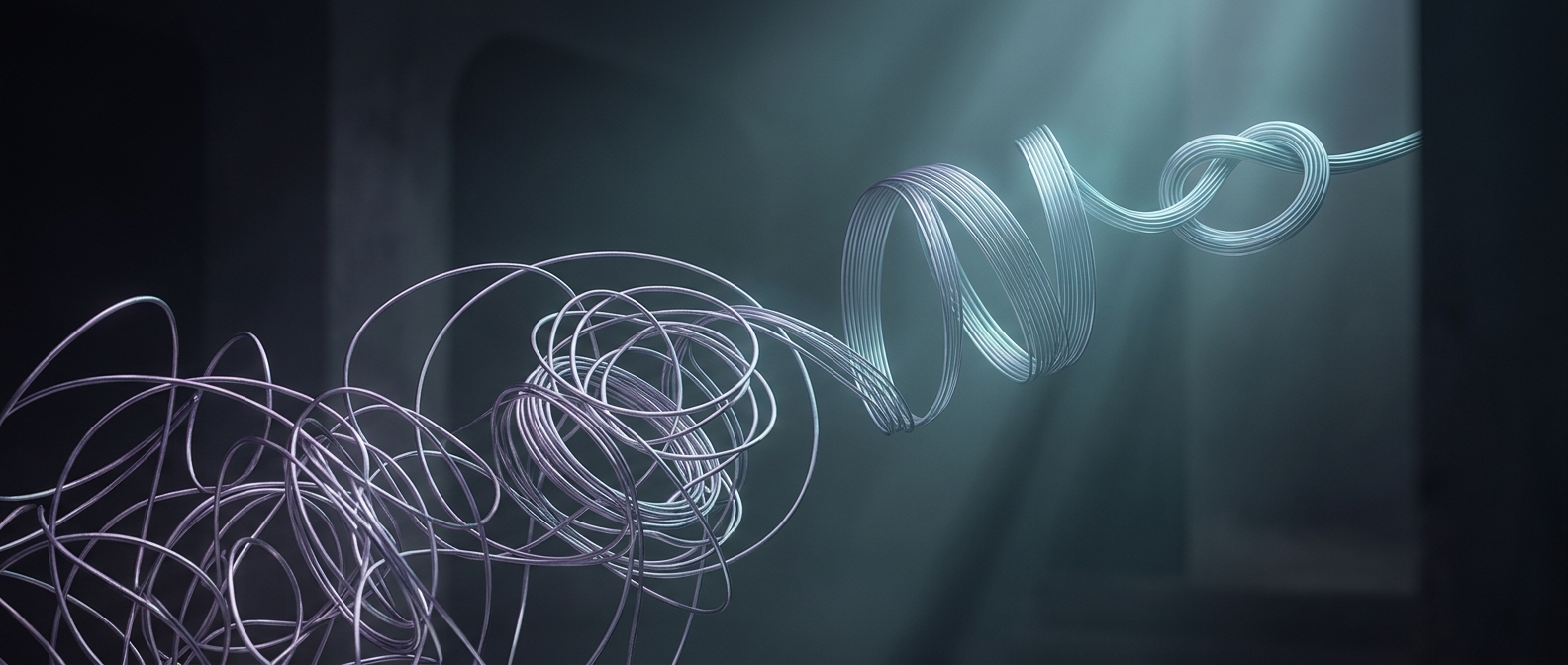
A wire is first formed into the shape it is meant to recover, then given a heat treatment that sets that shape. When cool, its crystal structure can shift into a more easily deformable form. Bending the wire changes how that structure is arranged, so the wire can look permanently bent even though it has not lost the ability to recover.
Heat switches the structure back
When the wire is heated past a particular transition temperature, its atoms reorganize into a stiffer crystal structure. That structure favors the shape set during manufacturing, pulling the wire back toward it. Cooling can make the wire flexible again, allowing the cycle to be repeated.
The transition temperature depends on the alloy and how it was processed, so a device can be designed to respond to a chosen range of temperatures. That makes Nitinol useful where a small wire must move without a motor: heating it can turn a temperature change into a mechanical action. The key tradeoff is that the wire must be cooled before it can be deformed and reset for another cycle.