A glass bulb under a hidden squeeze
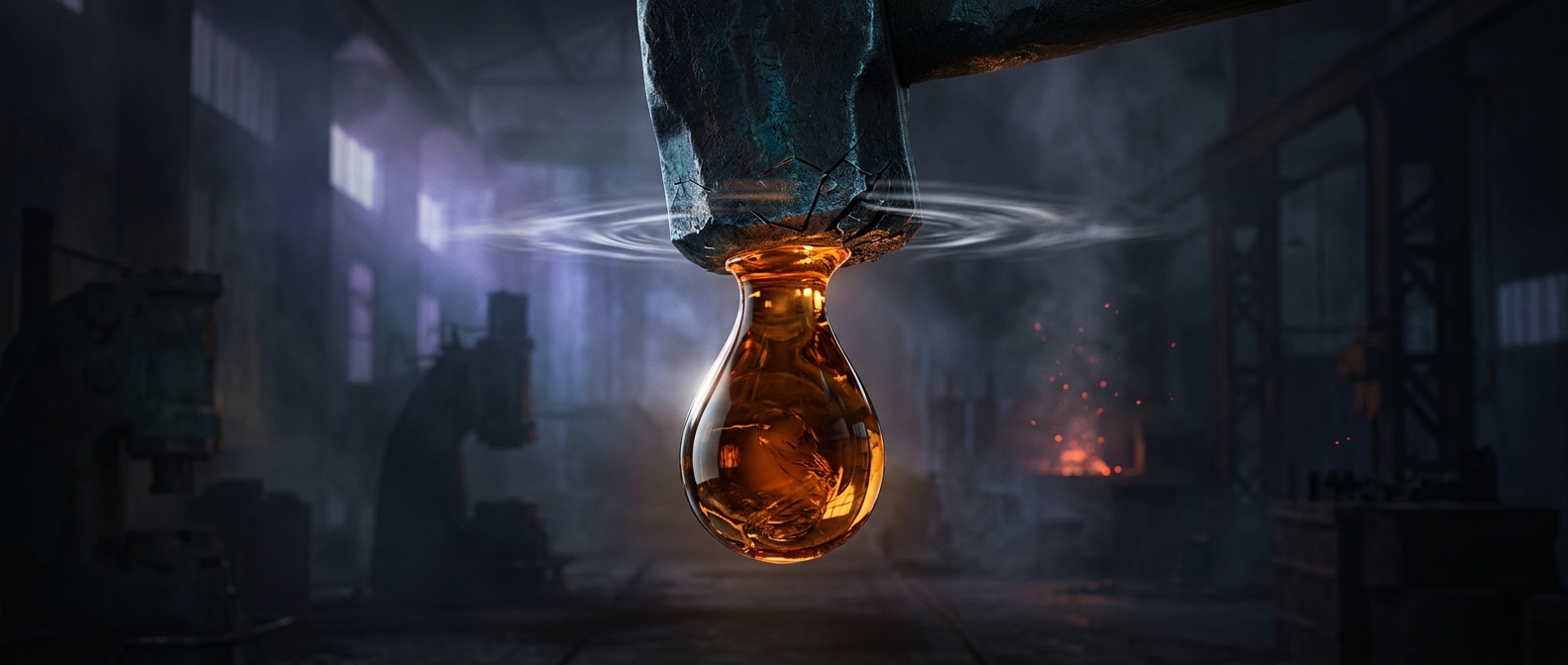
A Prince Rupert’s drop begins as a small blob of molten glass dropped into cold water. Its surface cools and hardens almost immediately, while the inside stays hot for longer. As the interior finally cools, it tries to shrink—but the already rigid outer layer holds it in place.
The result is a locked-in stress pattern: the surface is squeezed inward, or compressed, while the interior is stretched, or under tension. A crack struggles to open through that compressed skin, which is why the bulb can withstand blows that would ordinarily break glass. It is tough against certain impacts, not unbreakable; a sufficiently severe blow can still damage it.
Why the tail is the weak link
The thin tail is especially vulnerable to bending or snapping. When it breaks, the fracture can enter the drop and reach the highly stressed interior. There, the glass’s stored tension helps drive the crack rapidly through the bulb. The release of that stress produces a cascade of branching fractures, reducing the drop to tiny fragments.
So the tail is more than a handle: it is a route into the stress that protects the bulb. A small break at the right point can undo the strength built into the glass as it cooled.