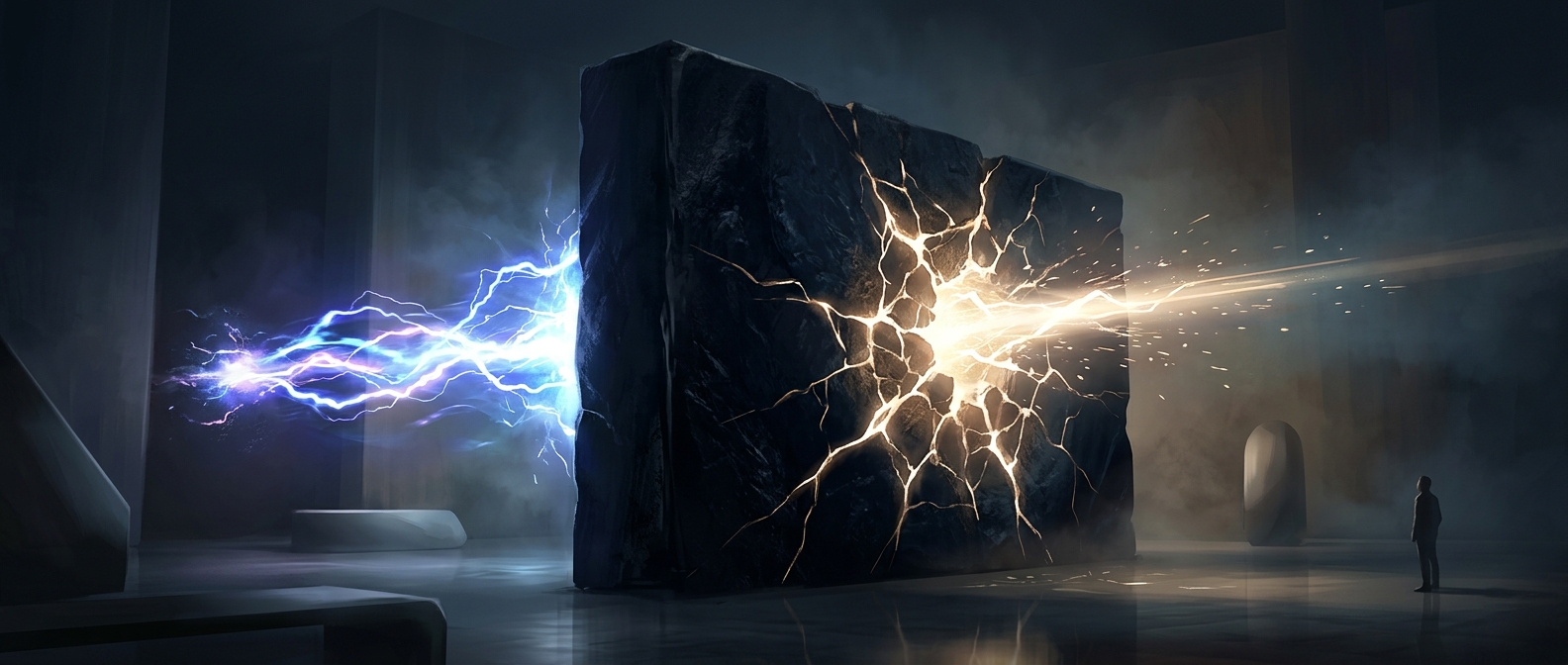
How an Insulator Stops Being an Insulator
Materials such as glass, plastic, and dry air are called insulators because their electrons are usually held tightly in place. With no freely moving charges, an electric field cannot drive a sustained current through them as it does through a metal.
Raise the voltage enough, though, and the field can exert such a strong force on those electrons that they break free. The released electrons accelerate, collide with atoms, and free still more electrons. This multiplying chain creates a conductive path through material that had been blocking the current—a process called electrical breakdown.
A Path Forms, Often in an Instant
Breakdown does not mean electricity simply pushes through an unchanged wall. The intense field changes the material: it may heat, crack, melt, or become chemically altered. In air, the chain reaction can create a sudden spark; in a solid, it can leave a tiny damaged channel. Once that path forms, current can surge through it, sometimes worsening the damage.
The voltage needed depends on the material and the conditions. A thick, clean layer of insulation can withstand more voltage than a thin or damaged one, while moisture, sharp edges, or defects can concentrate the electric field and make breakdown easier. That is why electrical equipment relies not just on insulating materials, but on carefully chosen thicknesses, shapes, and spacing.
Why It Matters in Everyday Hardware
Cables, plugs, and circuit boards are designed to keep the electric field below the level that can trigger breakdown. If insulation is punctured or deteriorates, the barrier may fail and create a short circuit, shock hazard, or fire risk. The surprising point is that a solid wall is not an absolute barrier to electricity: it is a barrier only while the field remains within what that material can withstand.