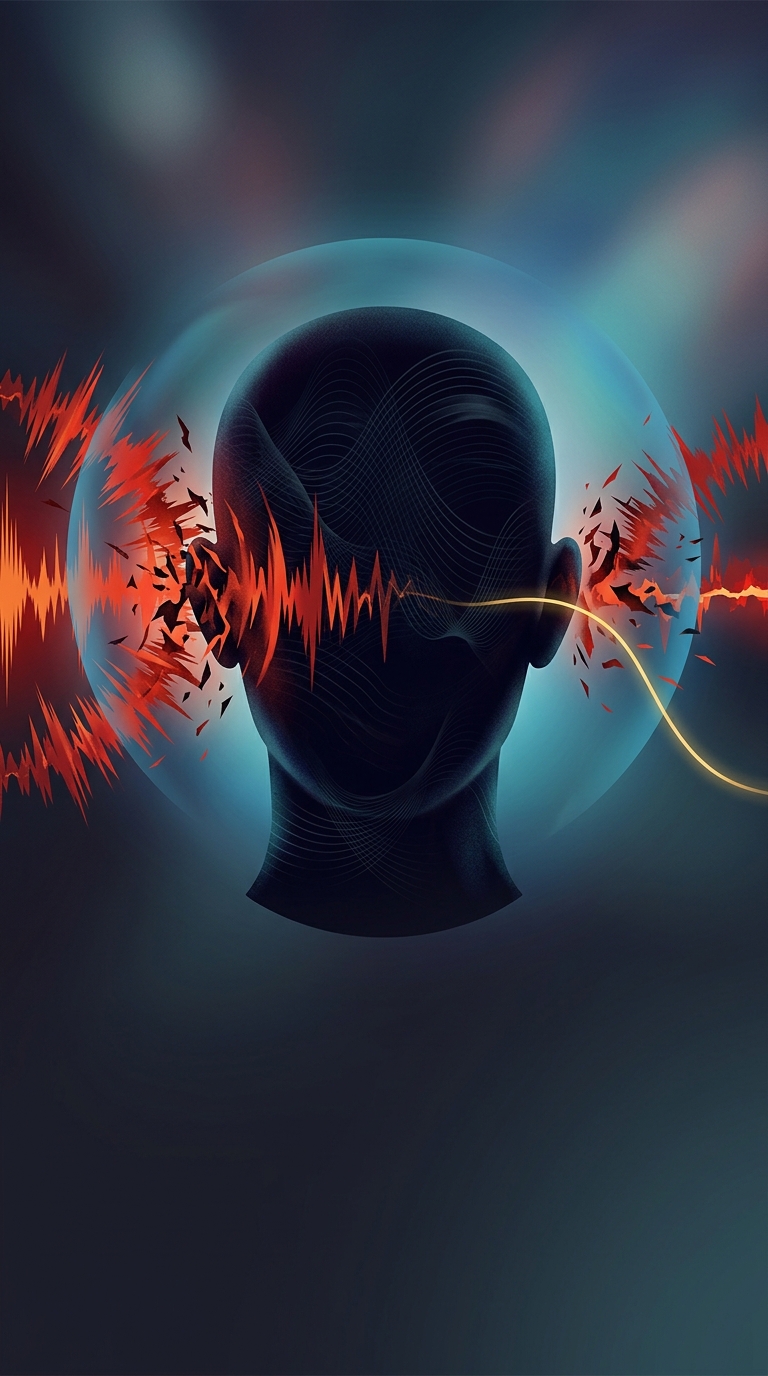
How Noise-Canceling Headphones Make Sound Meet Its Opposite
Inside each ear cup, tiny microphones listen to sound around you. The headphones’ electronics analyze that sound and play a carefully timed counter-sound through the speaker. When the original noise and the counter-sound reach your ear together, their pressure waves can partly cancel: a crest from one meets a trough from the other.
This is called active noise cancellation. It doesn’t remove sound from the cabin or silence the world; it reduces certain sound waves at your ears. Because the microphones and processing need a little time to react, the system works best on steady, predictable low-frequency sounds, such as the continuous rumble of an engine.
Why the Engine Fades More Than a Conversation
A jet’s low rumble changes relatively slowly, giving the headphones a chance to estimate the next part of the sound and produce its opposite in time. Voices contain quicker, more varied changes—consonants and syllables shift rapidly—so they are harder to counter accurately. Their higher frequencies are also more difficult to cancel because a small timing or position mismatch can spoil the alignment of the waves.
That is why many headphones combine active cancellation with passive isolation: the ear cups or eartips physically block some sound, especially higher-pitched noise. Voices may become quieter, but they often remain audible rather than disappearing.
Cancellation Has a Listening Position
The counter-sound is tuned for the space near the listener’s ear, not for the whole cabin. Move the headphones, loosen an eartip, or let outside air leak in, and the sound reaching your ear changes; the cancellation may become less effective. The result is not a perfect, silent void but a targeted reduction—strongest where the noise is steady and the fit is good.
In other words, the headphones don’t destroy noise everywhere. They arrange for two sounds to interfere with each other in just the right place: your ear.