Why a Refrigerator Makes Liquid Boil
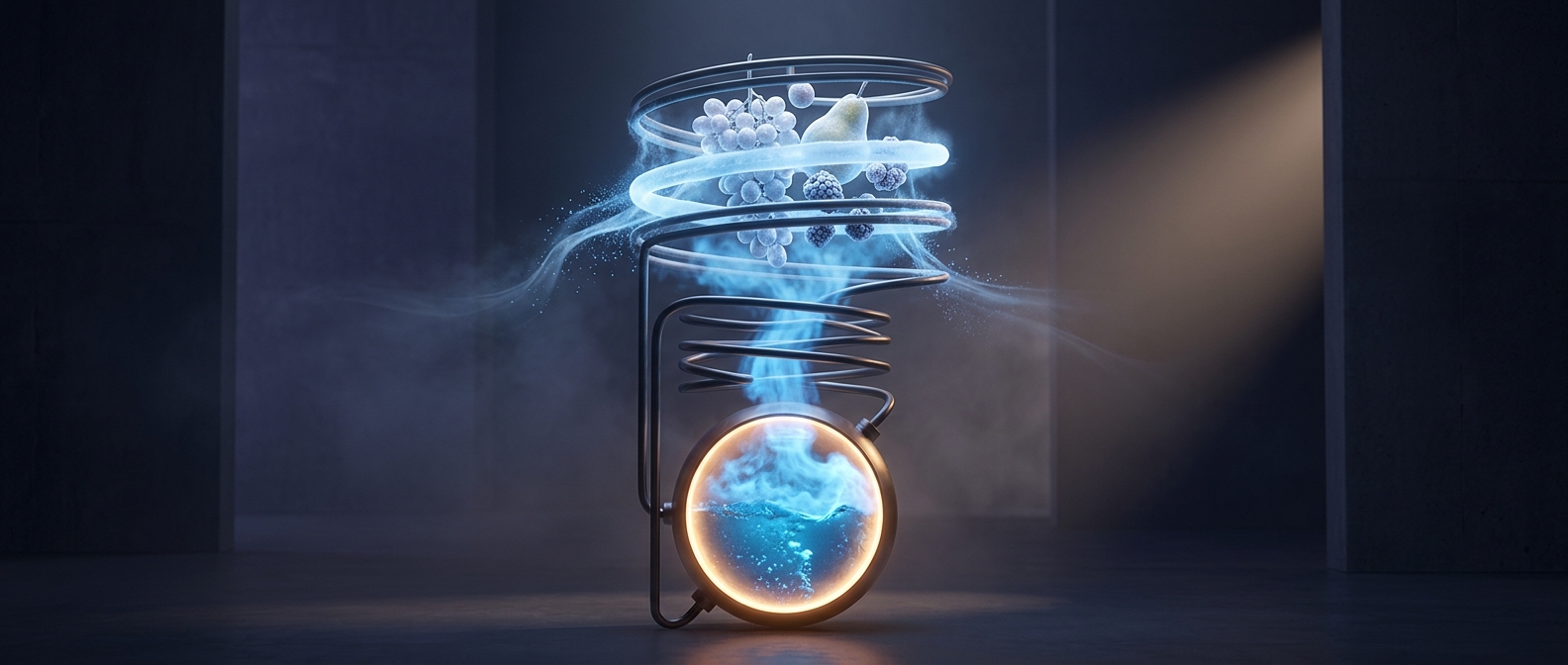
Inside a refrigerator, a refrigerant moves through a sealed loop. The system lowers the pressure of the refrigerant in the evaporator—the cold section inside the cabinet. At that pressure, the refrigerant can boil at a temperature colder than the food compartment. As it changes from liquid to gas, it takes in heat from nearby air and surfaces, including the food.
That heat transfer is the key: the refrigerator does not create cold so much as move heat out of the cabinet. A fan or natural airflow carries heat from food and shelves to the evaporator, where the refrigerant absorbs it.
How the Heat Gets Outside
The compressor squeezes the refrigerant gas, raising its pressure and temperature. The hot gas then flows through condenser coils, usually on the back or underneath the appliance. Because the gas is hotter than the room, it releases heat into the kitchen and condenses back into a liquid.
A narrow expansion device then drops the liquid’s pressure before it returns to the evaporator. That pressure drop makes it cold enough to boil again, and the loop repeats. The warmth you may feel near the refrigerator’s coils is heat removed from inside, plus energy used by the compressor.
Why the Loop Matters
Boiling here does not mean the refrigerator is getting hot: a liquid can boil at low temperatures when its pressure is low. By repeatedly evaporating inside and condensing outside, the refrigerant carries heat across the insulated cabinet wall. That is why blocking the exterior coils with dust or poor airflow can make cooling less effective: the system has a harder time releasing the heat it collected.