A flame that daylight could hide
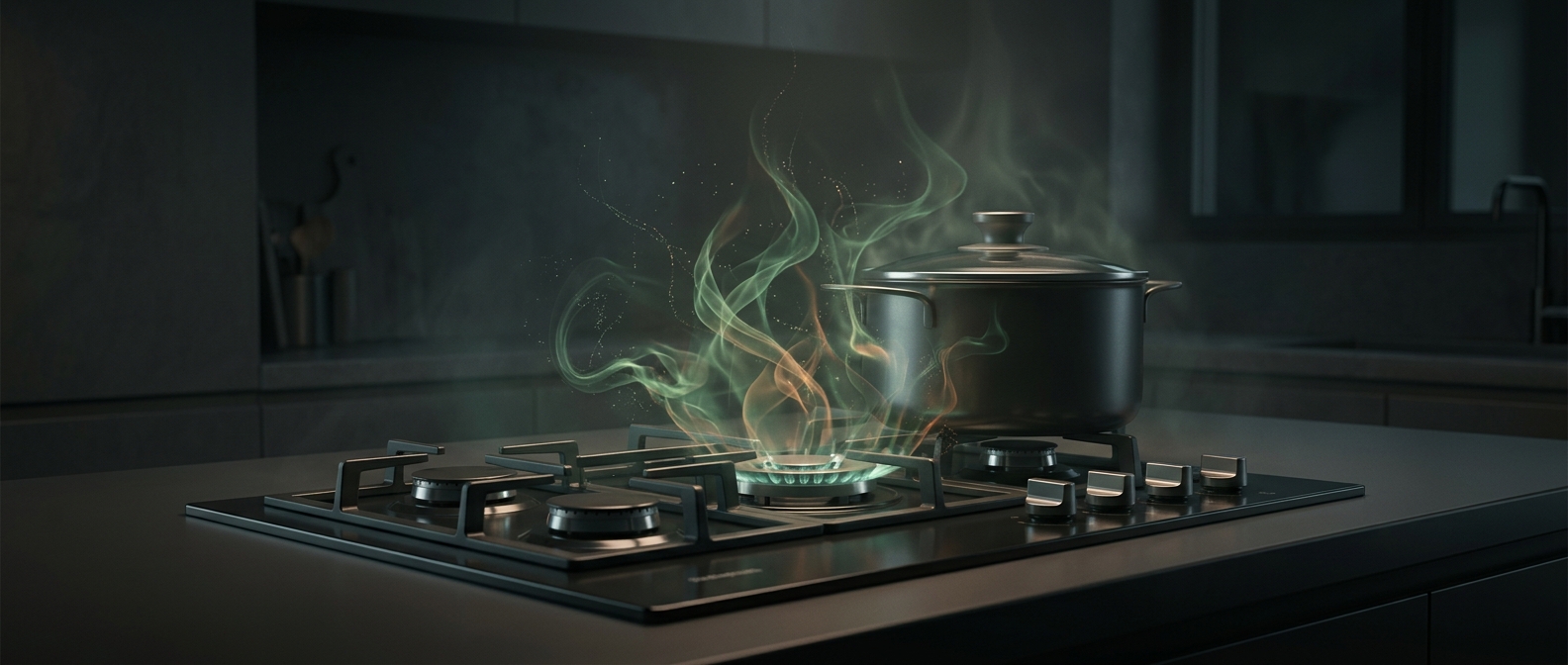
Many gas flames burn blue, and blue light is relatively faint beside the bright daylight of a kitchen. The burner could be lit and producing heat even when its flame was difficult to make out at a glance. That made a familiar safety cue—seeing the fire—less reliable than it was with a visibly glowing coal or wood flame.
The danger was not that the flame was cold or harmless when unseen. A sleeve brushing the burner could still be heated enough to ignite. Loose clothing made the risk especially easy to imagine: someone might lean over a stove, fail to notice the flame, and bring fabric into contact with it.
Convenience required new habits
Gas stoves replaced some of the daily work of tending a solid-fuel fire, but they asked cooks to trust a heat source they could not always see clearly. Users had to learn to check that a burner was lit and to keep clothing and other flammable materials away from it—even when the kitchen looked calm.
That mismatch between visible evidence and real heat explains the unease. The flame’s invisibility was not merely unsettling; it made judging distance and danger harder. A burner could look like an empty spot on the stove while still posing an immediate hazard to a dangling cuff.