How the resin captures hardness
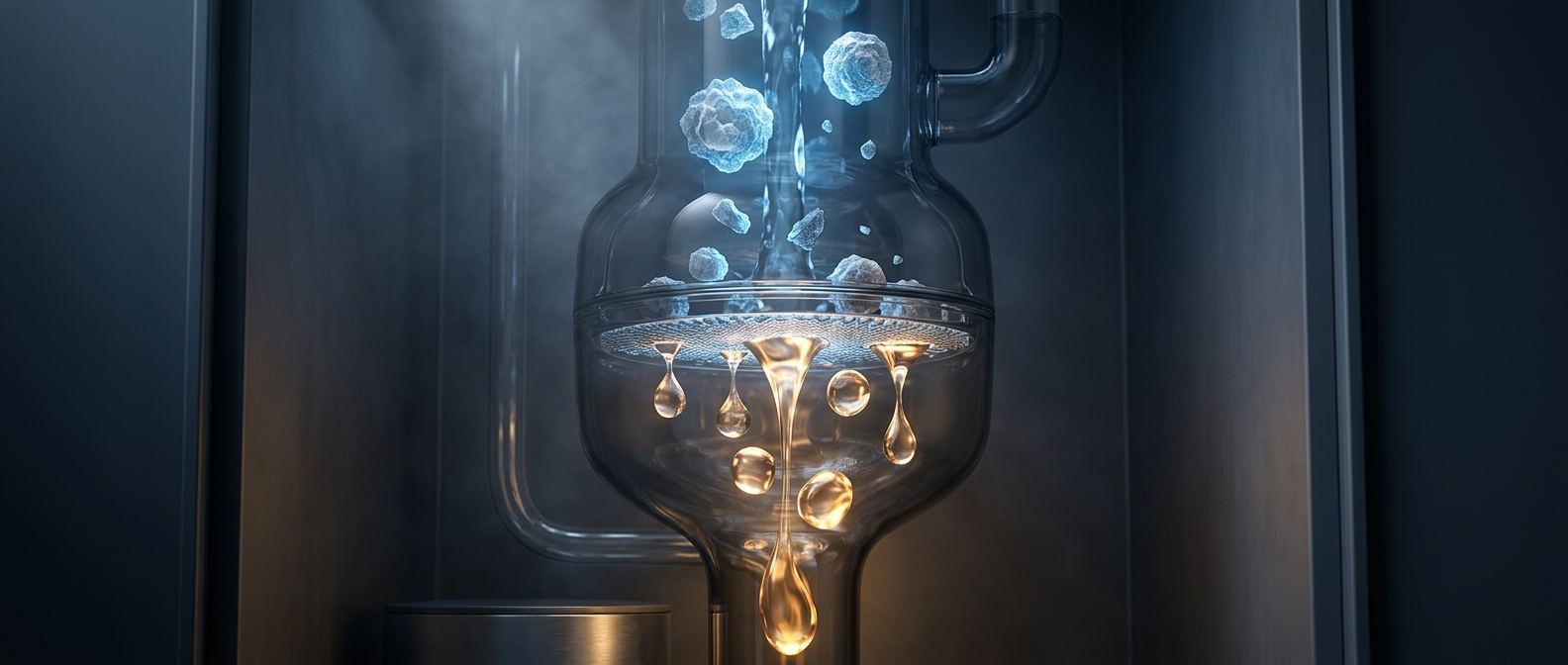
A water softener works by ion exchange: dissolved minerals trade places with other charged particles attached to a material inside the tank. The material is a resin made of tiny beads whose surfaces hold sodium ions. As water flows past, calcium and magnesium ions— the main causes of hardness—stick to the resin, and sodium ions enter the water instead.
This is not a reaction with liquid sodium, which is a highly reactive metal. The sodium is present as dissolved ions, electrically charged particles that are stable in water. The exchange changes which minerals are dissolved; it does not remove the water itself or make it chemically “salt water.”
The resin has to be reset
Eventually, most of the resin’s exchange sites fill with calcium and magnesium. The softener then flushes the beads with concentrated salt water, usually made from sodium chloride. The high concentration of sodium pushes the captured hardness minerals off the resin and sends them down a drain. A rinse clears away excess brine, leaving the beads ready to soften more water.
That cycle explains why a softener needs salt replenished: the salt is used to restore the resin, not sprinkled directly into every glass of treated water. The system does add some sodium to the softened water, with the amount depending largely on how hard the incoming water is and how the equipment is set.
What changes at home
With less calcium and magnesium available to form deposits, softened water is less likely to leave scale inside pipes, water heaters, and fixtures. Soap also lathers more readily because it no longer has to contend with those minerals. The tradeoff is that the water’s mineral balance has changed, and the spent hardness minerals and salty rinse water must be discharged. The beads do not destroy the minerals; they temporarily hold them, then release them during regeneration.