Air turns impurities into heat and gas
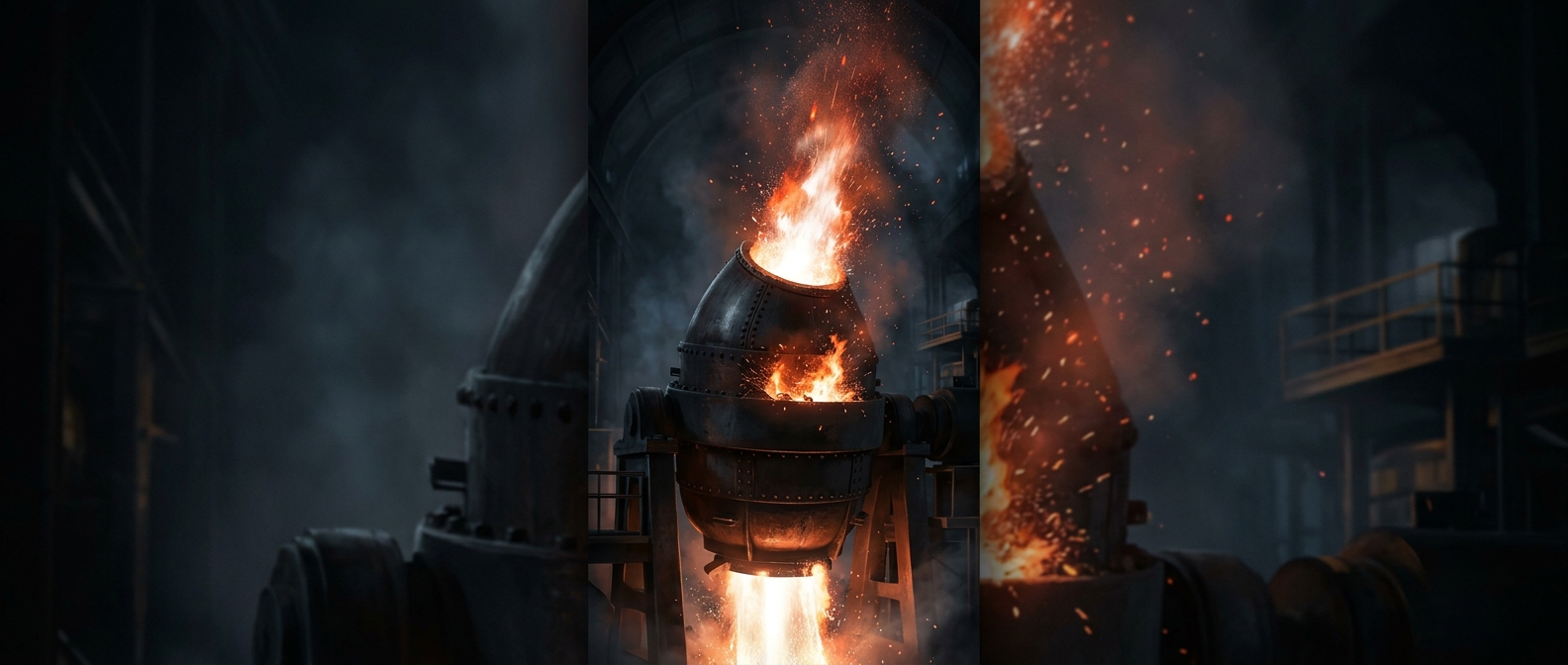
A Bessemer converter was a vessel that held molten pig iron—the carbon-rich iron produced in a blast furnace. Instead of heating the metal with fuel, the process forced air through openings near the bottom. The air’s oxygen reacted with carbon and other impurities, including silicon and manganese.
These reactions released heat, helping keep the iron molten as its composition changed. Carbon became carbon monoxide and carbon dioxide; the gases rose out of the metal, and carbon monoxide could burn as it met air above the converter. That combustion produced the dramatic plume at the vessel’s mouth.
The plume marked a change in the metal
The blast did more than make a spectacle: it drove a rapid chemical cleanup. But removing too much carbon would leave iron too soft for many uses. The operator therefore had to stop the air at the right point, then adjust the melt’s carbon content to make steel with useful strength and hardness.
That control made the process transformative. A converter could refine a large batch far faster than older methods that relied on prolonged heating and manual work. The key engineering idea was to use the impurities themselves as fuel: as oxygen consumed them, their reactions supplied much of the heat needed to finish the job.