Why a disinfectant that reacts more slowly can work better
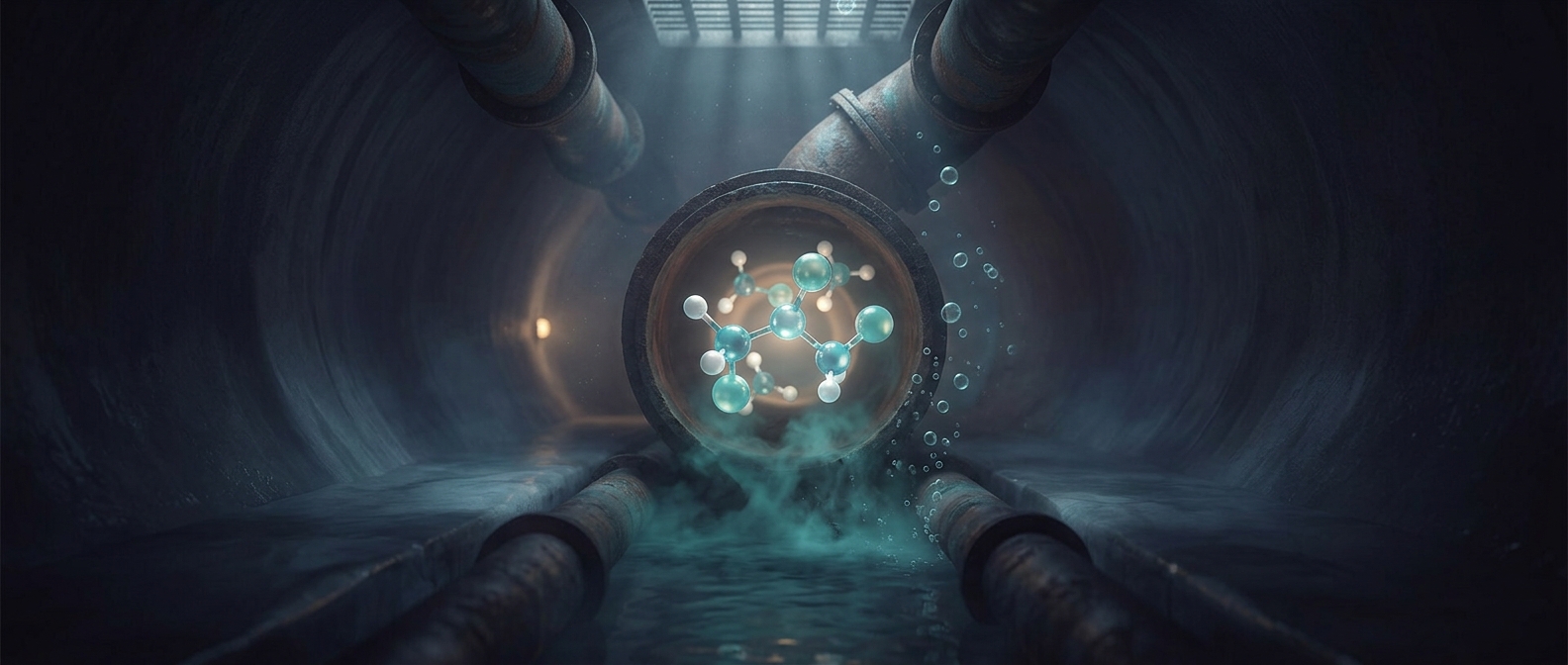
Chlorine is effective at killing many disease-causing microbes, but it is also quick to react with other substances in water. As treated water travels through miles of pipes, that reactivity can use up the disinfectant before the water reaches distant neighborhoods.
Adding ammonia changes the chemistry: chlorine forms chloramine, usually the form called monochloramine. It disinfects more slowly than free chlorine, but it also tends to persist longer. That lingering disinfectant, called a residual, helps suppress microbial growth during the trip from the treatment plant to the tap.
The tradeoff happens across the whole system
A treatment plant has to manage the amounts of chlorine and ammonia so the intended disinfectant forms and remains at a useful level. The payoff is not just disinfection at the plant gate: it is continued protection throughout the distribution network, without having to rely on a short-lived dose of free chlorine alone.
That slower action is also a limitation. Chloramine is not simply a stronger version of chlorine; it is a different tool, suited to maintaining protection over distance. The key design choice is to match the disinfectant to the journey water still has to make before anyone turns on a tap.