The Joke Is the Contestant’s Uncertainty
These challenges work by turning an ordinary sensation into a guessing game. A contestant may know that chocolate is involved, but not be able to identify it by taste alone when it is paired with an unexpected household object. The audience gets to compare the contestant’s confident guesses with the strange evidence on screen—a simple setup that builds suspense before the reveal.
A different kind of uncertainty drives the reptile-and-bungee challenge. The contestant faces both a physical jolt and an unpredictable animal, so viewers watch for two reactions at once: what the person does and how they respond under pressure. The absurd combination is part of the design; it makes a brief challenge easy to understand and hard to predict.
A Variety-Show Format Built for Reactions
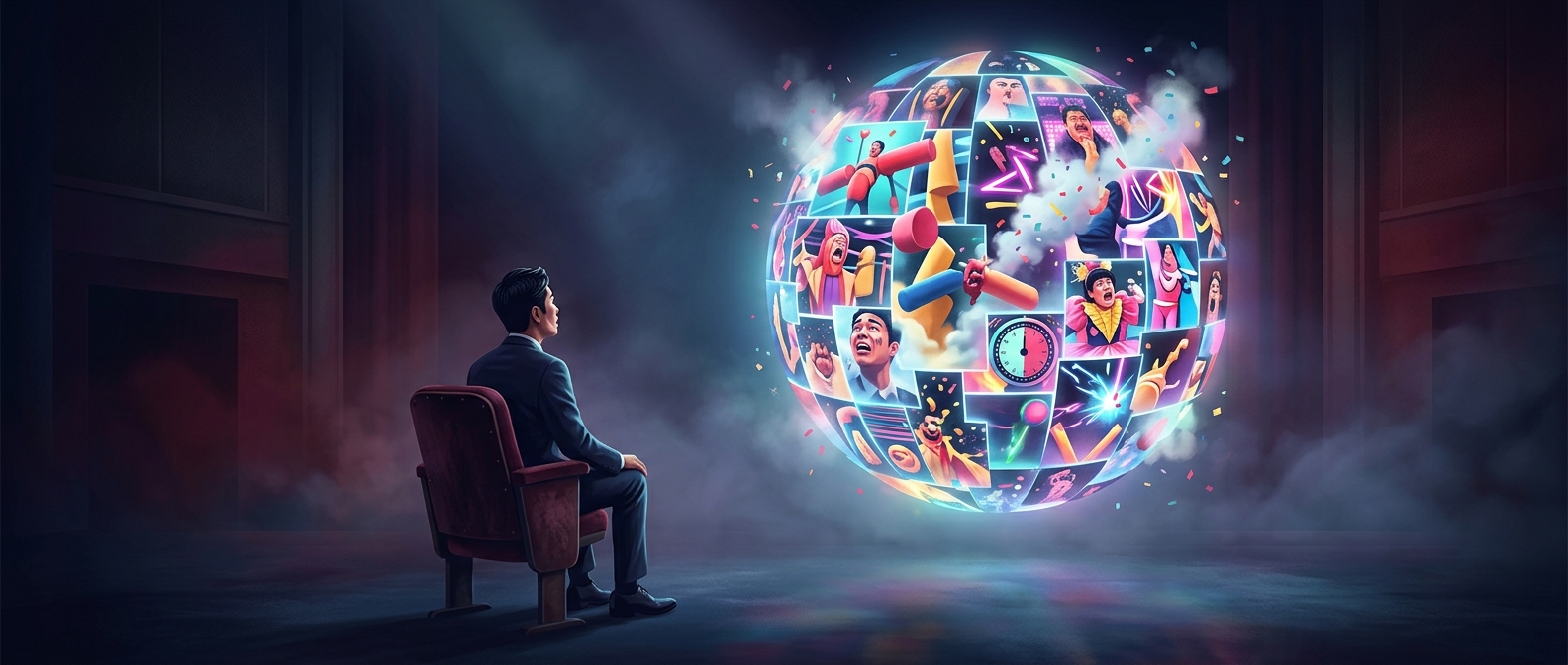
Japanese variety television includes many kinds of programming, but some shows make comic competition their central attraction. In these formats, a clear rule gives the audience a reason to follow the action, while an unusual obstacle supplies the surprise. Contestants’ expressions, hesitation, and attempts to keep composure become part of the entertainment—not just whether they win.
The effect depends on contrast: a familiar object becomes difficult to interpret, or a simple physical task gains an unnerving twist. That contrast lets a short segment deliver a whole comic arc, from the challenge being explained to the contestant’s reaction and the final reveal. The most memorable part may be less the prize than the moment someone realizes what they have agreed to do.