The Image Is Built Backward
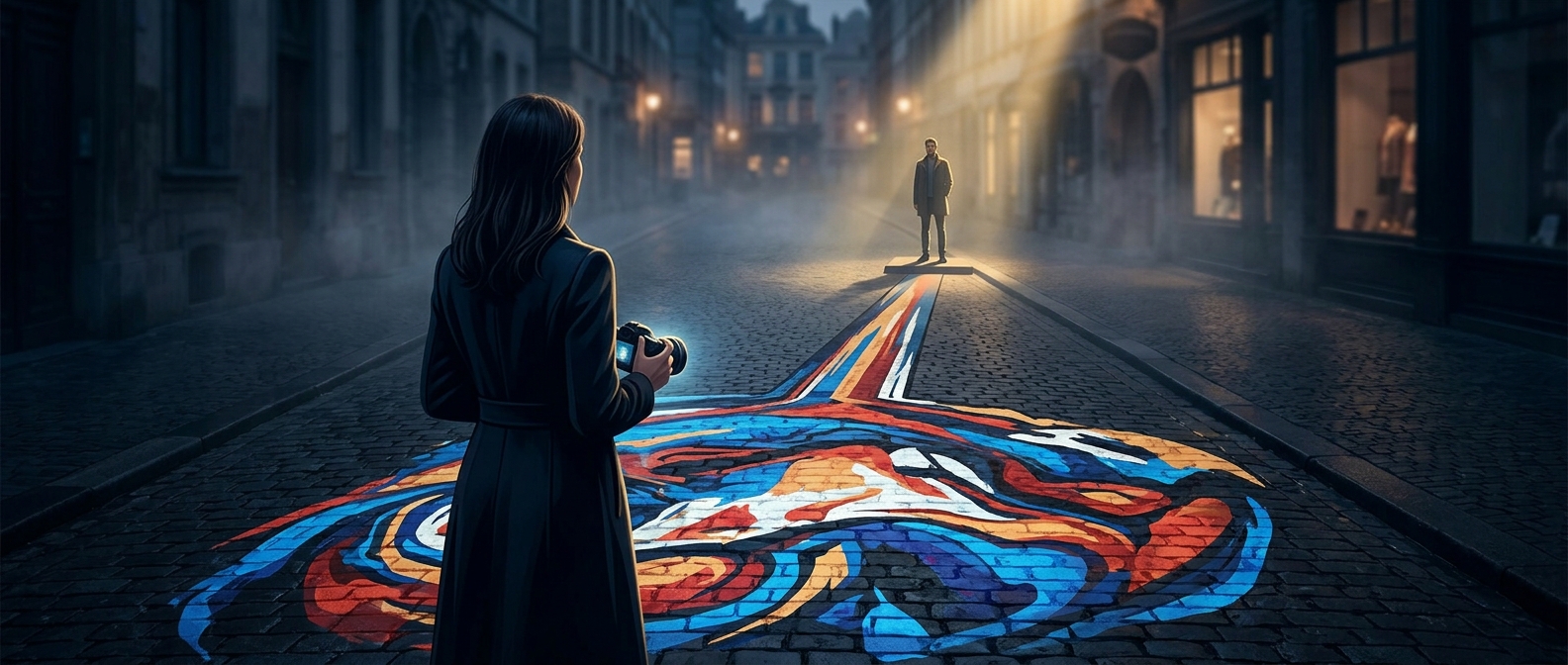
An anamorphic mural is designed from the viewing point outward. The artist first imagines how a finished scene should appear from one spot, then works out where each part must land on the pavement or wall to create that view. This reverse planning is called anamorphosis: a picture is deliberately stretched or skewed so that perspective makes it look proportionate from a particular position.
A useful way to picture the process is to imagine projecting a normal image onto the ground from the chosen viewpoint. Near parts of the pavement and far parts do not occupy equal-looking shapes in the finished scene, so the painted design must compensate. A shape that appears comically long when seen from above may line up neatly with the rest of the image from the intended spot.
One Viewpoint, Many Distortions
The illusion depends on the observer staying near that planned position. Move sideways, and the alignments shift: edges that seemed connected separate, and shapes that formed a convincing object no longer fit together. The artwork has not changed; the relationship between the viewer, the flat surface, and the painted shapes has.
That constraint is also part of the work’s design. Artists choose a viewing point that people can actually reach—perhaps a spot across a street or at the end of a walkway—and build the composition around it. The result can suggest a hole, a raised object, or a scene continuing below the pavement, but the surface remains flat. The apparent depth belongs to the viewpoint, not to the ground.