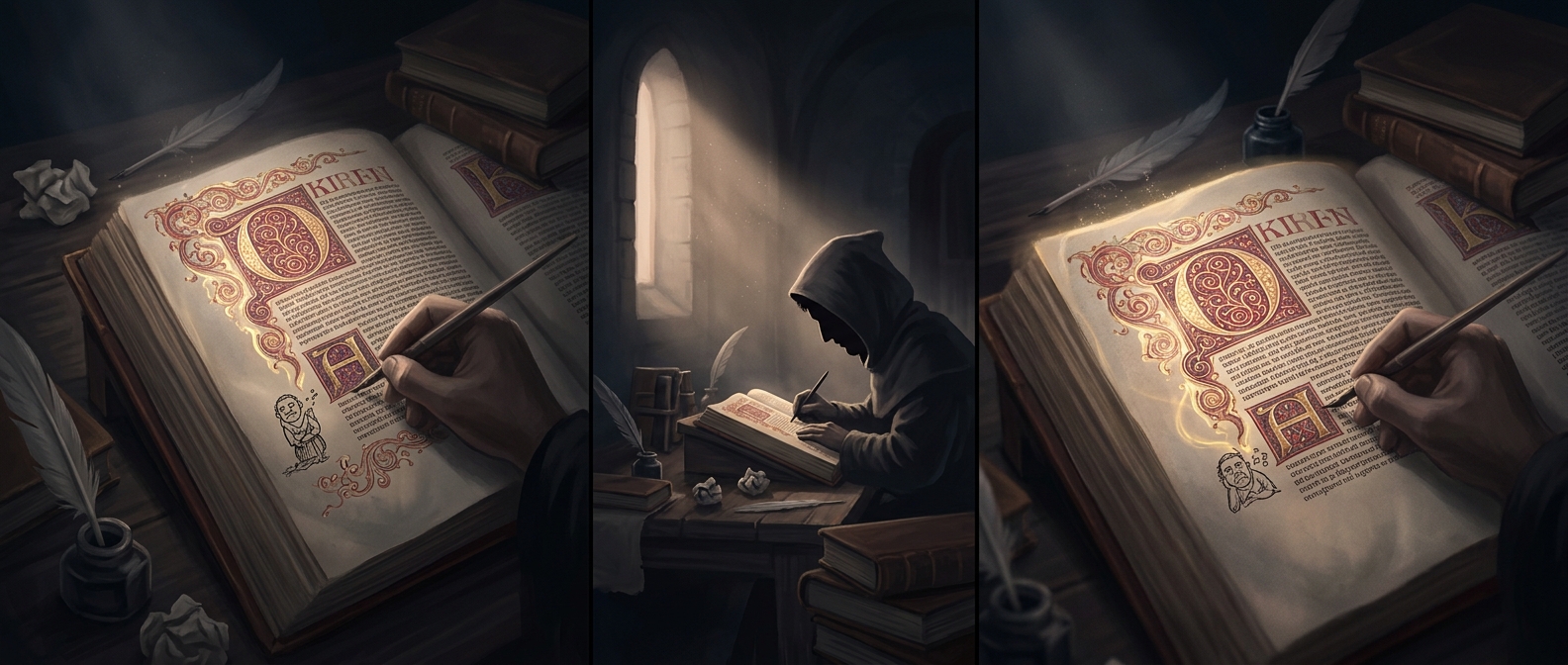
A working note beside the sacred text
A medieval manuscript was not produced by a machine but assembled through a chain of skilled handwork. A scribe copied text onto prepared sheets, keeping lines and columns within a planned layout. That left margins around the writing—space that could later hold corrections, additions, or comments. A complaint about aching limbs or a wish for a drink could slip into this working space beside the text the scribe was paid to preserve.
The page preserves the conditions of copying
Copying demanded sustained attention: a missed word or cramped line could affect the next stage of the book’s production. Scribes worked with quill and ink, and their pace depended on light, materials, and the demands of the task. A margin note makes those pressures unusually visible. Instead of presenting the book as an effortless vessel for knowledge, it lets the reader glimpse the person doing the repetitive work.
Not every marginal mark was a joke or a private aside. Margins could serve practical purposes, and later readers might add their own notes. But a personal complaint stands out precisely because it sits beside writing meant to outlast its maker. The book is both a text and a trace of the labor required to create it.
A small voice carried forward
The note may have been intended for no audience beyond the scribe—or for a fellow worker who might see the page. Centuries later, that ordinary frustration changes how the manuscript feels: the reader encounters not only medieval words, but evidence of a tired hand pausing at the edge of the page.