How Scattered Earth Becomes a Reading
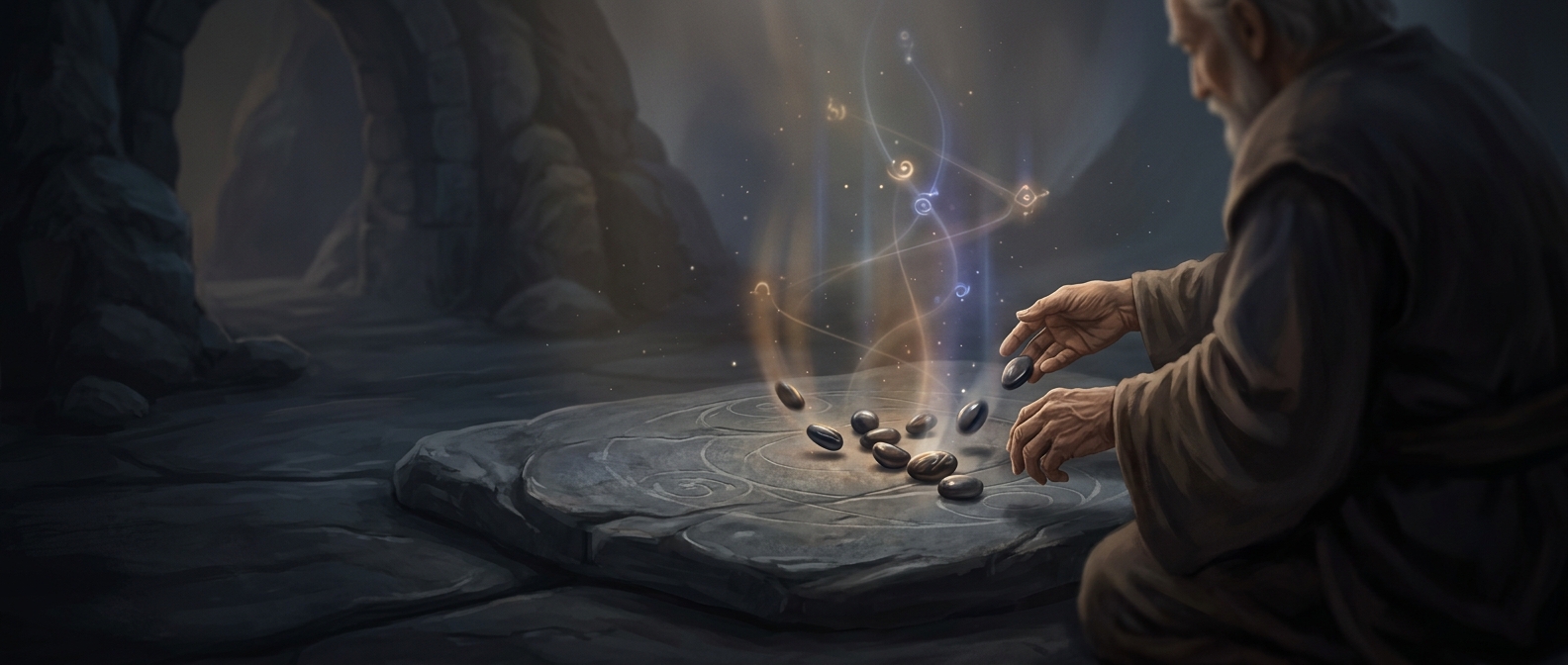
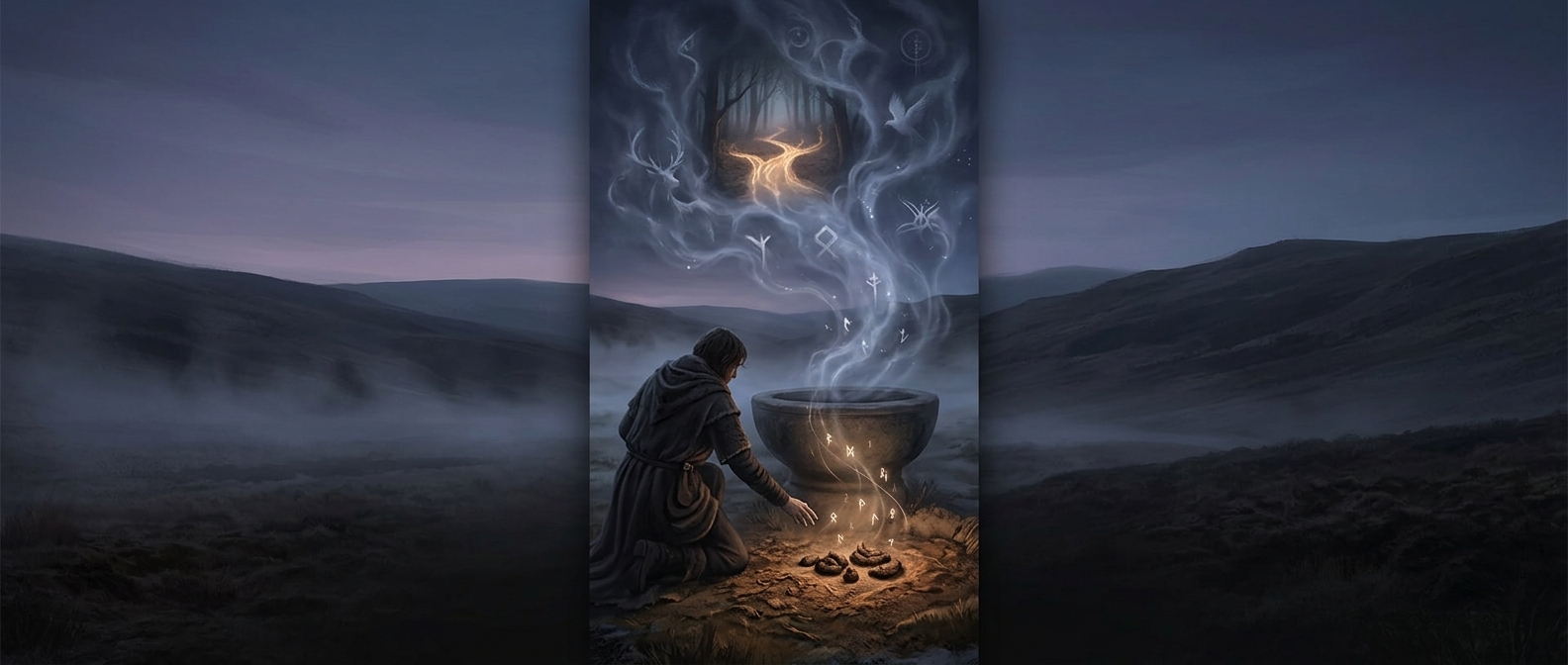
In geomancy—literally, divination by earth—the soil is not usually read as a picture in the way clouds or tea leaves might be. In a well-known form of the practice, a person makes a series of apparently random marks in sand or earth, then counts them in pairs. Whether each group leaves an odd or even remainder determines a pattern of single and double points. Those patterns are combined into a set of figures that a practitioner interprets.
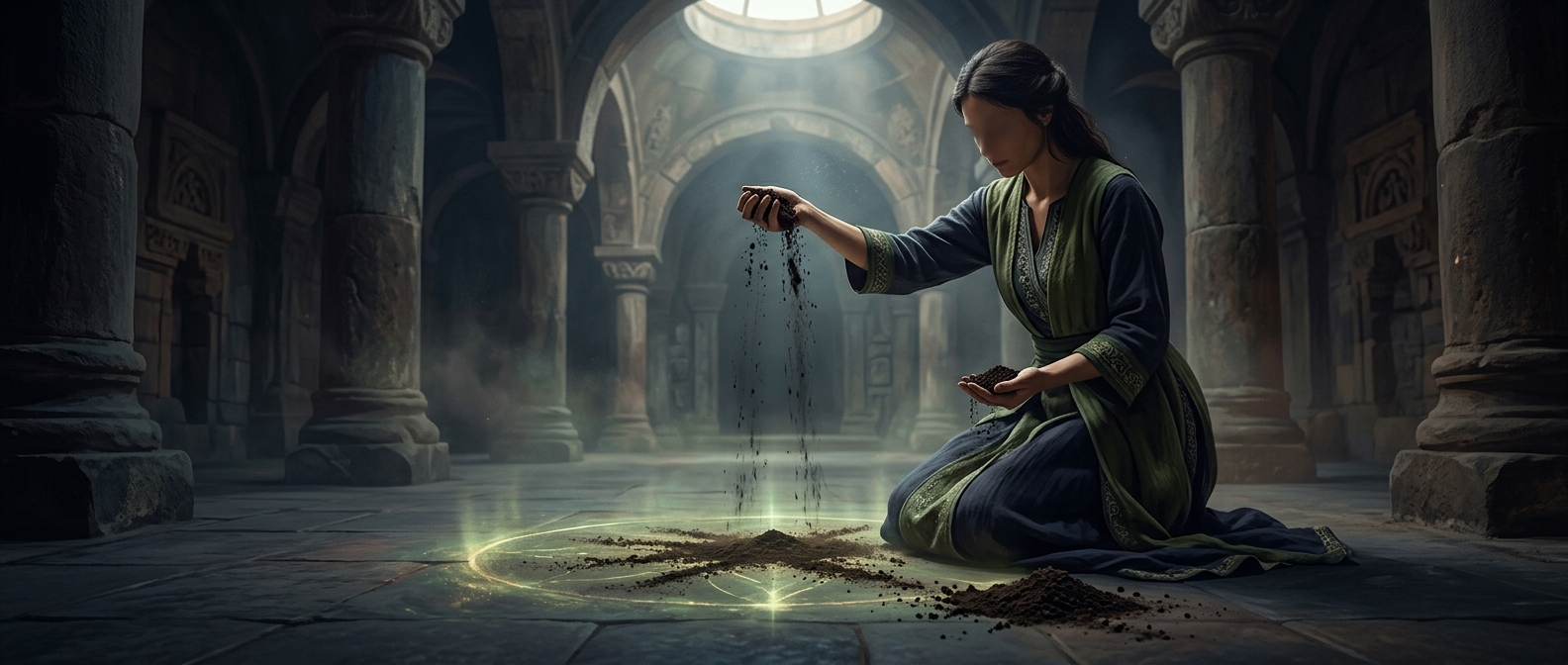
The scattered marks supply chance; the rules turn chance into a repeatable reading. A figure’s meaning depends not only on its shape but also on where it appears in the reading and what question is being asked. Methods vary, so a handful of soil on a floor does not, by itself, identify one exact system.
Why Use Soil—and Then Sweep It Away?
Earth makes the act visible and physical: the answer begins as marks that can be counted, arranged, and examined. In some traditions, the word “geomancy” also reflects this material method, though practices differ across places and periods. The surface is a working space, not necessarily a permanent record.
Sweeping the floor afterward can be as practical as it sounds: loose soil has to be cleared. It also gives the procedure a definite endpoint. The reading is made, considered, and then the temporary marks disappear—leaving behind an interpretation rather than an object to keep.