How scattered marks became a reading
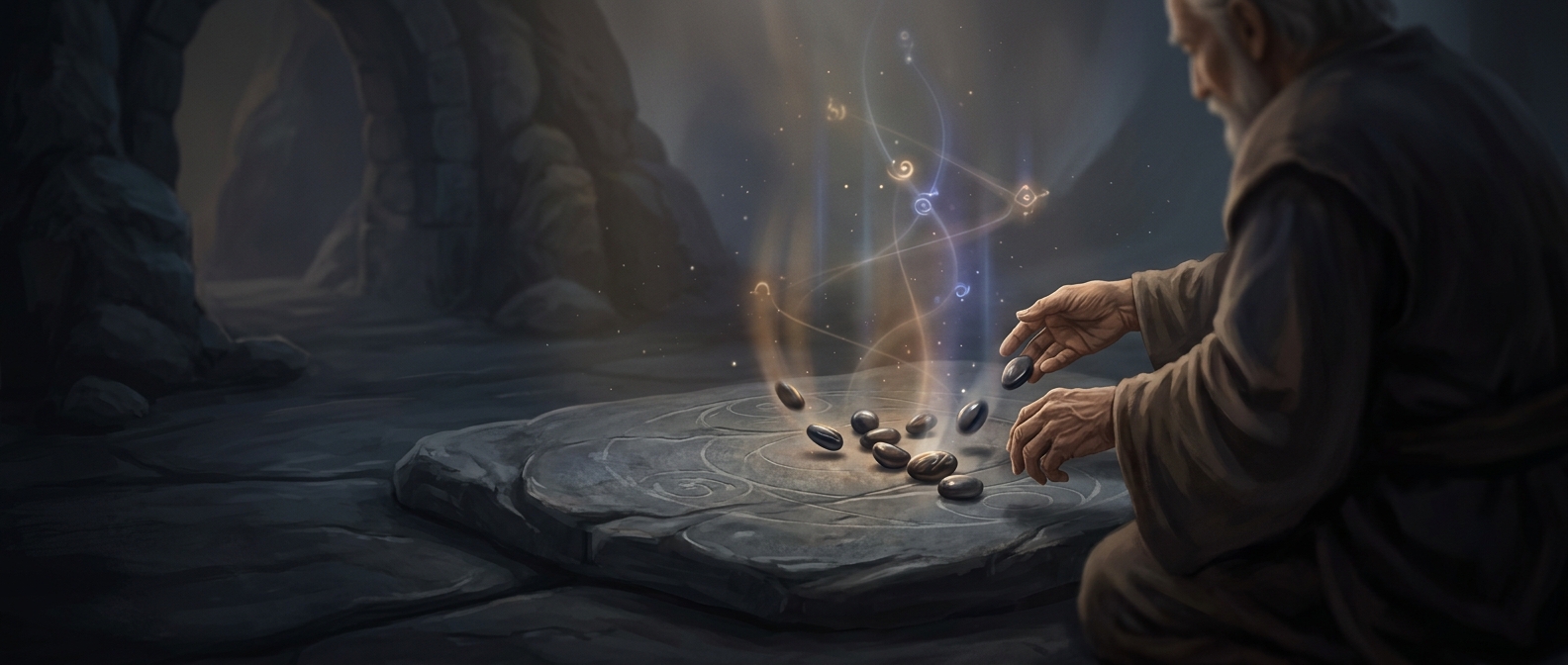
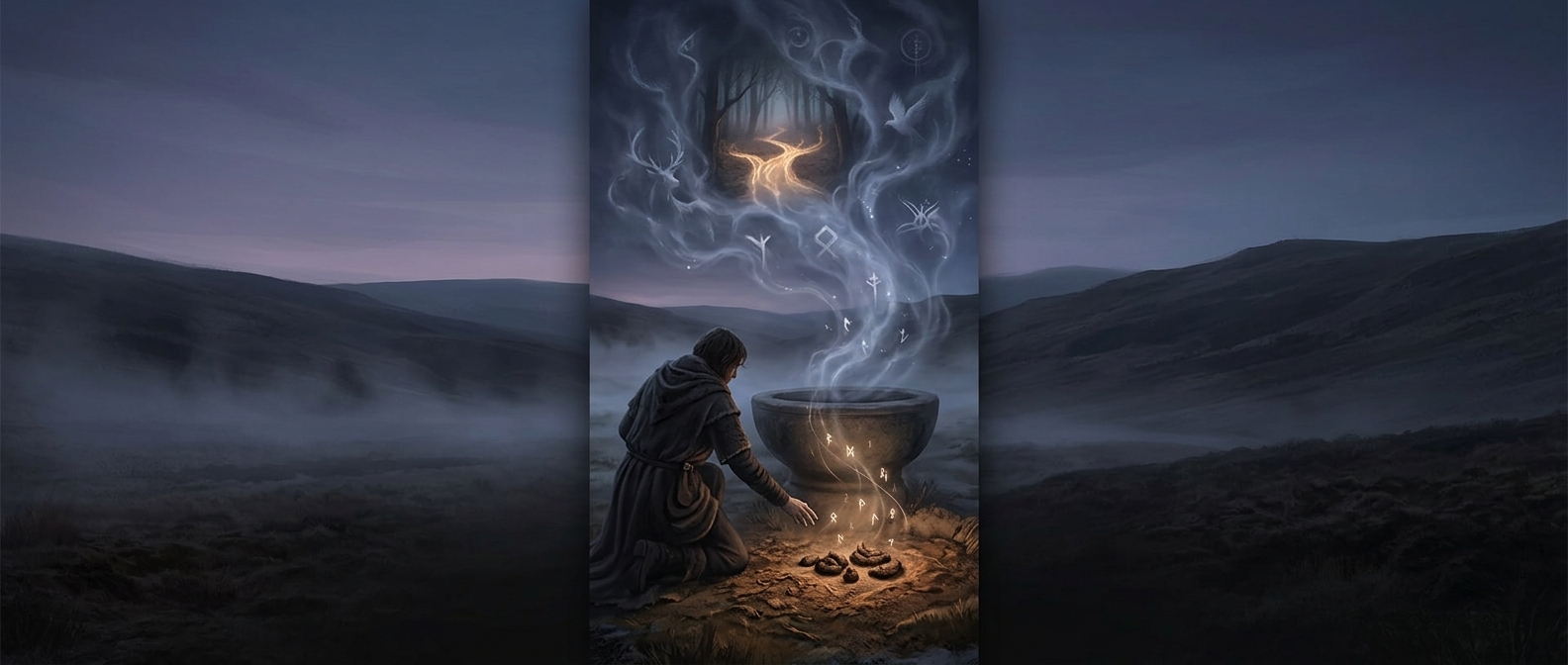
Geomancy turned a chance-making act into a repeatable system. In a common form, the diviner made rows of marks and counted each row, reducing it to either an odd or an even number. Those results formed compact patterns—often shown as rows of one or two points. A pattern was not read as a free-floating omen: it belonged to a set of recognized figures, each with traditional associations.
The resulting figures could then be arranged in a chart. Their positions mattered, so interpretation involved more than spotting a shape: the reader considered how the figures related to the question and to one another. This structure gave the practice a procedure that could be followed and taught, even though the final meaning depended on symbolic judgment.
Why ask the earth about politics?
For a political question, geomancy offered a way to turn uncertainty into an interpretable answer. A ruler or adviser might be concerned with the prospects of a decision; the diviner’s task was to read the pattern within the system, not to produce a demonstrable forecast. The method joined a practical need for guidance to a worldview in which the material world could carry signs.
That combination helps explain the practice’s reach: the materials were simple, while the interpretive framework could be elaborate. A handful of marks could become a structured reading—and, in the hands of a court mystic, part of a conversation about consequential choices.