From a private menagerie to Colombia’s rivers
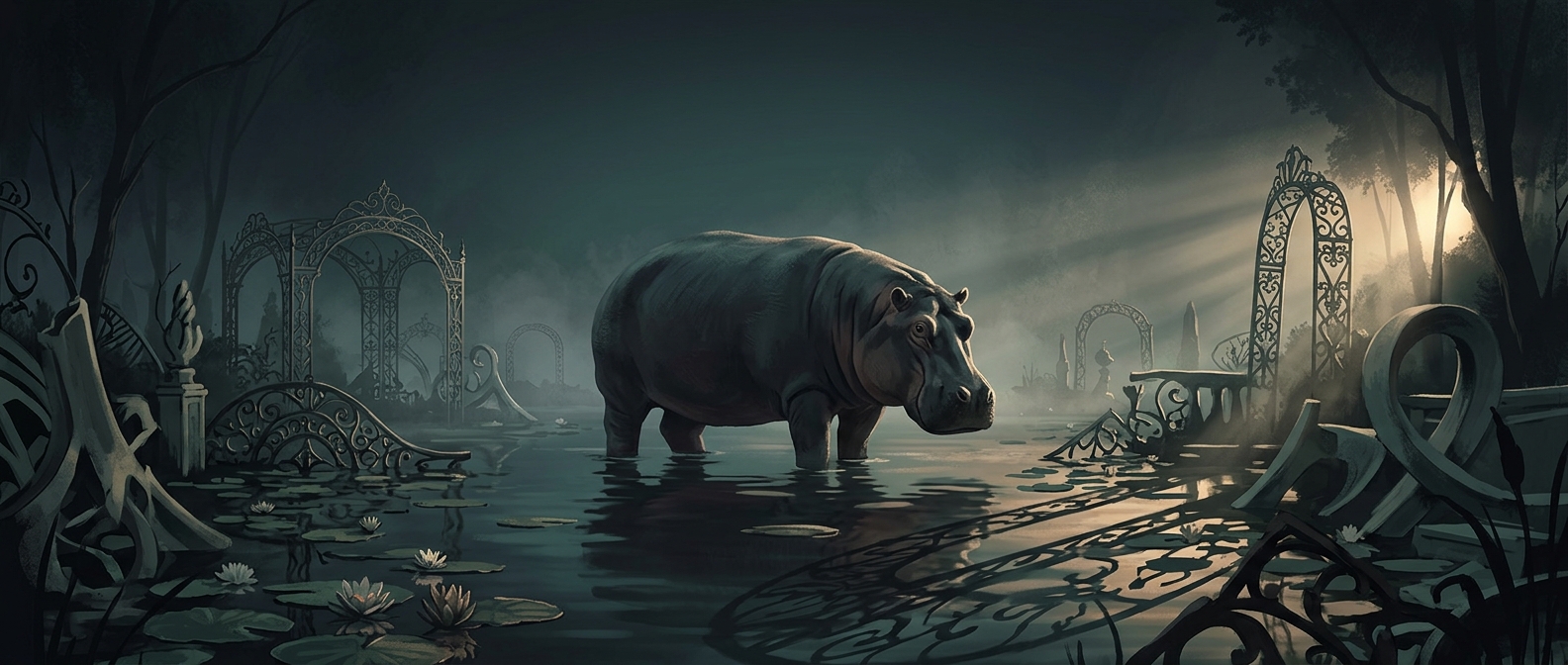
In the 1980s, drug kingpin Pablo Escobar brought hippos to Hacienda Nápoles, his sprawling estate in central Colombia. The animals were part of a private zoo built far from the African ecosystems in which hippos evolved. After Escobar was killed in 1993, the estate changed hands and the zoo did not remain a controlled collection. The hippos, however, stayed.
They could survive in Colombia’s warm climate and find what they needed in nearby waterways: water to spend much of the day in and vegetation to eat. As they reproduced, animals moved beyond the estate into the Magdalena River basin. A property once enclosed by private boundaries had become the starting point for a population living across a much larger landscape.
Why the population could keep growing
Hippos are large, long-lived mammals, and adults have few natural threats. In Colombia, they also encountered no native predator that could keep their numbers in check. Rivers and wetlands offered connected habitat, so the animals could spread rather than remain confined to the original grounds. Together, those conditions allowed a small introduced group to become a lasting wild population.
The result is more than an unusual sight. Hippos can be dangerous to people, and their movement through waterways brings a very large animal into ecosystems where native wildlife evolved without it. Managing the population is difficult: animals are strong, live in hard-to-reach water, and reproduce over time. Escobar’s private collection thus created a problem that could not be contained simply by letting the estate fall out of use.