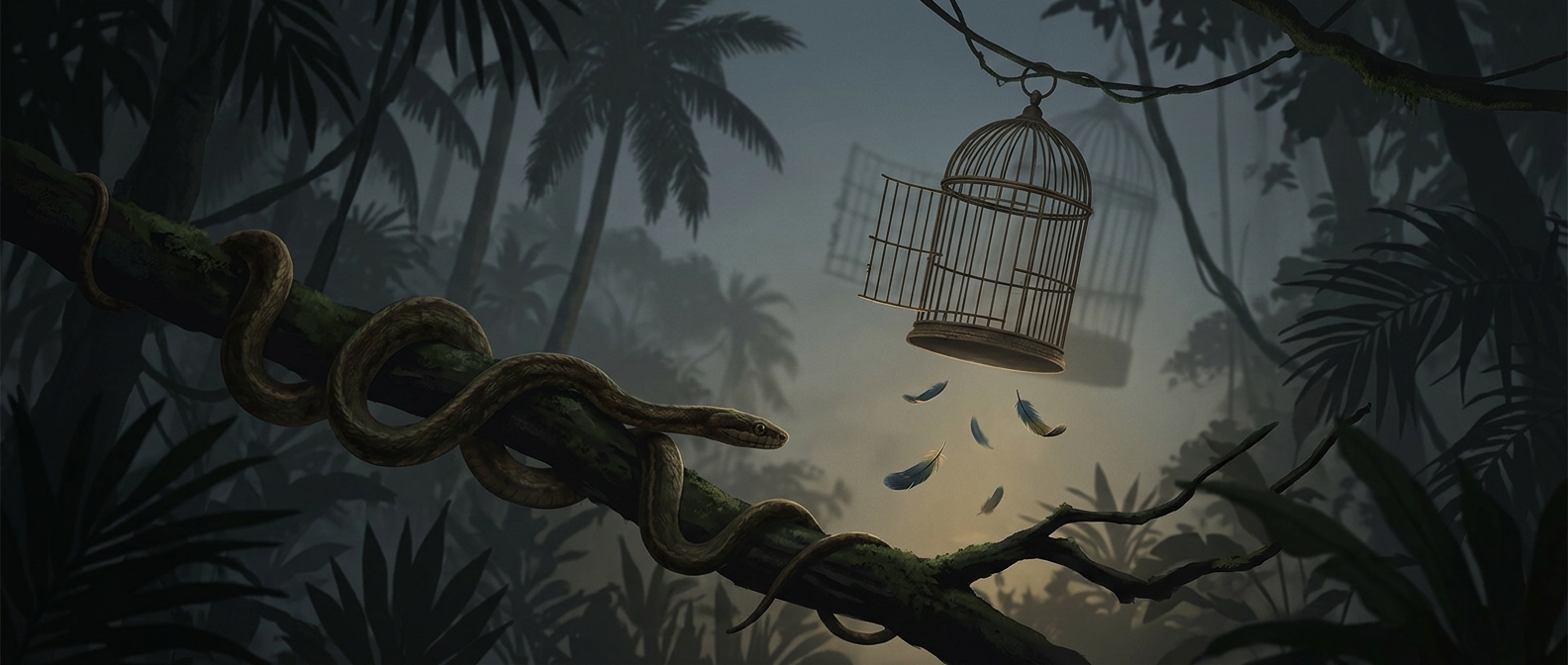
How a stowaway became a forest predator
The brown tree snake did not evolve alongside Guam’s native birds. Once snakes arrived as stowaways in cargo, that mismatch mattered: birds that had not adapted to this predator were suddenly exposed to a hunter able to climb trunks and branches and reach nests. Eggs, chicks and adult birds all became vulnerable. With abundant prey and few natural checks on the island, the snakes spread while bird populations collapsed.
The loss changed more than the sound
Birds help forests function. Some eat insects; others move seeds by carrying fruit or passing seeds after eating it. When birds disappear, those jobs are reduced or shifted to other animals, changing how a forest is used and how plants reproduce. The effects are not identical for every species or every patch of forest, but the loss of birds can alter relationships throughout the ecosystem.
The silence is therefore more than an eerie sign of fewer calls. It marks the removal of animals that once connected trees, insects and seeds. In a forest where birds have largely vanished, the animals most noticeable in the branches may be the very predators that helped make them disappear.