Why a snail targets a wall
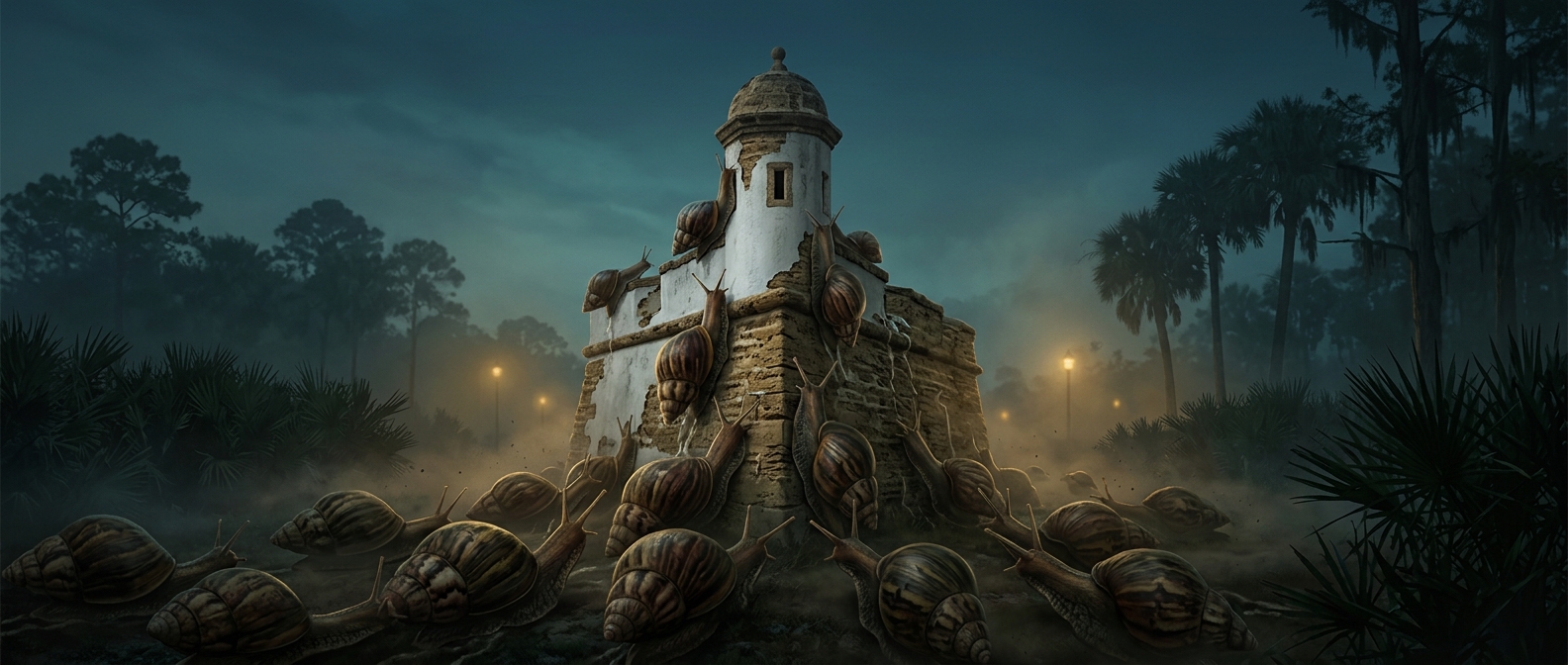
A shell is not just a covering: a giant African land snail must keep adding mineral material as it grows. Calcium is the key ingredient, and when the animal cannot get enough from its usual foods and surroundings, it may rasp at mineral-rich surfaces. Some paints contain calcium compounds, so a painted wall can become an unexpected source of shell-building material. The snail’s rough, tongue-like feeding organ, called a radula, works like a tiny scraper.
That appetite helps explain why an infestation is more than a garden nuisance. The snails feed on many kinds of plants, and their large size means they can consume far more than familiar backyard snails. They can also shelter in damp, hard-to-spot places around homes, making it difficult to find every animal and egg.
The difficulty of removing an invader
Florida has faced giant African land snails more than once. The animals reproduce rapidly, and eggs hidden in soil or debris can hatch after visible adults have been collected. Eradication efforts therefore require repeated searches and treatment, not a single cleanup. Officials have used organized inspections and targeted controls to keep populations from spreading further.
The wall-scraping behavior is a small clue to the larger challenge: an invasive animal can find resources in places people do not think of as food. A patch of damaged paint may be the visible sign of a much harder-to-see population nearby.