The bill is shaped by more than storage
Cloud services let a startup rent computing power instead of buying and maintaining its own machines. That flexibility is valuable when demand is uncertain: a team can add capacity quickly, then scale it back. But the monthly bill can include several moving parts—servers running around the clock, stored data, backups, and charges for moving data between services or out of the provider’s network.
As a company grows, those charges can become harder to predict. A workload that seemed inexpensive during a short test may cost much more when it runs continuously or handles a steady stream of customer data. The issue is not simply that cloud storage is costly; the convenience of renting can carry recurring charges tied to how the system is used.
Owning servers trades bills for responsibility
With on-premises servers, a company buys hardware and runs it in a space it controls. The initial expense is larger, but the machines’ capacity and operating costs are easier to plan around once the infrastructure is in place. For a startup with stable, predictable workloads, that can make long-term spending more manageable.
The tradeoff is that the cloud provider’s work does not disappear—it becomes the company’s. Staff must maintain machines, replace failed parts, protect against outages, and plan for growth. Idle hardware can waste money, while a sudden surge in demand can exceed what the company owns.
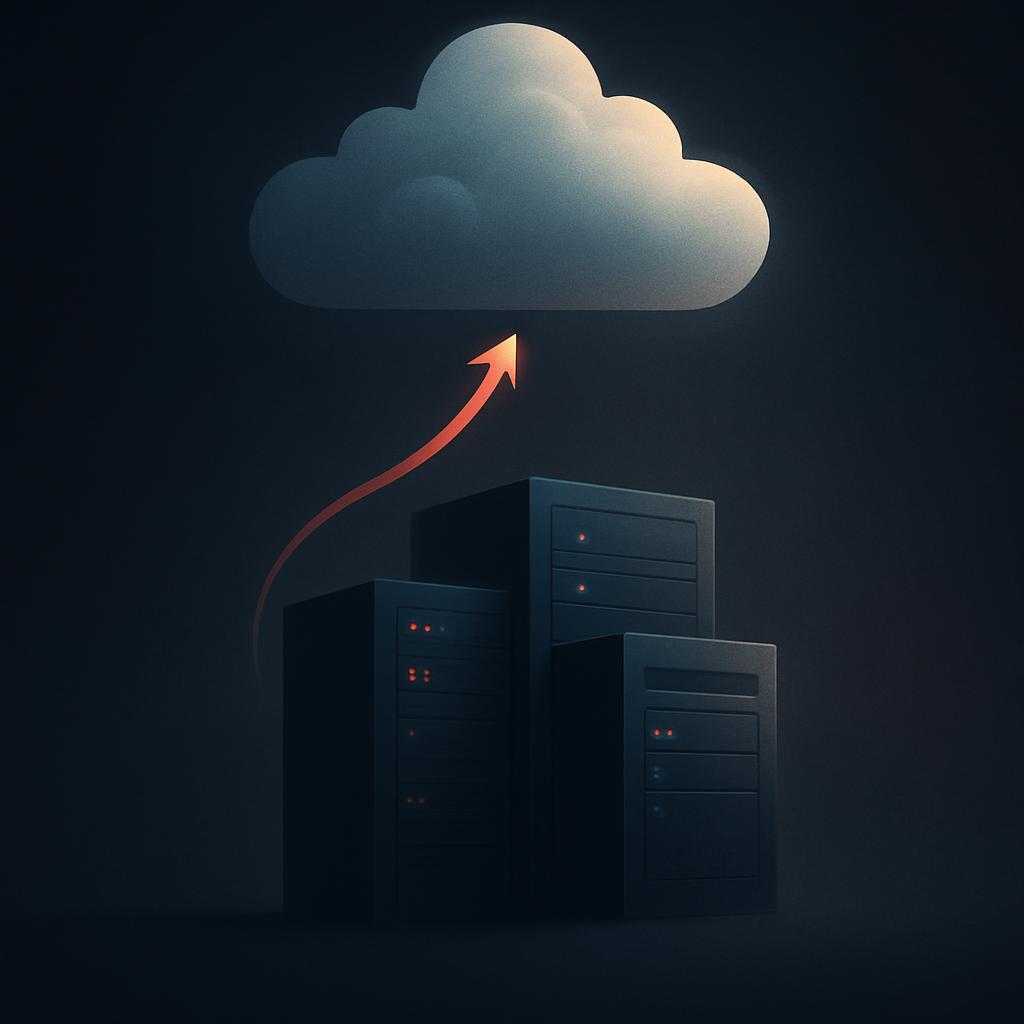
That is why moving data out of the cloud does not necessarily mean abandoning it altogether. A startup might keep changing or unpredictable workloads in the cloud while placing steady, data-heavy tasks on its own servers. The practical goal is to match each workload to the arrangement whose costs and operational demands the company can best manage.